


New CAR-T Cell Therapy Shows Promise in Shrinking Brain Cancer in Early Trial
The CSR Journal Magazine

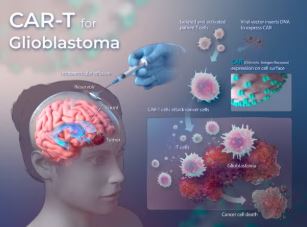
A novel CAR-T cell therapy has demonstrated encouraging outcomes for patients suffering from glioblastoma, a notably aggressive type of brain cancer. Researchers affiliated with the Mass General Cancer Center in the United States revealed significant reductions in tumour size among the initial three patients enrolled in the phase 1 clinical trial known as INCIPIENT, which commenced in 2024. This study, featured in The New England Journal of Medicine, focused on the CARv3-TEAM-E T cell therapy specifically targeting individuals with recurrent glioblastoma. Remarkably, just days following a single infusion, patients showed noteworthy shrinkage of their tumours, including one instance where there was nearly complete tumour regression.

Understanding CAR-T Therapy

CAR-T therapy utilizes a patient’s own genetically modified immune cells to combat cancerous cells. While this therapeutic approach has proven effective in treating blood cancers, it encounters challenges when addressing solid tumours such as glioblastoma. The recent combined methodology aims to pave the way for overcoming these obstacles.

Details of the Experimental Therapy

This innovative approach merges CAR-T therapy with bispecific antibodies, referred to as T-cell engaging antibody molecules (TEAMs). The primary goal is to tackle the issue of tumour heterogeneity by focusing on various populations of cancer cells present within glioblastoma. The infusion of the therapy is directly administered into the brain, thereby maximizing its effectiveness. The trial included three participants aged between 57 and 74, all of whom had previously received conventional treatments like radiation and chemotherapy. Among them, one patient exhibited a rapid but temporary regression of the tumour, while another experienced a sustained reduction exceeding 60 percent lasting beyond six months. The third patient noted a near-complete tumour shrinkage within just five days after treatment.

Patient Tolerance and Side Effects

Overall, the patients tolerated the treatment well, experiencing expected side effects that included fever and altered mental status shortly following the infusion. All patients were closely monitored in a hospital setting prior to their discharge. Despite these initial positive reactions to the therapy, tumour progression eventually occurred in all cases, attributed in part to the limited persistence of the CAR-TEAM cells after treatment.

Future Directions in Research

The research team is now investigating methods to prolong the effectiveness of the therapy, potentially utilizing multiple infusions or preconditioning with chemotherapy. This study exemplifies a collaborative effort spearheaded by experts at Massachusetts General Hospital, aiming to bridge the gap between laboratory research and clinical application. While the therapy has not yet achieved a cure for patients, the researchers indicate that these early findings represent significant advancements, with the aspiration of enhancing outcomes for individuals diagnosed with this challenging form of brain cancer.

Long or Short, get news the way you like. No ads. No redirections. Download Newspin and Stay Alert, The CSR Journal Mobile app, for fast, crisp, clean updates!

App Store –  https://apps.apple.com/in/app/newspin/id6746449540 

Google Play Store – https://play.google.com/store/apps/details?id=com.inventifweb.newspin&pcampaignid=web_share

Latest News

Popular Videos
