


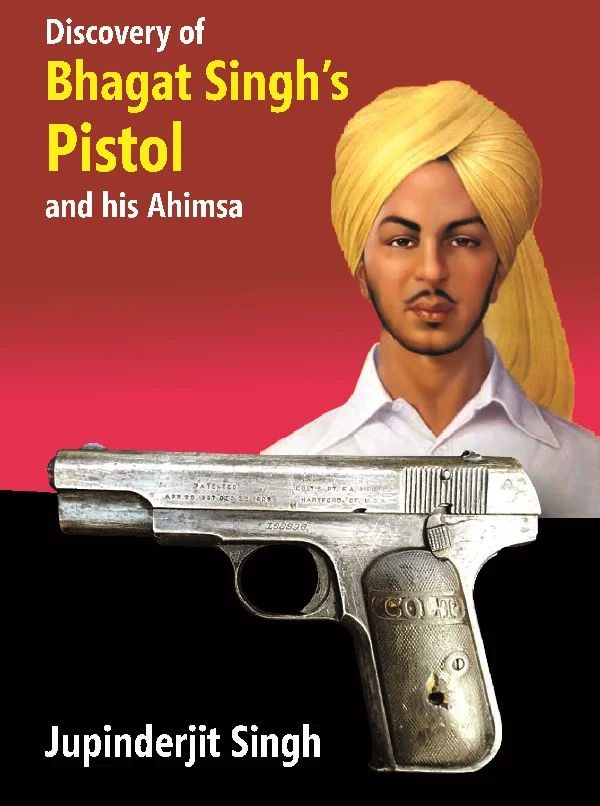

The book titled “Bhagat Singh’s Pistol” delves into the intriguing tale surrounding the firearm carried by the Indian revolutionary Bhagat Singh during his arrest in 1929. This pistol, a silver-grey .32 Colt, became a pivotal piece of evidence in the trial for the murder of British police officer JP Saunders. Following the trial, the weapon mysteriously vanished, prompting questions about its fate.
Years later, investigative journalist Jupinderjit Singh stumbled upon a newspaper article that reignited his curiosity about the missing pistol. He embarked on a journey to uncover its whereabouts, contemplating whether it had been smuggled out of India or simply lost. Singh’s determination to find and preserve the weapon serves as the backbone of the narrative.
Beyond the quest for the pistol, the book offers a comprehensive exploration of Bhagat Singh’s intellectual development. It traces his transformation from an idealistic young nationalist to a revolutionary thinker, influenced by global ideologies such as socialism and anti-colonialism. The text draws on a rich array of Bhagat Singh’s writings, including essays, letters, and prison notes, illuminating the philosophical foundations of his vision for an independent India.
This work is a blend of biography, intellectual history, and mystery, reflecting not only on a significant historical artefact but also on how a nation commemorates its heroes. It invites readers to consider the broader implications of Bhagat Singh’s legacy in the context of India’s fight for freedom.
In Sickness and in Death: The Impact of Disease on Colonial India
“Ipshita Nath’s “In Sickness and in Death” investigates the profound effects of disease on British colonial rule in India. When the British first arrived in the subcontinent in 1608, they were aware of the potential health risks posed by tropical diseases. However, they underestimated the extent to which these diseases would undermine their authority and disrupt their imperial ambitions.
The narrative reveals how British officials, initially confident in their scientific knowledge, found themselves vulnerable to illnesses that decimated both urban and rural populations. Common ailments often proved deadly, highlighting the unpredictable nature of survival in colonial India. This ongoing health crisis challenged the very foundations of British governance, exposing the fragility of their control over the subcontinent.
Over the course of two centuries, the relentless toll of disease forced colonial administrators to reassess their strategies and policies. The book illustrates how public health crises strained resources and infrastructure, ultimately revealing the limitations of colonial power. Nath’s research draws from extensive medical and academic sources, providing a detailed examination of how disease shaped everyday life and governance in colonial India.
Moreover, the book connects historical events to contemporary issues, suggesting that the politics surrounding disease continue to resonate in today’s post-pandemic world. It serves as a reminder of the enduring impact of health crises on societal structures and governance.
Every Least Thing: Rumer Godden’s Autobiographical Journey
<h4″Rumer Godden’s “Every Least Thing” offers a personal glimpse into the author’s life, revealing how her experiences in India shaped her literary career. The book compiles selections from her autobiographical writings, tracing her unconventional upbringing in Bengal and the various influences that marked her formative years.