


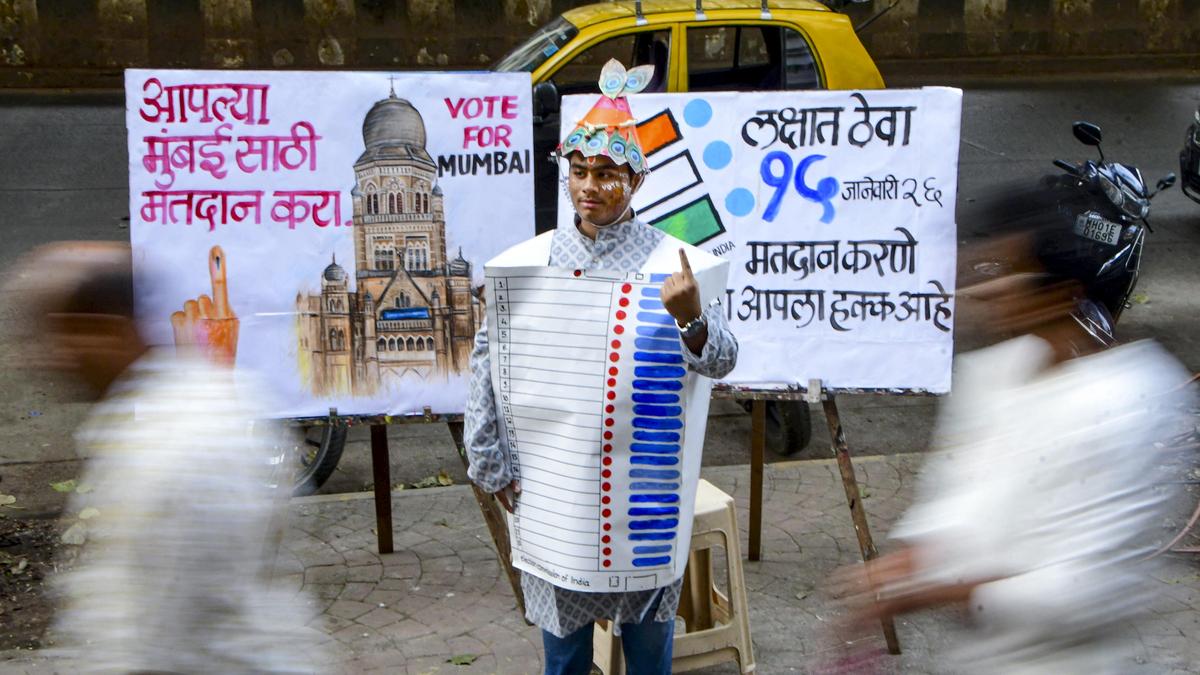

A total of 29 municipal corporations including Mumbai will undergo elections on Thursday, January 15. In Mumbai, after almost three years without elected civic leaders, a major political battle will be witnessed between the BJP-led Mahayuti alliance and the united Thackeray front to gain control over the Brihanmumbai Municipal Corporation (BMC). The ongoing BMC elections of January 15 represent a high-stakes battle for control over India’s richest civic body, boasting a budget exceeding Rs 74,000 crore.
Mumbai’s Brihanmumbai Municipal Corporation (BMC) elections have been delayed since 2017 due to several factors. The key reasons behind the delay include the Covid-19 pandemic, OBC reservation dispute and ward delimitation issues.
The Covid-19 pandemic, which struck in 2020 led to the postponement of local body elections across Maharashtra including BMC Elections. A legal battle over Other Backward Classes (OBC) reservation in local body elections caused a deadlock, with the Supreme Court ruling that OBC quota could only be allowed after a proper data-based study. On top of this, there have been disputes over ward delimitation, including the increase in BMC seats from 227 to 236, led to legal challenges and further delays.
The Supreme Court of India finally intervened on August 4, 2025, directing the Maharashtra Election Commission to conduct the elections by January 2026. Voting is going today, January 15, 2026, with results scheduled for January 16, 2026.
How have the delayed BMC Elections impacted Mumbai’s governance?
The delayed BMC elections have significantly impacted Mumbai’s governance, with the city going over three years without an elected administration. This has led to weakened accountability and worsening everyday problems, such as pothole deaths, garbage piles, water shortages, and lack of basic infrastructure. The absence of elected representatives has also resulted in a lack of focus on civic issues, with governance taking a backseat to ideology and alliance politics.
The delayed elections have also affected the city’s development, with many projects and initiatives stalled or put on hold. The BMC, which is India’s richest civic body, has been functioning without a clear mandate, leading to inefficiencies and corruption.
The impact of the delayed elections is particularly evident in areas like infrastructure and healthcare. While poor road conditions, inadequate waste management, and insufficient water supply have become major concerns, Mumbai’s healthcare system has struggled to cope with the growing population and increasing demands. Moreover, the lack of elected representatives has led to a lack of transparency and accountability in governance.
The question now is the Mumbai BMC Elections, which finally took place on January 15, 2026, will it bring the much-needed stability and focus to the governance of India’s financial capital?
What should be the immediate focus on for Mumbai’s further development?
The BMC elections are a big deal for Mumbai’s future development. The winning party is expected to shape the city’s growth for the next five years, focusing on key issues like infrastructure, transportation, and environmental concerns.
The areas which need immediate attention, include expansion of Mumbai’s metro network to 437 km, integration of public transport systems, and improved waste management. Affordable housing for Maharashtra’s residents, Dharavi redevelopment and rehabilitation. Also, given Mumbai’s poor air quality and felling of trees for multiple developmental projects, there should be immediate measures taken to improve air quality, pollution control, and green cover protection. The city’s public transport system also needs attention in areas such as easing traffic flow in congestion-prone zones, pedestrian infrastructure, and public transport accessibility.