


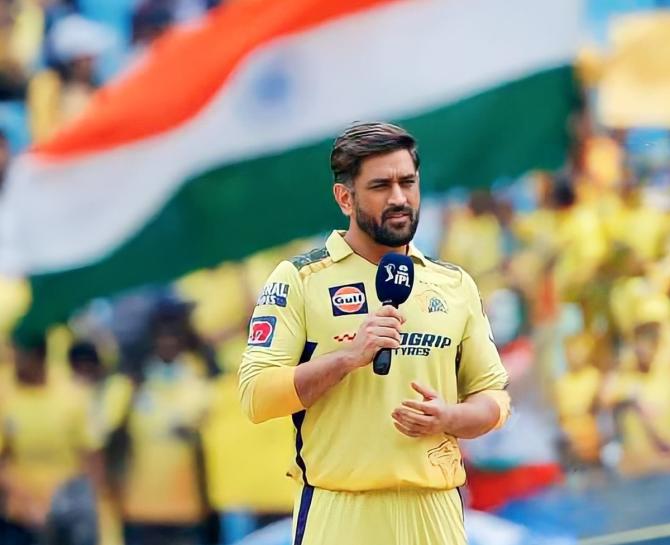

Former Indian cricket captain Mahendra Singh Dhoni has described commentary as a challenging task, highlighting the delicate balance it demands between analysing the game and avoiding criticism of individual players. Sharing his thoughts on the subject, Dhoni noted that articulating real-time assessments while ensuring fairness is no easy feat.
Difficulty in Balancing Analysis and Criticism
Addressing the issues faced by commentators, Dhoni explained that describing a match involves more than just stating facts. He believes there is a “fine line” between providing game insights and criticising the players involved. According to him, navigating this boundary requires a great deal of skill and sensitivity, especially when speaking about athletes who are actively on the field.
Dhoni pointed out that commentary is not merely about narrating what unfolds during a game. Instead, it entails a careful evaluation of performances, strategies, and decisions—tasks which can easily cross into the territory of personal critique if not handled with care. This challenge, he added, makes the role of a commentator both complex and demanding.
Struggles with Memorising Statistics
The former skipper also spoke candidly about his own limitations when it comes to recalling match statistics. Dhoni admitted that he struggles to remember figures, including those from his own performances. This, he suggested, puts him at a disadvantage in the commentary domain, where in-depth knowledge of player records, historical data, and trends often plays a crucial role.
In his view, many successful commentators are able to reinforce their analysis with relevant statistics, which adds value for the audience. Without the ability to instantaneously recall such details, Dhoni feels it becomes difficult to offer the kind of comprehensive insights viewers expect from seasoned analysts.
Insights from a Veteran Cricketer
Dhoni, who led India to major international titles including the ICC T20 World Cup in 2007, the ICC World Cup in 2011, and the ICC Champions Trophy in 2013, is widely regarded for his sharp cricketing mind and calm leadership. While he is known for reading the game exceptionally well, he acknowledged that translating these observations into commentary is not straightforward.
Drawing from his experience as a player and captain, he suggested that understanding the pressures of the game is essential for fair commentary. He underlined the importance of empathy, especially when discussing players’ decisions under high-stakes scenarios.
Perspective on Post-Retirement Roles
Though Dhoni has remained largely away from the commentary box since retiring from international cricket in 2020, his recent remarks have offered a rare glimpse into his perspective on one of cricket’s most visible post-retirement roles. His comments also shed light on the way former cricketers view the transition from active play to media responsibilities.
Currently active in franchise cricket, Dhoni continues to enjoy popularity among fans across the country. His honest acknowledgement of the challenges involved in analysing the game from the commentary box provides an interesting view into the lesser-discussed complexities of sports broadcasting.