app-store-logo
play-store-logo
January 30, 2026

Menstrual Health now a Fundamental Right: Supreme Court issues 11-Point order for schools in India

The CSR Journal Magazine

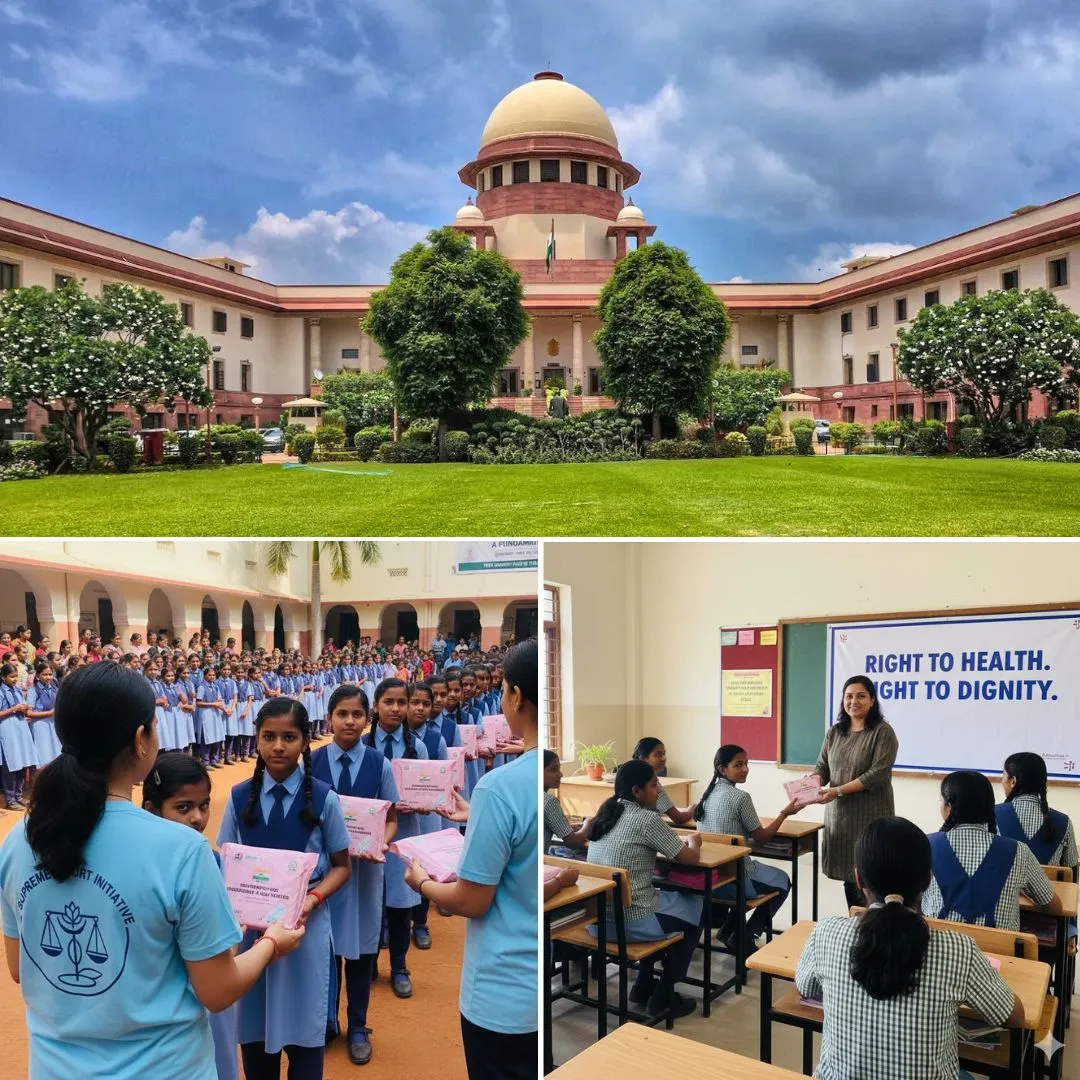
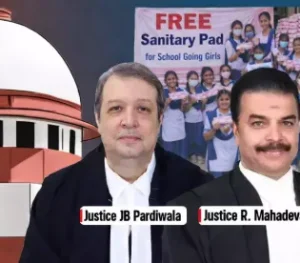
In a landmark judgement by the Supreme Court on Friday, direction was issued to make sure that menstrual hygiene facilities are easily available for all girl students across all schools in India. A bench comprising Justice JB Pardiwala and Justice R Mahadevan recognised that the right to Menstrual Health falls under the Article 21 of the Constitution (no person shall be deprived of their life).

This order was passed to spread awareness on menstrual health, and the court underscored that the menstrual health must no longer be considered ‘woman’s problem’ rather a shared responsibility.

What direction on menstrual hygiene has been issued by SC?

  1. Any school falling under the purview of State or Union Territories will ensure that they have oxo-biodegradable sanitary napkins in schools and available free of cost. This is applicable for both rural and urban schools.

  2. It has to be ensured that sanitary napkins would be readily available to girls, location can be preferably toilets. These napkins will be available via a vending machine. In case schools aren’t able to install a vending machine immediately, they can keep the napkin at a designated place within the school.

  3. It would be compulsory for every school whether in rural or urban locality to have gender-segregated toilets with proper water connectivity.

  4. Toilets in schools must cater to the needs and privacy of the students, including students with disabilities.

  5. All schools must have functional hand washing facilities.

  6. There must be a corner in every school called Menstrual Management corners. This corner must be equipped with spare innerwear, spare uniforms, disposable bags, and other necessary materials.

  7. Schools should have a mechanism to properly dispose of the menstrual pads. There must be a covered waste bin, to ensure cleanliness. Proper maintenance of bins must be ensured.

  8. Court directed National Council of Educational Research and Training (NCERT) and the State Council of Educational Research and Training (SCERT) to incorporate gender-responsive curricula, more particularly, on menstruation, puberty, and other related health concerns (PCOS, PCOD, etc.), in order to break the stigma and taboos.

  9. Teachers of the school must be sensitised on handling and comfort menstruating students.

  10. Sanitary napkin availability must be properly publicised in schools.

  11. Court even directed the District Education Officers to make regular inspections of the school to check if the above points are in place. Besides, the officers must also take feedback from students.

    The directions were issued to improve awareness, access, dignity and inclusivity around menstruation in educational institutions, covering both rural and urban schools under State and Union Territory jurisdictions.

    As per the order, all schools must provide oxo-biodegradable sanitary napkins free of cost to girl students. These napkins should be easily accessible, preferably through vending machines installed in school toilets. If installing vending machines is not immediately possible, schools are required to keep sanitary napkins at a designated and easily reachable location within the premises.

    The Supreme Court also made it mandatory for all schools to have gender-segregated toilets with proper water connectivity. These toilets must cater to the privacy and specific needs of students, including children with disabilities. Additionally, all schools must ensure the availability of functional handwashing facilities to maintain hygiene standards.

    To support students during emergencies, the court directed schools to set up “Menstrual Management Corners.” These corners should be stocked with spare innerwear, extra uniforms, disposable bags, and other essential items required during menstruation.

    Proper disposal of menstrual waste was another key focus of the judgment. Schools must have covered waste bins for safe and hygienic disposal of sanitary pads, along with a system to ensure regular maintenance and cleanliness.

    Beyond infrastructure, the court emphasised education and sensitisation. It directed NCERT and SCERT to introduce gender-responsive curricula that address menstruation, puberty and related health issues such as PCOS and PCOD, with the aim of breaking stigma and taboos. Teachers must also be trained and sensitised to support menstruating students with care and understanding.

    The availability of sanitary napkins must be clearly publicised within schools, and District Education Officers have been tasked with conducting regular inspections and collecting student feedback to ensure effective implementation of these directions.


Latest News

Popular Videos