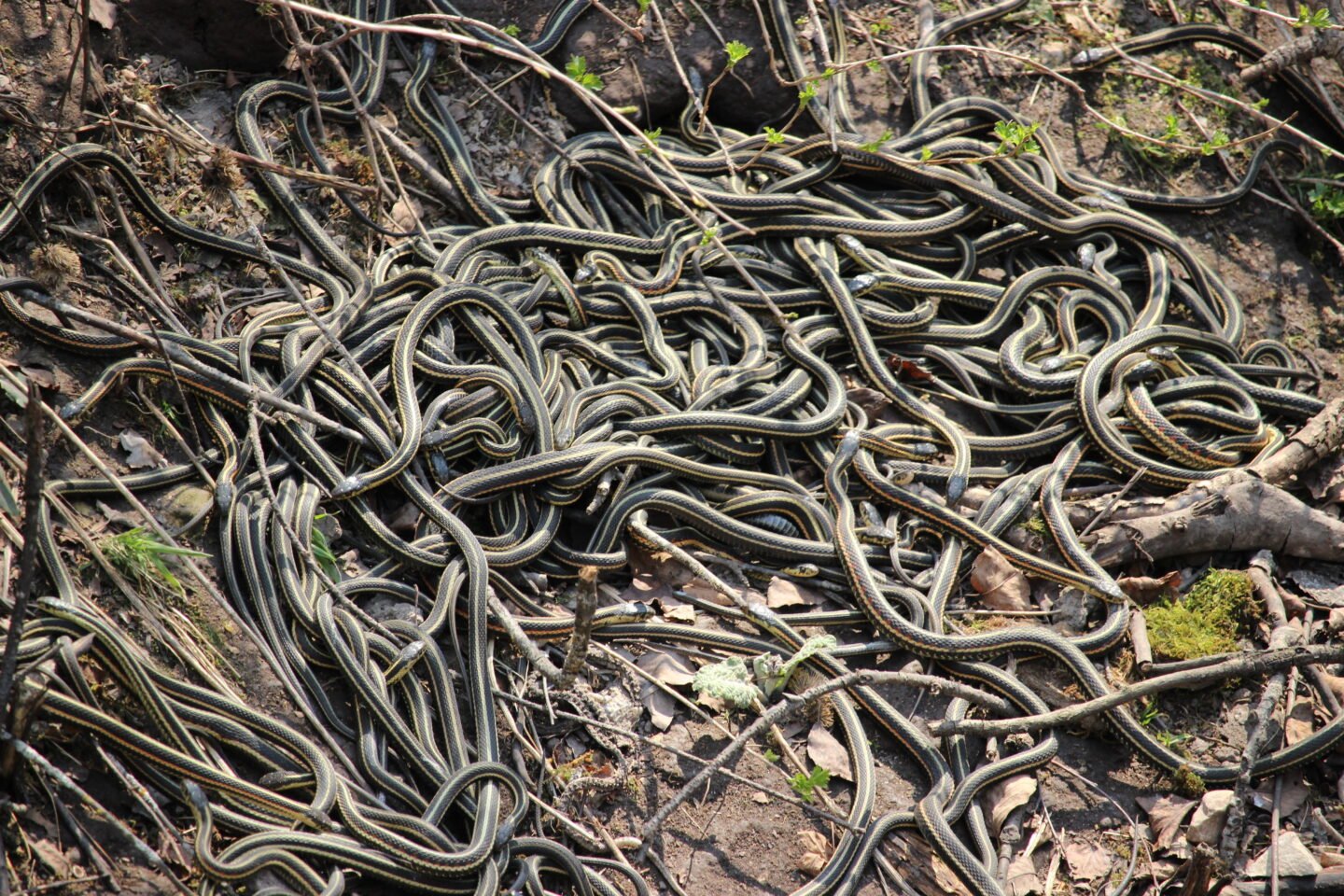
In the Narcisse Snake Dens of Manitoba, Canada, more than 100,000 red-sided garter snakes gather every spring, marking one of the most remarkable wildlife phenomena in North America. This unique site, located in the Rural Municipality of Armstrong, is recognised as the largest known gathering of these snakes anywhere in the world. Following months of hibernation hidden deep within limestone caverns, the snakes emerge in large numbers to participate in their seasonal mating rituals.
Winter Habitat and Survival Strategies
The Narcisse Snake Dens are characterised by sinkholes that provide ideal winter shelter for the red-sided garter snakes, scientifically known as Thamnophis sirtalis parietalis. These underground habitats are situated several meters below the frost line, allowing the snakes to remain comfortable even as winter temperatures plummet to as low as -30°C on the surface. This unique environment prevents temperatures from dropping below freezing, creating an essential refuge for the species during the harsh winter months.
As autumn arrives, typically around late September to early October, the snakes begin to migrate to the dens, forming tight clusters to conserve warmth and moisture during their prolonged hibernation period, which lasts five to six months. Due to their reliance on external warmth for metabolic regulation, the snakes become inactive during the winter, conserving energy until the conditions become favorable for emergence.
Mating Rituals and Behaviour
When spring arrives, the male garter snakes are the first to venture outside, often seen near the entrances of their dens before the last of the winter snow melts away. The triggering factor for their emergence is the release of pheromones by females, chemical signals that attract males from considerable distances. This leads to the formation of what is known as a mating ball, a fascinating spectacle where numerous males compete for the attention of a single female. In this mass of snakes, the competition can create a visual illusion of a single, pulsating entity.
During this mating frenzy, male snakes attempt to align their bodies with females and use their specialised reproductive organs, called hemipenes, to transfer sperm. A unique gelatinous mating plug is sometimes left behind, which can help reduce the likelihood of other males mating with the same female, ensuring reproductive success.
Physical Characteristics and Habitat
Red-sided garter snakes are non-venomous and generally pose minimal risk to humans. They typically grow to lengths of three to four feet and exhibit a robust build, with coloration ranging from olive-brown to nearly black. The snakes feature distinct markings, including a prominent yellow stripe along the back and red bars along their sides, which vary among individuals.
The species thrives in habitats near water sources such as ponds, marshes, and slow-moving streams, where they primarily feed on amphibians but also consume worms and occasional small rodents. Their reproductive habits, combined with their adaptability to various environments, contribute to their prominent presence in the region.
As the spring season unfolds, the Narcisse Snake Dens continue to attract visitors, eager to witness this extraordinary natural event and the fascinating behaviors of the red-sided garter snakes.