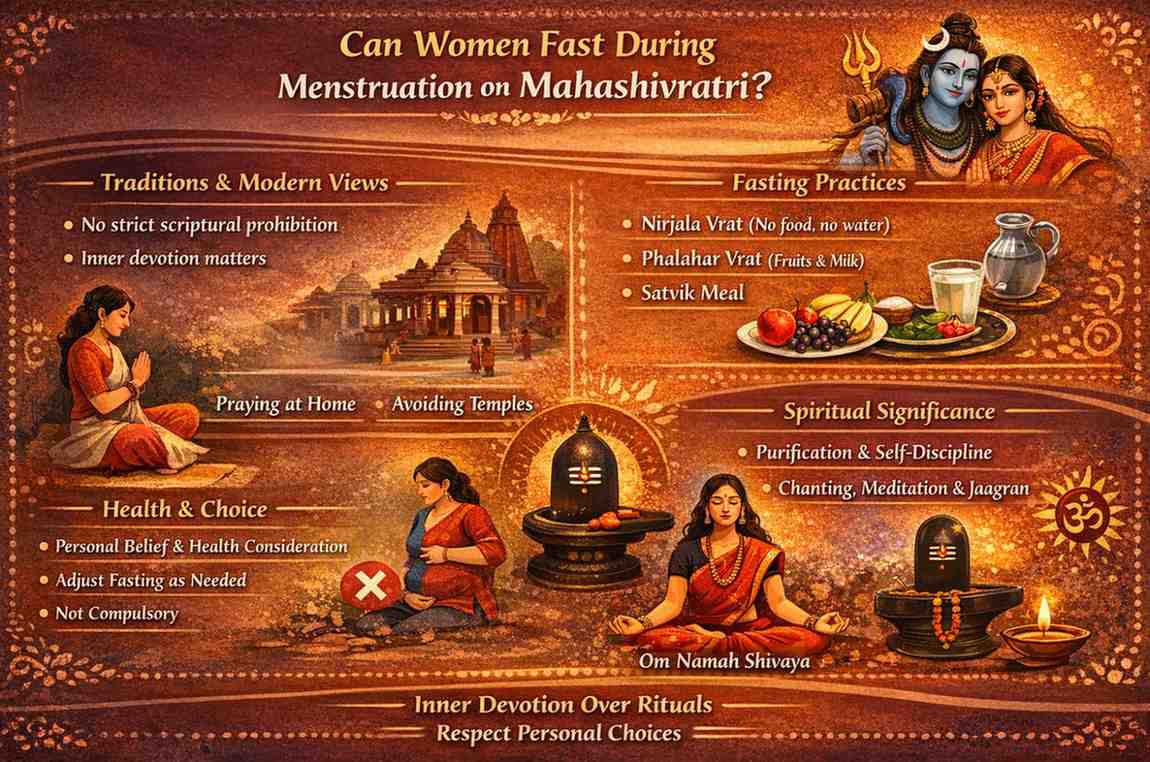
Mahashivratri 2026 is expected to be celebrated with reverence through night-long prayers across India and among Hindu communities globally. The observance of fasting, or vrat, plays a crucial role in the festivities dedicated to Lord Shiva. However, a recurring question arises each year—can women continue their fasts while menstruating? Evolving social norms, increased medical awareness, and varied interpretations of tradition necessitate a distinction between personal belief and societal expectations. Religious texts, customs, and insights from health experts offer diverse perspectives on fasting during this time, alongside the spiritual significance of Mahashivratri.
Traditions and Modern Perspectives
Traditionally, some households in India suggest that women refrain from attending temples or participating in rituals during their menstrual cycle. Nonetheless, there is no comprehensive scriptural prohibition in Hindu texts that outright forbids women from fasting or engaging in prayer while menstruating. Many contemporary spiritual leaders and scholars assert that the true essence of Mahashivratri lies in inner devotion rather than physical rituals. In modern practice, numerous women opt to observe the fast even during menstruation if they feel physically capable. Some may adjust their participation by praying at home instead of visiting temples. Ultimately, the choice to fast during this time is often influenced by personal beliefs, family traditions, and individual health considerations.
Compulsory Nature of Fasting
While fasting during Mahashivratri is a common practice among devotees, it is not universally obligatory. Individuals may follow various fasting methods, such as Nirjala vrat (abstaining from food and water), Phalahar vrat (consuming fruits and milk), having a Satvik meal once a day, or opting for partial fasting with dietary restrictions. Religious scholars emphasize that the motivation behind the fast is more critical than strict adherence to specific fasting rules. Engaging in chanting “Om Namah Shivaya,” performing Rudrabhishek rituals, meditating, and remaining awake during the night vigil (jaagran) are equally integral elements of the celebration. Those who are unwell, menstruating, pregnant, or managing health conditions often consider modifying their fasting practices.
Spiritual Significance of Fasting
The act of fasting on Mahashivratri is considered a means of purifying both the body and mind. The practice is believed to enhance self-discipline, promote mental clarity, minimize physical indulgence, and strengthen spiritual focus. Mahashivratri is traditionally associated with the divine union of Lord Shiva and Parvati, symbolizing the triumph over darkness and ignorance. Devotees engage in fasting as a method to cultivate detachment and deepen their devotion. The night-long vigil serves to heighten awareness, reminding practitioners to remain spiritually awake throughout the observance.