


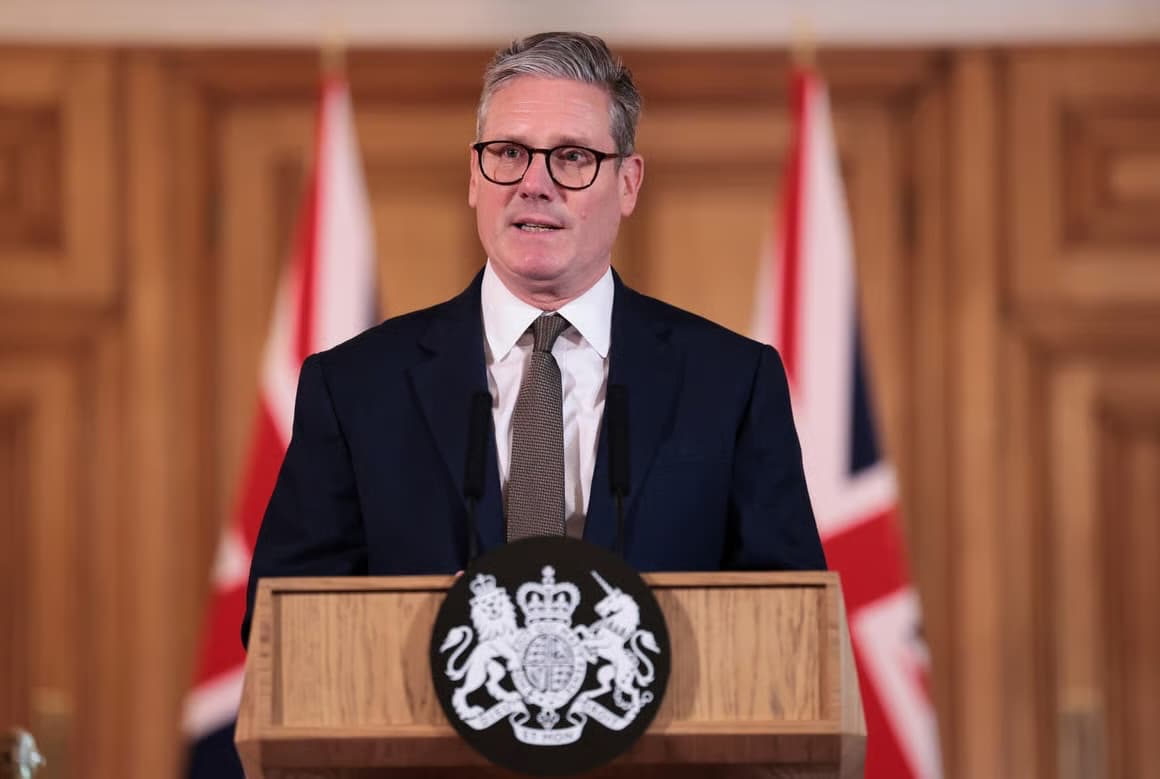

The United Kingdom has announced a coordinated diplomatic push to reopen the Strait of Hormuz, as escalating conflict involving the United States, Israel and Iran disrupts one of the world’s most critical energy corridors. Prime Minister Keir Starmer said London will convene talks with 35 countries to chart a pathway towards restoring navigation through the strategically vital waterway.
The move comes amid mounting global concern over the effective closure of the strait, which handles nearly one-fifth of global oil and liquefied natural gas flows. The disruption has triggered a sharp surge in energy prices and forced several nations to consider tapping into strategic reserves to stabilise markets.
Global Coalition Takes Shape Amid Energy Shock
Speaking at a press conference, Starmer confirmed that UK Foreign Secretary Yvette Cooper will host a virtual meeting of partner nations to assess diplomatic and political options for reopening the passage once hostilities subside. The talks will focus on ensuring safe transit for stranded vessels and seafarers while restoring the flow of critical commodities.
Countries including France, Germany, Italy, Japan and the Netherlands are expected to participate, signalling a broad-based international effort to address the crisis. The UK has also indicated that military planners may be brought in after the diplomatic discussions to evaluate logistical and security frameworks required to make the strait operational again.
The urgency stems from the Strait of Hormuz’s centrality to global trade. Any prolonged disruption threatens not only energy security but also wider economic stability, particularly for import-dependent economies.
War Escalation Complicates Reopening Efforts
The crisis has been fuelled by intensified military exchanges, with US and Israeli strikes on Iranian targets met by retaliatory attacks across the region. While Iran has not formally declared a blockade, its actions have effectively rendered the strait inaccessible, raising fears of a prolonged standoff.
Starmer acknowledged the complexity of the situation, cautioning that reopening the route would be a difficult and gradual process. “This will not be easy,” he said, underscoring the geopolitical sensitivities and security risks involved in restoring passage through a conflict zone.
The situation has also exposed divisions among Western allies. The United States has criticised European nations for what it sees as insufficient support in ensuring maritime access, adding a layer of diplomatic tension to an already volatile scenario.
Trump’s Remarks Add Pressure On Allies
US President Donald Trump has publicly urged allied countries to take more direct action, suggesting they should independently secure access to the strait rather than relying on Washington. His remarks have drawn attention to the evolving dynamics within the Western alliance as the conflict deepens.
Trump’s statements come as global energy markets remain on edge, with traders closely monitoring developments in the Gulf. Analysts warn that any delay in reopening the strait could lead to sustained price volatility and supply disruptions, impacting economies worldwide.
For now, the focus remains on diplomatic engagement. The outcome of the UK-led talks is expected to shape the next phase of international response, balancing the need for immediate energy security with the risks of further military escalation in an already fragile region.