


Ladakh’s Geological Past: Volcanic Forces Shaped the Himalayas
The CSR Journal Magazine

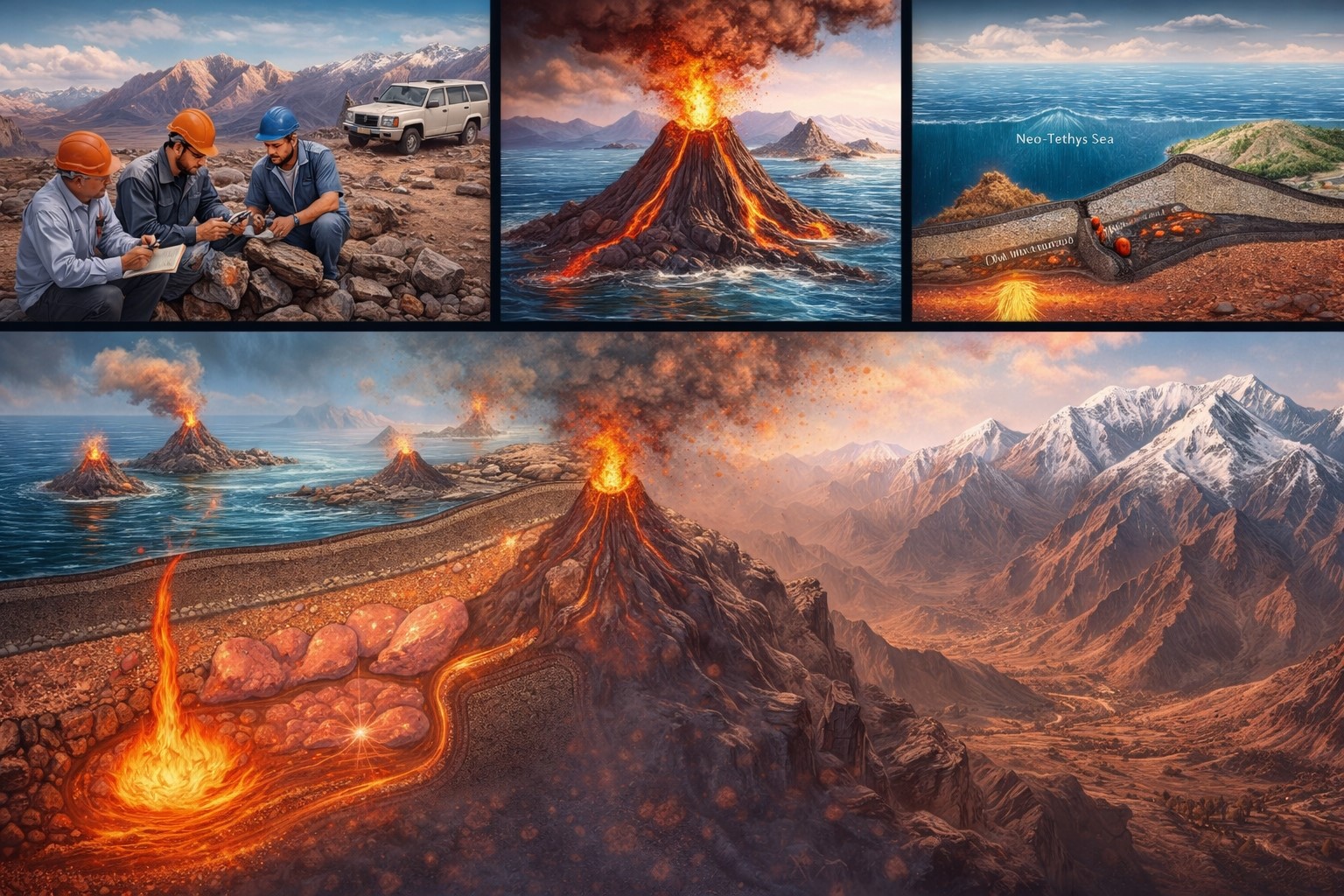
Researchers have unveiled a comprehensive 130-million-year geological history of Ladakh, shedding light on the region’s evolution before the Himalayas reached their current heights. This research, conducted by scientists at the Wadia Institute of Himalayan Geology, focuses on the ancient volcanic rocks within a belt known as the Ladakh Magmatic Arc. Although this volcanic system is now dormant, it previously generated significant amounts of molten rock beneath the Earth’s surface. Millions of years ago, the landscape of Ladakh was vastly different from the arid terrain observed today. At that time, it was situated above the Neo-Tethys Sea, with parts of the Earth’s crust sinking slowly into the planet’s interior beneath the ocean.

Formation of the Region

This subsurface movement induced intense heat, leading to the melting of materials and the development of volcanic systems that gradually shaped the Ladakh region. The geological narrative highlights the collision of two landmasses that eventually closed the ancient ocean and gave rise to the Himalayas.

Research Methodology and Discoveries

Through a detailed analysis of the chemical composition of rocks gathered from various locations in Ladakh, scientists have identified three major evolutionary stages of this geological system. In the initial stage, the area was characterized as a chain of volcanic islands emerging from the ocean. The trace elements found in the rocks from this period indicate that the majority of the molten material originated from deep within the Earth’s mantle, with only a minimal contribution from surface components.

Increasing Complexity Over Time

As geological time progressed and the landmasses drifted closer together, the volcanic system underwent significant changes. This evolution included the formation of substantial granite bodies beneath the surface, suggesting an increased incorporation of crustal material into the molten rock. This transition points to a rise in geological pressure as the Indian landmass moved toward the Eurasian plate.

Final Stage of Geological Development

The culmination of this geological journey occurred after the two landmasses collided, which led to the closure of the ancient ocean and the emergence of the Himalayas. Even at this stage, molten rock continued to ascend through fissures in the Earth’s crust, giving rise to distinct dark rock formations that remain evident in the landscape today. To establish this extensive geological chronology, researchers analyzed minute traces of elements present within the rocks, which serve as chronological indicators. This analysis has allowed scientists to discern the origins of the material, determining whether it originated from deep internal layers or recycled surface materials.

Implications of the Findings

The outcomes of this research provide an enriched understanding of how the Ladakh region, in conjunction with the Himalayas, was formed, revealing that these majestic mountains are the result of a lengthy and intricate geological process spanning millions of years. This work enhances comprehension of Earth’s historical geological dynamics, showcasing how ancient volcanic activities contributed significantly to the present-day landscape of Ladakh and the Himalayas.

Long or Short, get news the way you like. No ads. No redirections. Download Newspin and Stay Alert, The CSR Journal Mobile app, for fast, crisp, clean updates!

App Store –  https://apps.apple.com/in/app/newspin/id6746449540 

Google Play Store – https://play.google.com/store/apps/details?id=com.inventifweb.newspin&pcampaignid=web_share

Latest News

Popular Videos
