


app-store-logo
play-store-logo
March 2, 2026

Karachi Shootings Spark Concerns Over Pakistan’s Sovereignty and Accountability
The CSR Journal Magazine

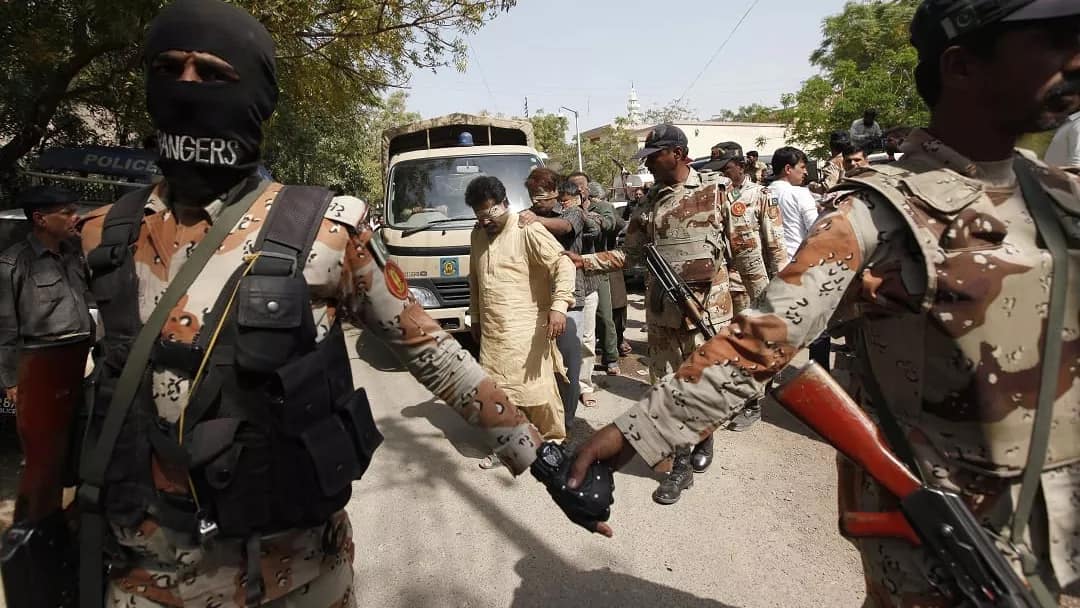
In Karachi, as citizens mourn the loss of lives, the government’s focus appears to be on managing public perception rather than addressing accountability issues. Reports indicate that the state’s response to the shooting deaths of several individuals during protests has raised significant questions about sovereignty and the responsibilities of the state. At the center of this controversy is an incident involving Marine Security Guards at the U.S. Consulate on Mai Kolachi Road, where at least twelve Pakistani nationals were reportedly killed.

Emergency services transported the victims to Civil Hospital Karachi, where medical records confirmed that they had sustained gunshot wounds. These findings stand in contrast to claims that injuries were caused by tear gas or baton charges. The nature of these injuries is crucial to understanding the gravity of the situation.

Official statements have largely focused on crowd management rather than addressing the specifics of the alleged shootings. Interior Minister Mohsin Naqvi held a press conference but did not directly respond to the allegations regarding the use of lethal force. Sindh Chief Minister Murad Ali Shah expressed regret over the incident and announced an investigation, yet provincial authorities may face limitations due to the diplomatic protections covering foreign security personnel.

Prime Minister Shehbaz Sharif condemned the assassination of a major Iranian clerical figure, Ayatollah Ali Khamenei, which had incited national protests, while also highlighting concerns regarding damage to the U.S. consulate property. However, the Foreign Office of Pakistan has not made any formal protest, nor summoned the U.S. ambassador, nor issued a demarche concerning the reported killings.

This lack of a formal response has led to comparisons with the Raymond Davis case from 2011, where two Pakistani individuals were killed, and the accused was later freed under diplomatic immunity. Legal inconsistencies under the Vienna Convention on Consular Relations have also been noted, indicating that while Pakistan must protect diplomatic missions, this does not grant blanket immunity for actions resulting in the death of citizens.

With an estimated 37 million Shia Muslims residing in Pakistan, the assassination of Khamenei is not viewed solely as a geopolitical event but as the targeting of a key religious authority. The subsequent protests in various cities prompted the enforcement of Section 144 and heavy police presence, primarily positioned to separate demonstrators from diplomatic establishments.

The wider implications of the situation highlight significant issues beyond immediate damage control or public messaging. The muted reaction from the Foreign Office of Pakistan gives rise to deeper concerns regarding national sovereignty, accountability, and the overarching priorities of the state in managing its international relations and domestic safety.

Long or Short, get news the way you like. No ads. No redirections. Download Newspin and Stay Alert, The CSR Journal Mobile app, for fast, crisp, clean updates!

App Store –  https://apps.apple.com/in/app/newspin/id6746449540 

Google Play Store – https://play.google.com/store/apps/details?id=com.inventifweb.newspin&pcampaignid=web_share

Latest News

Popular Videos
