


Iran Celebrates Islamic Republic Day, Pro-Government Celebrations in Tehran
The CSR Journal Magazine

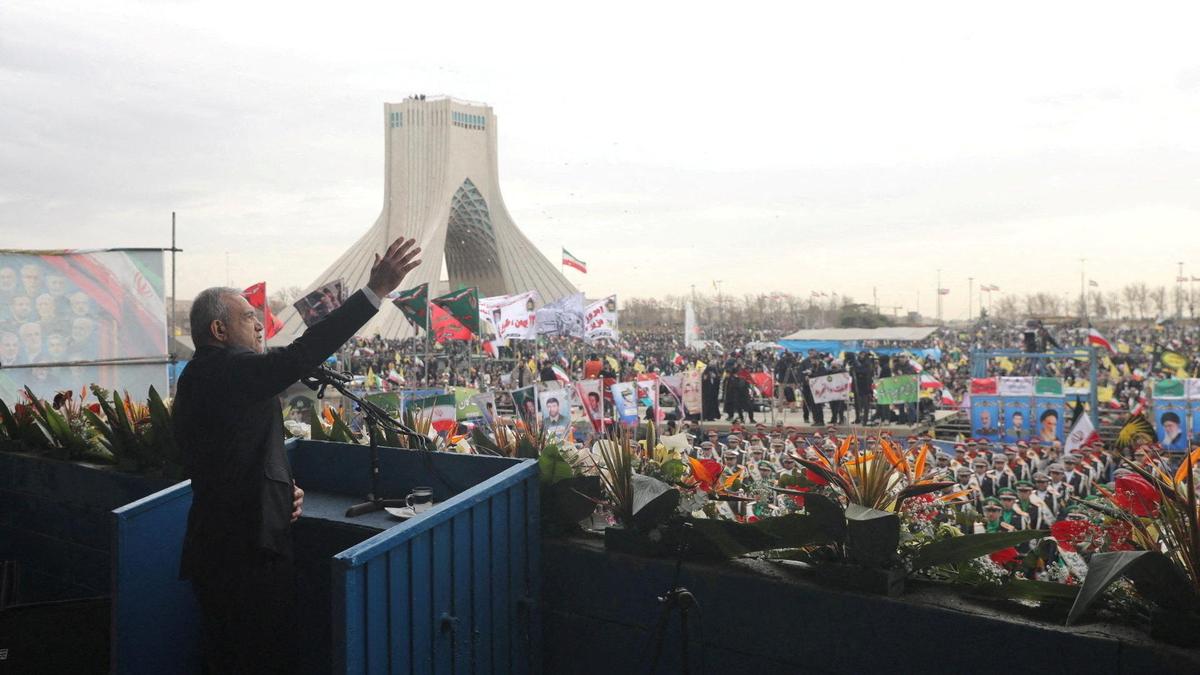
Supporters of the Iranian government gathered in Tehran to commemorate the anniversary of a critical 1979 referendum that established the Islamic Republic. As festivities got underway on Tuesday night, President Masoud Pezeshkian and Foreign Minister Abbas Araghchi were visible participants in the pro-establishment demonstrations, which coincided with ongoing military actions by the United States and Israel against Iran.

The Islamic Republic Day marks a significant moment in Iran’s history, when authorities claimed an overwhelming 98.2 percent of the popular vote following the Islamic revolution. While the celebrations continued, U.S. forces struck the site of the former U.S. embassy in Tehran early Wednesday morning, an act interpreted as a symbolic gesture related to this national observance. State media showcased footage of the aftermath, highlighting damage and smoke in an area monitored by the Islamic Revolutionary Guard Corps (IRGC).

Flag-raising and Security Measures

On Wednesday, Iranian officials displayed what they described as the tallest and heaviest national flag, measuring 150 meters (492 feet) and weighing 300 kilograms (660 pounds) in downtown Tehran. The government initiated a series of festivities, which are expected to extend into the following night. Political and military leaders urged their supporters to maintain a strong presence on the streets, emphasizing the importance of security amidst threats of dissent and calls for regime change.

During an interview, Araghchi conveyed his intentions for joining the celebrations, stating he sought encouragement and morale-boosting. The president engaged with the crowd, taking selfies while surrounded by bodyguards. Hassan Khomeini, grandson of Iran’s first Supreme Leader, also called for continuous public presence until the end of the ongoing conflict.

Public Sentiment and Military Patrols

Pro-government demonstrators in various cities expressed their displeasure toward the U.S. and Israel through chants, accompanied by religious slogans. In response to increased tensions, the IRGC and Basij paramilitary forces established checkpoints throughout Tehran. Observers noted the presence of Iraqi nationals, linked to the IRGC and various allied forces, participating in local activities.

Hamid al-Hosseini, a notable clerical figure, reported that these Iraqi groups were providing religious services and food to the Iranian populace. Recently, Hashd al-Shaabi fighters, offered support to the Iranian government by delivering what they termed humanitarian assistance across different regions in southwestern Iran.

Defensive Preparations Amid Threats

The Iranian leadership portrayed a robust external posture, responding to U.S. military maneuvers with comments about preemptive measures taken since 2001. General Ahmad Reza Pourdastan stated that the Iranian armed forces have consistently prepared for potential foreign aggression, ensuring that any such actions would incur significant costs for the aggressors.

State authorities have framed Islamic Republic Day as a celebration of resilience against perceived foreign arrogance. They asserted that the military would protect the nation’s sovereignty and that aggressors will face repercussions for their actions. In various media releases, officials articulated a sense of urgency, urging citizens to participate in demonstrations while maintaining vigilance against dissent.

Concerns Amidst Internet Shutdown

The Iranian public remains concerned as a nearly month-long internet blackout continues to restrict access to information. Many residents are grappling with financial strains under high inflation and the financial burden of acquiring VPN services. Individuals have reported losing money to fraudulent vendors promising internet access, contributing to a growing black market.

As authorities crack down on dissent, they have issued national security and espionage charges against those sharing information or images related to military conflicts. Footage of individuals reportedly confessing to dissent has circulated, adding to an environment of fear and uncertainty. Amid these restrictions, innovative communication methods have emerged, with some using mobile phone alerts to warn of air raids, highlighting the public’s adaptive strategies in testing times.

Long or Short, get news the way you like. No ads. No redirections. Download Newspin and Stay Alert, The CSR Journal Mobile app, for fast, crisp, clean updates!

App Store –  https://apps.apple.com/in/app/newspin/id6746449540 

Google Play Store – https://play.google.com/store/apps/details?id=com.inventifweb.newspin&pcampaignid=web_share

Latest News

Popular Videos
