


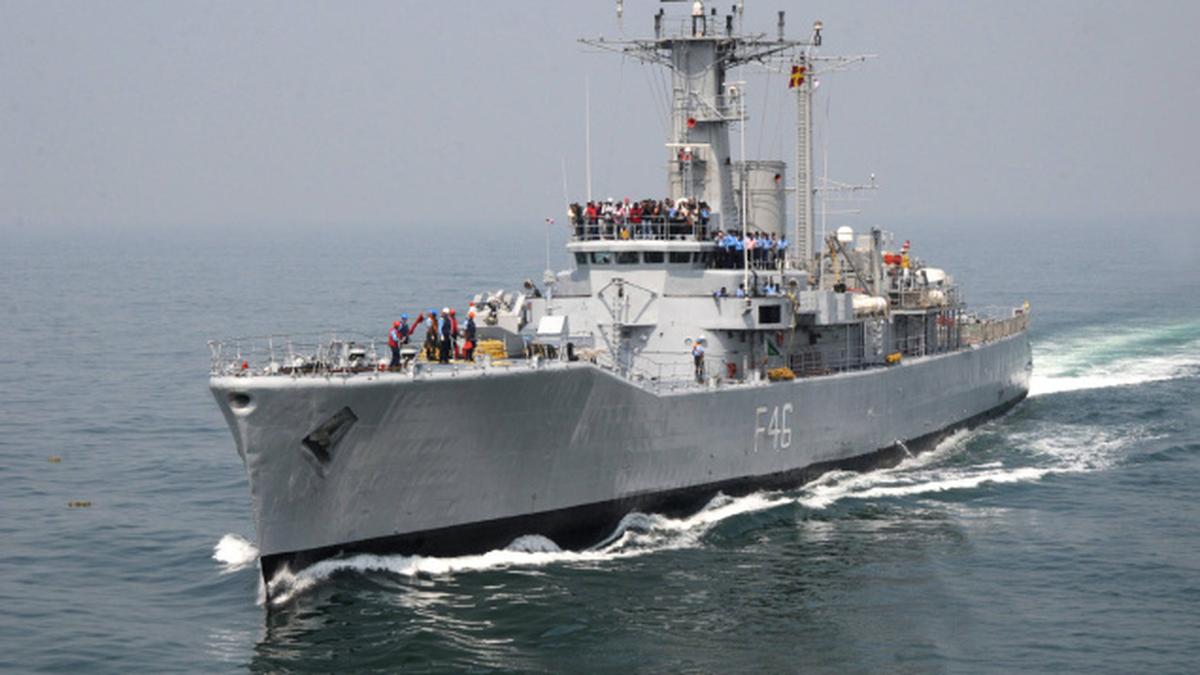

The Indian Navy has officially launched INS Krishna, marking a significant step in its training infrastructure for naval cadets. The vessel was inaugurated by Anupama Chauhan, the spouse of Chief of Defence Staff General Anil Chauhan, during a ceremonial event held in Chennai. The launch was attended by senior armed forces officials and representatives from shipbuilding firm Larsen & Toubro (L&T).
Innovative Floating Classrooms
INS Krishna is the first vessel in a new series of indigenous Cadet Training Ships (CTS) aimed at providing enhanced training opportunities. Unlike previous arrangements where sea training was limited, the newly designed ships will serve as dedicated “floating classrooms” and “living labs.” These platforms will equip cadets with practical experience in navigation, seamanship, and watch-keeping in actual sea environments. The initiative is expected to bolster hands-on training for naval cadets immediately after they complete their basic training on land.
Future Training Capabilities
The introduction of INS Krishna plays a pivotal role in the Navy’s commitment to developing its sea training capabilities. Over the next three decades, the three planned training ships will form the foundation of this infrastructure. In line with traditional naval practices, the official launch underscores a new era of modern naval training aimed at preparing future officers more effectively.
Capacity and Features of INS Krishna
Constructed at the L&T shipyard located in Kattupalli, near Chennai, INS Krishna, designated as ‘Yard 18003’, is scheduled for formal delivery and operational readiness by the end of the year. The ship is designed with the capacity to accommodate 20 officers, 150 sailors, and 200 cadets simultaneously. It includes three classrooms capable of accommodating 70 cadets each, a specialized training bridge, and a chart house to facilitate learning.
Broader Implications for Defense Cooperation
Aside from its primary function as a training vessel, INS Krishna is set to play a crucial role in broader defense cooperation initiatives. The ship will also be utilized for training international cadets from friendly nations, thereby strengthening ties and contributing to regional security efforts. Furthermore, its design allows for a variety of operational uses, including non-combatant evacuation operations, humanitarian aid, disaster relief efforts, and search-and-rescue missions.
Specifications of the Vessel
With an approximate displacement of 4,700 tonnes, INS Krishna is engineered to achieve a maximum speed of 20 knots and can remain operational at sea for up to 60 days. This capability ensures that the vessel can undertake extended training missions and other important maritime operations efficiently. The commissioning of INS Krishna is expected to enhance the Indian Navy’s readiness and operational capabilities in the coming years.
Long or Short, get news the way you like. No ads. No redirections. Download Newspin and Stay Alert, The CSR Journal Mobile app, for fast, crisp, clean updates!
App Store – https://apps.apple.com/in/app/newspin/id6746449540
Google Play Store – https://play.google.com/store/apps/details?id=com.inventifweb.newspin&pcampaignid=web_share