


app-store-logo
play-store-logo
December 7, 2025

IndiGo Flight Crisis Exposes Monopoly Woes in Indian Aviation Amid Political Scrutiny
The CSR Journal Magazine

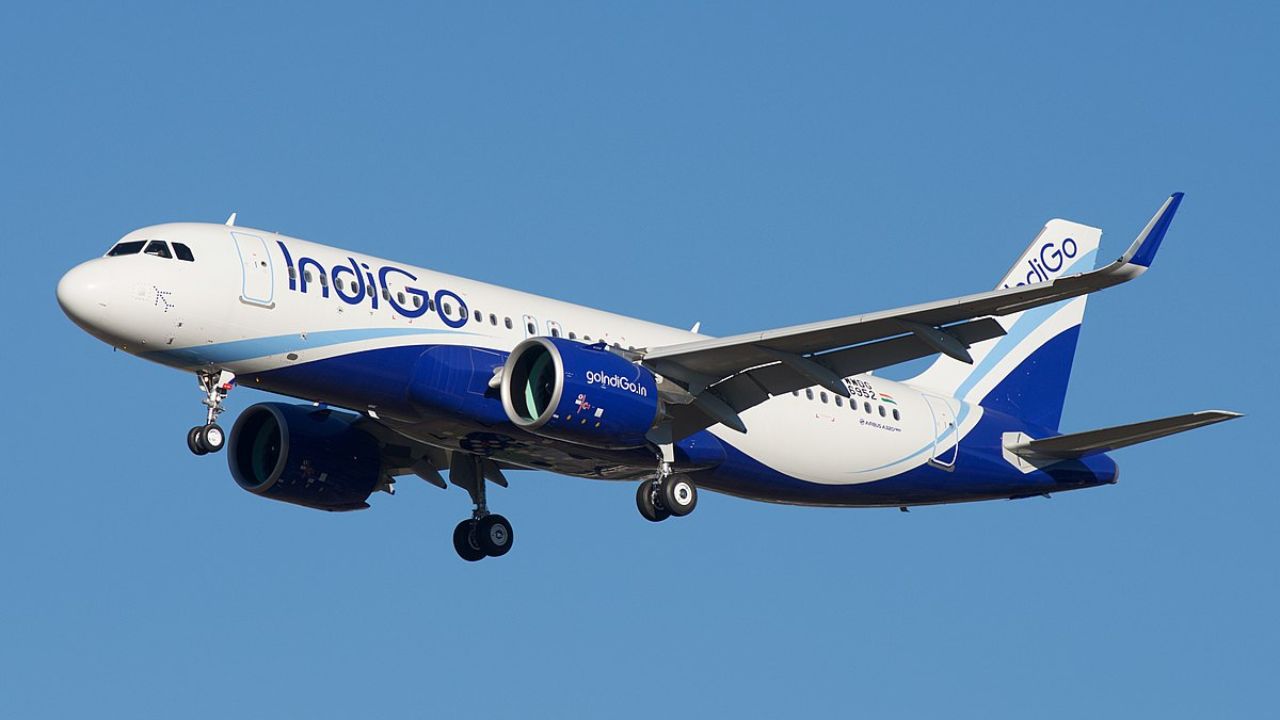
India’s largest private airline, IndiGo, has faced the most severe disruption in its 20-year history. The airlines cancelled over hundreds of flights daily leaving thousands of passengers stranded across the country. The crisis began after the Directorate General of Civil Aviation (DGCA) enforced new Flight Duty Time Limitation (FDTL) rules from November 1. These rules were aimed at reducing pilot fatigue, limiting night flying, and improving aviation safety.

IndiGo failed to manage its pilot rosters in compliance with these norms, particularly during the peak December holiday season. Crew shortages escalated quickly, and passengers at major airports, including Delhi, Mumbai, Bengaluru, and Hyderabad, faced delays, cancellations, and confusion over flight status. Reports indicate that on some domestic routes, IndiGo is the only airline operating, magnifying the impact of the disruption.

Civil Aviation authorities have now temporarily exempted IndiGo from the new rules until February 10, while additional trains and alternative arrangements are being deployed to clear the backlog. Airfare caps have been imposed on major routes, a measure reminiscent of policies introduced during the COVID-19 pandemic in 2020.

Opposition Blames Monopoly, Political Ties

The political fallout has been immediate. Congress leader Rahul Gandhi accused the Narendra Modi government of fostering a monopoly-driven aviation sector, stating that ordinary Indians are paying the price in delays, cancellations, and helplessness. Several opposition MPs, including Shashikant Senthil, Pramod Tiwari, P. Chidambaram, Priyanka Chaturvedi, and Raghav Chadha, have echoed this concern, pointing to IndiGo’s dominant market share of over 60% and its duopoly with Air India.

“IndiGo has captured almost 70% of the domestic market. If such a big airline shuts down, passengers face massive inconvenience,” said Chadha. Priyanka Chaturvedi added, “Neither food nor water was provided to passengers, and staff themselves were struggling to get information from management. This is a lesson for the government to prevent monopolies in the future.”

Opposition leaders also highlighted the broader risks of monopolistic practices in aviation. According to industry data, of the 1,131 domestic sectors in India, 737 are monopoly routes where only one airline operates, and IndiGo alone serves 514 routes with no competition. Such concentration means that operational disruptions by a single airline ripple across the entire country, leaving passengers stranded and causing major economic loss.

Government Response and Defence

Civil Aviation Minister Kinjarapu Ram Mohan Naidu defended the government, asserting that the issue is not political but a matter of public concern. He stressed that efforts have been made to increase competition, reduce leasing costs, and allow new carriers to join the market. “Competition should increase in the aviation sector, and the government welcomes new entrants. Mr. Gandhi’s comments are made without complete information,” Naidu said.

The DGCA has issued a regulatory notice to IndiGo CEO Pieter Elbers, demanding an explanation within 24 hours for failing to ensure reliable operations. The notice warns of possible penalties or suspension of officials. The government has also exempted IndiGo from several pilot duty rules, including night flying and weekly rest limits, drawing criticism from pilot unions who argue that safety should not be compromised.

The Directorate General of Civil Aviation has issued a show-cause notice to the accountable manager of IndiGo. “…You are directed to show cause within 24 hours of receipt of this notice as to why appropriate enforcement action should not be initiated against you under the relevant provisions of the Aircraft Rules and Civil Aviation Requirements for the violations. Failure to submit your reply within the stipulated period shall result in the matter being decided ex parte,” it said in the notice.

Action against Indigo

Union minister of state for civil aviation and cooperation Murlidhar Mohol on Sunday said that they are closely monitoring the situation and have taken immediate action against the airline for not adhering to Flight Duty Time Limitations (FDTL).

“The reason behind the situation that formed 4 days back, the chaos was that IndiGo and its management did not take this seriously. Through DGCA, we took immediate action. We appointed a 4-member investigation committee, a 24/7 control room was set up, and we kept FDTL regulations in abeyance until February 2026. DGCA has issued a show-cause notice to IndiGo CEO, and a response has been sought within 24 hours,” he said.

Over 300 IndiGo flights cancelled today

IndiGo cancelled more than 300 flights at Delhi and Mumbai airports on Sunday, as the disruptions entered the sixth day while efforts are on to normalise operations.

Reports suggest at least 112 flights were cancelled at the Mumbai airport and 109 flights at Delhi airport. Meanwhile, 115 flights are canceleld at the Hyderabad airport, 38 in Chennai and 11 in Amritsar. After cancelling approximately 1,600 of its 2,300 daily flights on Friday, the airline saw a reduction in disruptions on Saturday, with cancellations falling to around 800.

Historical Airline Failures and Political Connections

India’s aviation sector has long been prone to instability. Several airlines, including Kingfisher Airlines, Jet Airways, Air Deccan, and SpiceJet, either shut down or faced severe operational crises due to financial mismanagement, policy neglect, or overexpansion. These failures have left passengers stranded and investors burned.

By contrast, airlines with strong political connections or government backing, such as IndiGo and Air India, have historically received regulatory leniency and state support, raising questions about fairness and competition. Opposition leaders argue that such favoritism allows politically connected airlines to absorb shocks while smaller competitors struggle to survive, creating a duopolistic market that disadvantages passengers.

Economic and Operational Impact

The IndiGo crisis has had far-reaching consequences. Thousands of passengers missed connecting flights, suffered delays in business travel, and faced added expenses due to last-minute cancellations. Airport authorities reported massive queues at check-in counters, with hundreds of travelers waiting hours for rebooking or refunds.

Industry experts say the crisis is a warning for India’s aviation sector. “India’s skies are dominated by two players, IndiGo and Air India. If one major airline fails to plan for operational contingencies, it disrupts the entire system. A competitive market with multiple airlines would absorb shocks better and ensure passenger safety,” said an aviation analyst.

Amid the Indigo fiasco, the Ministry of Civil Aviation (MoCA) has imposed temporary price caps on domestic airfares following widespread disruptions and mass cancellations by IndiGo Airlines. With thousands of flights grounded due to a pilot shortage, ticket prices on alternative carriers had surged to exorbitant levels.

To curb this, the government has mandated that one-way economy fares cannot exceed ₹7,500 for flights under 500 km, ₹12,000 for 500–1,000 km, ₹15,000 for 1,000–1,500 km and ₹18,000 for flights over 1,500 km. These caps are effective immediately and will remain in place until the aviation sector stabilizes, with the Directorate General of Civil Aviation (DGCA) warning of strict action against non-compliance.

Lessons for the Future

The IndiGo debacle underscores the risks of a concentrated airline market in India. While the temporary exemption from FDTL rules will restore operations, it raises long-term concerns about safety, regulation, and accountability. Authorities must enforce compliance uniformly across all carriers, and policies should encourage more entrants to reduce monopoly routes and ensure resilience in the sector.

Meanwhile, the government has promised to monitor airfares closely and maintain contingency measures, but the incident has already sparked national debate over competition, safety, and regulatory oversight.

Long or Short, get news the way you like. No ads. No redirections. Download Newspin and Stay Alert, The CSR Journal Mobile app, for fast, crisp, clean upda

App Store – https://apps.apple.com/in/app/newspin/id6746449540

Google Play Store – https://play.google.com/store/apps/details?id=com.inventifweb.newspin&pcampaignid=web_share

Latest News

Popular Videos
