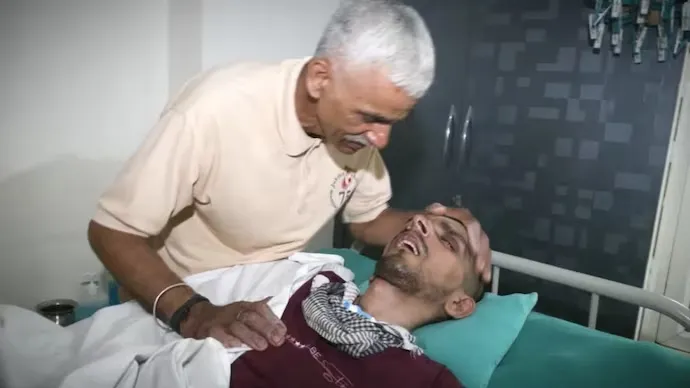
The 32-year-old Harish Rana, who was granted passive euthanasia—a landmark judgment in India’s legal and medical history—passed away on Tuesday at AIIMS-Delhi following the procedure. The procedure was carried out at the palliative care unit of Dr. B.R. Ambedkar Institute Rotary Cancer Hospital. After the Supreme Court upheld his ‘right to die’ in the landmark judgment, Rana was shifted to AIIMS Ghaziabad on March 14. In the order dated March 11, the Supreme Court allowed passive euthanasia for the first time in history, permitting the withdrawal of artificial life support.
Has been in coma since 2013
Rana was in a coma for over 13 years due to a severe head injury sustained in 2013 when he fell from the fourth floor of his rented accommodation in Chandigarh while he was an engineering student. The euthanasia process started last week and was conducted in stages following all medical protocols. In this process, life support, including nutritional support, is withdrawn gradually; however, it is ensured that the patient does not experience pain.
When the CSR Journal team spoke to medical experts, they elaborated that such a procedure falls under palliative care, where the patient’s dignity is prioritized to relieve them from prolonged suffering with bleak chances of recovery. One expert said, “External support that only prolongs suffering in irreversible conditions may be withdrawn after due approvals, allowing nature to take its course.”
Multi-stage approach before euthanasia
The procedure was carried out under medical supervision and overseen by a medical board formed at AIIMS. They first assessed Rana’s condition and then confirmed that the procedure could be performed. A complete, detailed investigation was conducted to determine if the patient met the criteria for passive euthanasia. According to sources, the complete process took about two to three weeks due to the multi-stage approach taken to ensure medical ethics were followed. This case is the first of its kind in India and is seen as a significant development in India’s legal and ethical framework.