


app-store-logo
play-store-logo
March 7, 2026

Indian Rupee Hits Record Low Against US Dollar Amid Geopolitical Tensions
The CSR Journal Magazine

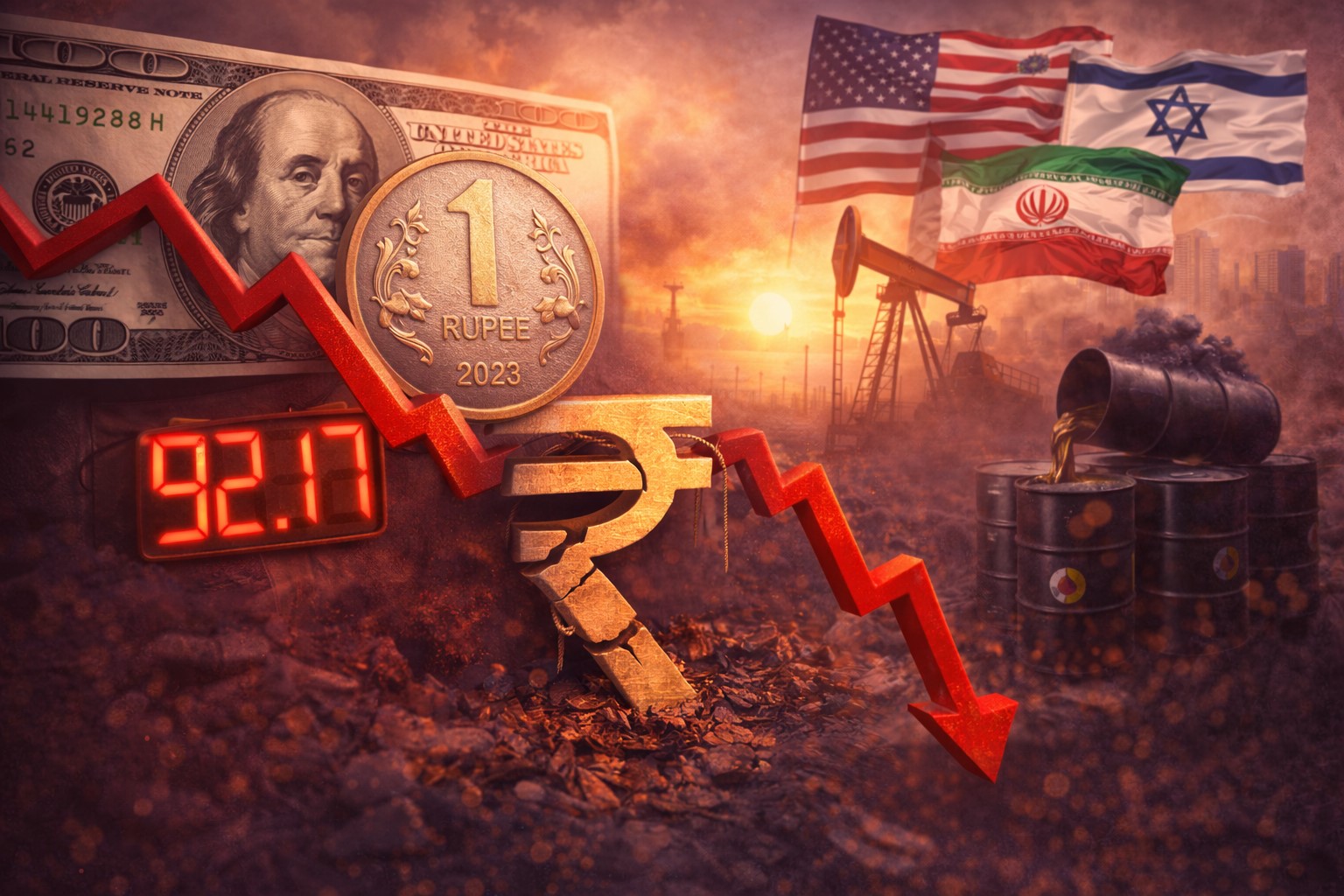
The Indian rupee experienced a significant decline on Wednesday, falling below the Rs 92 mark against the US dollar. By 10:40 am, the currency was trading at Rs 92.17. This depreciation comes in light of increasing geopolitical anxieties and rising crude oil prices, leading to turmoil in global financial markets. The rupee faced mounting pressure as ongoing conflicts involving the United States, Israel, and Iran prompted investors to adopt a risk-averse stance.

Impact of Rising Crude Oil Prices

A significant factor contributing to the rupee’s decline is the sharp increase in crude oil prices, driven by concerns over potential supply disruptions in the Middle East. This region is a crucial supplier of global energy, and the rising tensions have sparked worries about the continuity of oil supplies. India relies on imports for approximately 85% of its crude oil needs, rendering the economy particularly sensitive to prolonged increases in oil prices. Elevated crude costs generally exacerbate the country’s import bill, heighten inflationary pressures, and lead to depreciation of the currency. A sustained rise in oil prices could also widen the current account deficit, further straining economic growth and putting additional pressure on the rupee.

Influence of a Stronger US Dollar

The rupee’s downturn has been compounded by the strengthening of the US dollar against various global currencies. In an environment marked by heightened geopolitical tensions, investors are increasingly seeking refuge in the dollar as a secure asset. During periods of global risk aversion, capital tends to exit emerging markets in favor of safer investments, such as the US dollar and US Treasury bonds. This capital flight further exacerbates downward pressure on emerging market currencies, including the rupee.

Broader Market Volatility Affecting Currencies

The decline of the rupee reflects overarching volatility within financial markets globally. Equity markets in Asia saw significant downturns following a weak performance on Wall Street, as investors opted to minimize exposure to riskier assets. Currency markets typically respond swiftly to geopolitical disruptions, particularly those involving oil-producing nations. With crude prices on the rise and global uncertainty increasing, many emerging market currencies are facing renewed challenges.

Future Outlook for the Rupee

Market observers are now closely monitoring developments in the Middle East as well as fluctuations in crude oil prices, both of which are anticipated to play a crucial role in shaping the rupee’s trajectory in the forthcoming days. The ongoing geopolitical crisis and associated economic ramifications are likely to continue influencing investor sentiment and currency valuations in the near term.

Long or Short, get news the way you like. No ads. No redirections. Download Newspin and Stay Alert, The CSR Journal Mobile app, for fast, crisp, clean updates!

App Store –  https://apps.apple.com/in/app/newspin/id6746449540 

Google Play Store – https://play.google.com/store/apps/details?id=com.inventifweb.newspin&pcampaignid=web_share

Latest News

Popular Videos
