


app-store-logo
play-store-logo
March 16, 2026

Indian Markets Lose $240 Billion in a Week Amid Rising Middle East Tensions
The CSR Journal Magazine

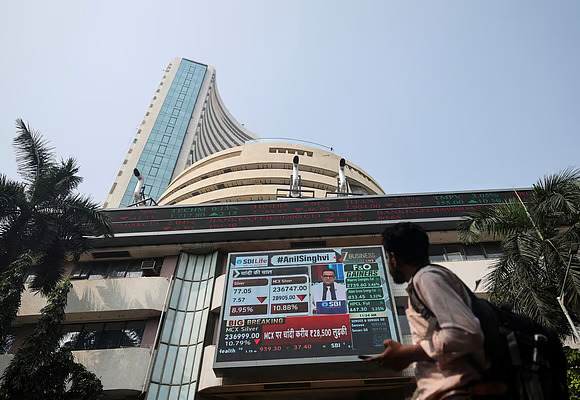
Iran Israel War Big Update: Indian stock markets have faced a considerable downturn as geopolitical unrest in the Middle East has triggered waves of uncertainty in global financial markets. Data from the Bombay Stock Exchange and the National Stock Exchange of India indicates that this recent turmoil has resulted in a loss of nearly $240 billion in investor wealth within a week.

Such rapid declines underscore how international conflicts, specifically the war between Iran and the United States-Israel, can have immediate repercussions on financial stability in emerging economies like India, which are heavily intertwined with global trade and energy supply chains.

Warnings from Financial Leaders

Shaktikanta Das, Governor of the Reserve Bank of India, has previously pointed out the risks that arise from ongoing global geopolitical tensions, noting their potential impact on financial stability during a Monetary Policy Committee press conference in Mumbai.

The striking decline in wealth has sent shockwaves throughout Dalal Street, prompting investors to reassess their strategies amid heightened uncertainties. Analysts have indicated that even conflicts occurring far from Indian borders can trigger significant market volatility, highlighting the delicate balance between geopolitical developments and financial markets.

Consequences of the Market Sell-Off

The recent market decline has resulted in substantial losses for companies on Indian exchanges, with the overall market capitalization witnessing a sharp decrease. Investors have been actively divesting from riskier assets amid escalating global tensions. As a result, investor wealth has diminished significantly since the inception of the conflict. Nilesh Shah, Managing Director of Kotak Mahindra Asset Management Company, warned that geopolitical instability tends to compel investors to lower their exposure to more precarious markets, cautioning that uncertainty in the markets can lead to significant shifts in capital flows.

Regional and Global Trends Impacting Indian Markets

Oil prices have surged as a direct consequence of the conflict, reaching levels above $100 per barrel, raising fears concerning inflation and economic stability in oil-importing nations such as India. Dr. Indranil Pan, Chief Economist at Yes Bank, remarked that persistent increases in crude oil prices could worsen India’s current account deficit while heightening inflationary pressures.

With India being one of the largest importers of crude oil globally, any rise in energy prices bears direct consequences for the economy through increased costs in transportation and manufacturing sectors.

Panic Selling Hits Major Stock Indices

The ramifications of this geopolitical unrest have become evident on India’s prominent stock indices. Both the BSE Sensex and Nifty 50 have seen marked declines, with investors seeking to minimize their exposure to risk amid these developments. In certain instances, the Sensex experienced a drop of over 1,300 points in a single trading session. Analysts highlight that the interplay of rising oil costs and geopolitical tensions considerably diminishes investor sentiment, contributing to increased volatility in equity markets.

Foreign Investment Withdrawals Amid Uncertainty

Another key factor driving the recent market downturn is the retreat of foreign portfolio investors from Indian equities. Recent estimates suggest that foreign investors withdrew approximately ₹52,704 crore (around $5.7 billion) from Indian stocks in just the first half of March.

Andrew Holland, CEO of Avendus Capital, noted that geopolitical crises typically result in investors shifting capital away from emerging markets toward more stable assets. This pattern of capital flight can create further instability in the Indian markets, particularly as foreign institutional investors hold substantial positions in Indian equities.

Extensive Sectoral Losses Across the Economy

The market downturn has affected a broad range of sectors, with notable declines in the financial industry, which is typically a mainstay in Indian indices. Banking stocks endured significant losses due to concerns regarding slower economic growth. The automobile sector also faced considerable challenges as rising fuel prices may negatively affect consumer spending. Aviation and infrastructure stocks have similarly come under pressure as expectations of increasing operational costs become more pronounced.

Shifts in Investor Behaviors Amidst Market Instability

While foreign investors have largely been selling off equities, domestic institutional investors such as mutual funds continue to make purchases to mitigate the market’s volatility. However, industry analysts caution that local buying alone may not suffice to counteract the substantial foreign capital withdrawals if the geopolitical situation does not stabilize. Retail investors, who played a pivotal role in prior market gains, are currently adopting a more cautious wait-and-see approach.

Long or Short, get news the way you like. No ads. No redirections. Download Newspin and Stay Alert, The CSR Journal Mobile app, for fast, crisp, clean updates!

App Store –  https://apps.apple.com/in/app/newspin/id6746449540 

Google Play Store – https://play.google.com/store/apps/details?id=com.inventifweb.newspin&pcampaignid=web_share

Latest News

Popular Videos
