


app-store-logo
play-store-logo
January 8, 2026

India Speeds Up Chenab Dams With 2026 Deadline, Spotlight on Pakistan Water Flow
The CSR Journal Magazine

India has issued firm construction deadlines for four major hydropower projects on the Chenab River in Jammu and Kashmir, marking a decisive shift in its water and energy strategy in the Indus basin. The directive, delivered during a high-level inspection tour, signals New Delhi’s intent to move rapidly on projects that have long faced diplomatic, procedural and political hurdles.

The move comes eight months after India placed the 1960 Indus Waters Treaty in abeyance following a terror attack in Pahalgam that killed 26 people. By setting clear timelines for the Pakal Dul, Kiru, Kwar and Ratle projects, the Centre has underlined its position that it will fully utilise its river waters for domestic development, energy security and strategic leverage.

During the visit, Union Power Minister Manohar Lal Khattar ordered officials to commission the Pakal Dul and Kiru projects by December 2026, complete the Kwar project by March 2028, and accelerate construction work on the long-delayed Ratle dam. Speaking at the Pakal Dul site, Khattar asserted that India is free to use its rivers for the benefit of its people and that Pakistan has no locus standi to object.

Indus Waters Treaty pause

For decades, the Indus Waters Treaty governed how India and Pakistan shared the waters of the Indus basin, allocating the eastern rivers to India and restricting storage and design features on the western rivers, including the Chenab. While India retained the right to build run-of-the-river hydropower projects, each major plan often triggered objections, technical disputes and international arbitration.

That dynamic changed in April 2025 when India suspended the treaty in response to the Pahalgam attack. The decision created both diplomatic fallout and a new policy space, allowing New Delhi to fast-track projects that had been slowed by procedural constraints. The Chenab, one of the most strategically significant western rivers, has since emerged as a focal point of this recalibrated approach.

Officials now describe the fast-tracking of Chenab projects as a matter of national interest. Beyond electricity generation, the dams provide India with operational flexibility over water flows, seasonal storage and grid stability in the northern region. The fixed deadlines are intended to cut through delays, enforce accountability and ensure that stalled timelines do not stretch further.

Pakal Dul as the Centrepiece Project

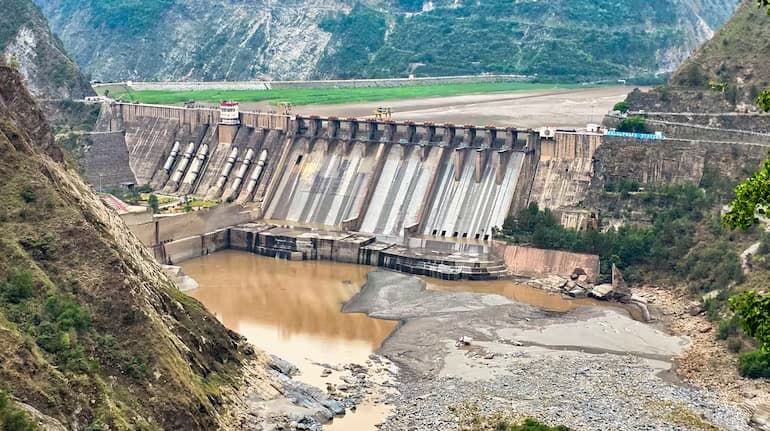
The most prominent of the four projects is the Pakal Dul hydropower plant in Kishtwar district. With an installed capacity of 1,000 megawatts and a dam height of 167 metres, it is set to become India’s tallest dam and the first major storage project on a western river that flows into Pakistan. The project was inaugurated by Narendra Modi in 2018, but progress remained uneven until the treaty suspension injected fresh urgency.

Pakal Dul’s storage capacity allows India to regulate water flows more effectively, particularly during lean seasons. This capability has both developmental and strategic implications, strengthening grid reliability in Jammu and Kashmir while altering downstream flow dynamics in a way that Pakistan has long viewed with concern.

The Kiru project, also located in Kishtwar, is designed to generate 624 megawatts from a 135-metre-high dam. Together, Pakal Dul and Kiru form the backbone of the Chenab hydropower push, with December 2026 now set as the non-negotiable commissioning deadline for both.

Kwar and Ratle

The Kwar project, with a planned capacity of 540 megawatts and a dam height of 109 metres, is scheduled for completion by March 2028. While less controversial than Pakal Dul, it has faced logistical and terrain-related challenges typical of large Himalayan infrastructure projects. The new timeline aims to ensure synchronised development across the Chenab cascade.

Ratle, however, remains the most contentious. The 850-megawatt project has been a persistent source of dispute, with Pakistan objecting to its spillway design and alleging that it violates treaty provisions. Arbitration proceedings and technical disagreements slowed progress for years, making Ratle emblematic of how water infrastructure became entangled in geopolitics.

With the treaty in abeyance, India has moved to accelerate Ratle’s construction, treating it as a sovereign infrastructure decision rather than a bilateral negotiation issue. Officials insist the design meets safety and engineering requirements, and that delays are no longer acceptable given the country’s energy and security priorities.

Regional Energy Security and Climate Commitments

Beyond geopolitics, the Chenab projects play a critical role in India’s renewable energy strategy. Hydropower offers flexible, low-carbon electricity that complements solar and wind generation, particularly during peak demand and grid fluctuations. In a region prone to harsh winters and difficult terrain, local generation also reduces dependence on long transmission lines.

The combined capacity of the four projects runs into several thousand megawatts, enough to significantly bolster northern India’s power availability. The government views this expansion as essential to meeting climate commitments while ensuring energy security in border states.

At the same time, the construction push is expected to generate employment, improve infrastructure and stimulate economic activity in Jammu and Kashmir. Roads, tunnels and transmission networks associated with the dams often bring secondary development to remote districts like Kishtwar.

Mounting Pressure on Pakistan’s Water System

Across the border, developments on the Chenab are being watched closely. The river is a lifeline for Pakistan’s agriculture, with more than 90 per cent of its farming dependent on the wider Indus basin system. Pakistan’s Indus River System Authority reported a 21 per cent decline in Chenab inflows in early 2025, warning of potential risks to Kharif crops such as rice, cotton and sugarcane.

Islamabad has already objected to India’s clearance of the Dulhasti Stage-II project and the revival of the long-pending Sawalkote hydropower scheme. India has rejected these objections, maintaining that with the treaty suspended, advance notices and consultations are no longer binding.

While Indian officials emphasise that the projects are not designed to cut off water flows, they acknowledge that enhanced storage and regulation inevitably alter downstream patterns. This reality adds a new layer of strategic complexity to India-Pakistan relations, where water security increasingly intersects with national security.

Assertion of Sovereign Control

The December 2026 deadlines are more than administrative milestones. They represent a broader assertion of India’s sovereign control over its rivers and a willingness to absorb diplomatic costs in pursuit of long-term national interests. By locking in timelines and mobilising agencies accordingly, the Centre is signalling that reversals or slowdowns are unlikely.

As construction gathers pace across the Chenab basin, the projects are set to reshape not only India’s hydropower landscape but also the regional balance of water politics. For New Delhi, the message is clear: the era of hesitation on the Chenab is over, replaced by firm deadlines, accelerated execution and a recalibrated approach to shared rivers.

Long or Short, get news the way you like. No ads. No redirections. Download Newspin and Stay Alert, The CSR Journal Mobile app, for fast, crisp, clean updates!

App Store –  https://apps.apple.com/in/app/newspin/id6746449540 

Google Play Store – https://play.google.com/store/apps/details?id=com.inventifweb.newspin&pcampaignid=web_share

Latest News

Popular Videos
