


India has 129 Pieces of Space Debris, Including 49 Defunct Satellites: ISRO
The CSR Journal Magazine

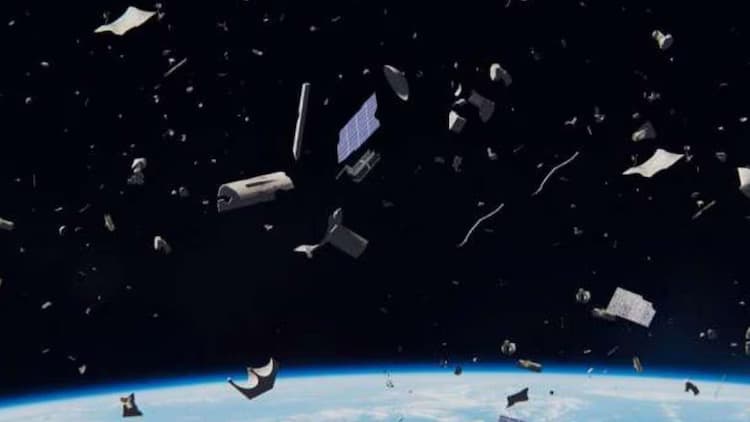
India has emerged as a significant player in space exploration over the years. Recent disclosures, however, indicate a concerning accumulation of space debris resulting from Indian missions. In a written response to a question raised in the Lok Sabha, Union Minister Jitendra Singh revealed that there are currently 129 trackable pieces of debris in orbit that have originated from Indian initiatives. This category encompasses defunct satellites, used rocket bodies, and other fragments that remain in space.

Total Number of Defunct Satellites

Among the total of 129 pieces of detected debris, 49 are classified as non-operational satellites. These defunct satellites are divided between two main categories: 23 are situated in low Earth orbit (LEO) while 26 are in geostationary Earth orbit (GEO). The remaining space debris includes 40 rocket bodies from the Polar Satellite Launch Vehicle (PSLV), 4 from the Geosynchronous Satellite Launch Vehicle (GSLV), and 3 from the Launch Vehicle Mark-3 (LVM3). Additionally, there are 33 fragments resulting from the breakup of a PSLV-C3 rocket stage.

Understanding Space Debris

Space debris refers to any human-made object currently in orbit that no longer serves its intended function. The definition includes inactive satellites, discarded rocket stages, and even small pieces like paint chips. Traveling at speeds close to 10 kilometers per second, even minor debris can cause catastrophic damage to functional satellites upon impact. Such collisions can result in the creation of new fragments, which further complicates the operating environment for future missions.

ISRO’s Initiatives to Combat Space Junk

In recognition of the escalating issue of space debris, the Indian government has initiated the Debris Free Space Mission (DFSM), which was announced in 2024. This initiative aims for zero debris generation by all stakeholders in the Indian space sector, including both government and private entities, by the year 2030. To achieve this goal, the Indian Space Research Organisation (ISRO) has incorporated protocols that ensure excess fuel reserves are included in spacecraft and launch vehicle designs. This strategy will enable satellites to be safely directed out of orbit once their operational life concludes.

One of the exciting prospects in this context is the SpaDeX mission, which was conducted by India in 2025. This mission showcased the ability to perform autonomous docking and undocking operations in space, a significant advancement for potential future debris removal activities. Research is also ongoing into the development of robotic arms and rendezvous technologies that could assist in debris mitigation. Simultaneously, Project Netra, India’s space situational awareness initiative, operates a control center that monitors space debris and provides collision avoidance alerts, thereby safeguarding active satellites from potential impacts.

The Future of India’s Space Environment

As the orbit grows increasingly congested, India’s ambitious target of achieving zero debris by 2030 is a pivotal challenge. With time running out, the implementation of these strategies will be essential to maintain a sustainable environment for future space missions.

Long or Short, get news the way you like. No ads. No redirections. Download Newspin and Stay Alert, The CSR Journal Mobile app, for fast, crisp, clean updates!

App Store –  https://apps.apple.com/in/app/newspin/id6746449540 

Google Play Store – https://play.google.com/store/apps/details?id=com.inventifweb.newspin&pcampaignid=web_share

Latest News

Popular Videos
