


app-store-logo
play-store-logo
January 8, 2026

India Builds Joint Counter-Drone Grid to Deter Pakistan Threats
The CSR Journal Magazine

India is moving swiftly to reshape its air defence architecture as drone warfare becomes a defining feature of modern conflict. The armed forces are building a unified Counter Unmanned Aerial Systems grid to detect, track and neutralise hostile drones across the country, defence officials confirmed this week. The initiative brings together the Indian Army, Navy and Air Force under a single operational framework, signalling a decisive shift towards permanent, technology-driven counter-drone preparedness.

The new grid is being developed as part of Mission Sudarshan Chakra, India’s long-term national air defence mission announced last year. Unlike existing air defence networks that focus on aircraft and missiles, this system is designed exclusively to deal with small, low-flying unmanned aerial threats that can evade conventional radars and overwhelm legacy command structures.

Why India Needs a Dedicated Counter-Drone Grid

Indian defence planners have grown increasingly concerned about the rapid proliferation of drones in the region, particularly their use by hostile state and non-state actors. Small unmanned systems are inexpensive, difficult to detect and capable of targeting both military installations and civilian infrastructure. Officials say that routing such threats through traditional air defence networks would place an unsustainable burden on existing systems.

The new counter-drone grid will therefore operate separately from the Integrated Air Command and Control System, which is already tasked with managing high-speed aircraft, missiles and other conventional aerial threats. By creating a standalone network, India aims to ensure faster response times, clearer decision-making and uninterrupted coverage against low-altitude intrusions.

Crucially, the grid will be connected to the Joint Air Defence Centres of all three services. This linkage is expected to eliminate service-specific silos and allow seamless information sharing, real-time monitoring and coordinated engagement of hostile drones, regardless of whether they approach from land, sea or airspace near critical assets.

Lessons from Operation Sindoor

The urgency behind the project is rooted in operational experience. During Operation Sindoor in May 2025, Pakistan attempted to strike Indian civilian and military targets using a large number of drones sourced from Turkey and China. Over four days, Indian air defence units neutralised more than 600 drones, demonstrating both the scale of the threat and the effectiveness of layered responses when systems are properly deployed.

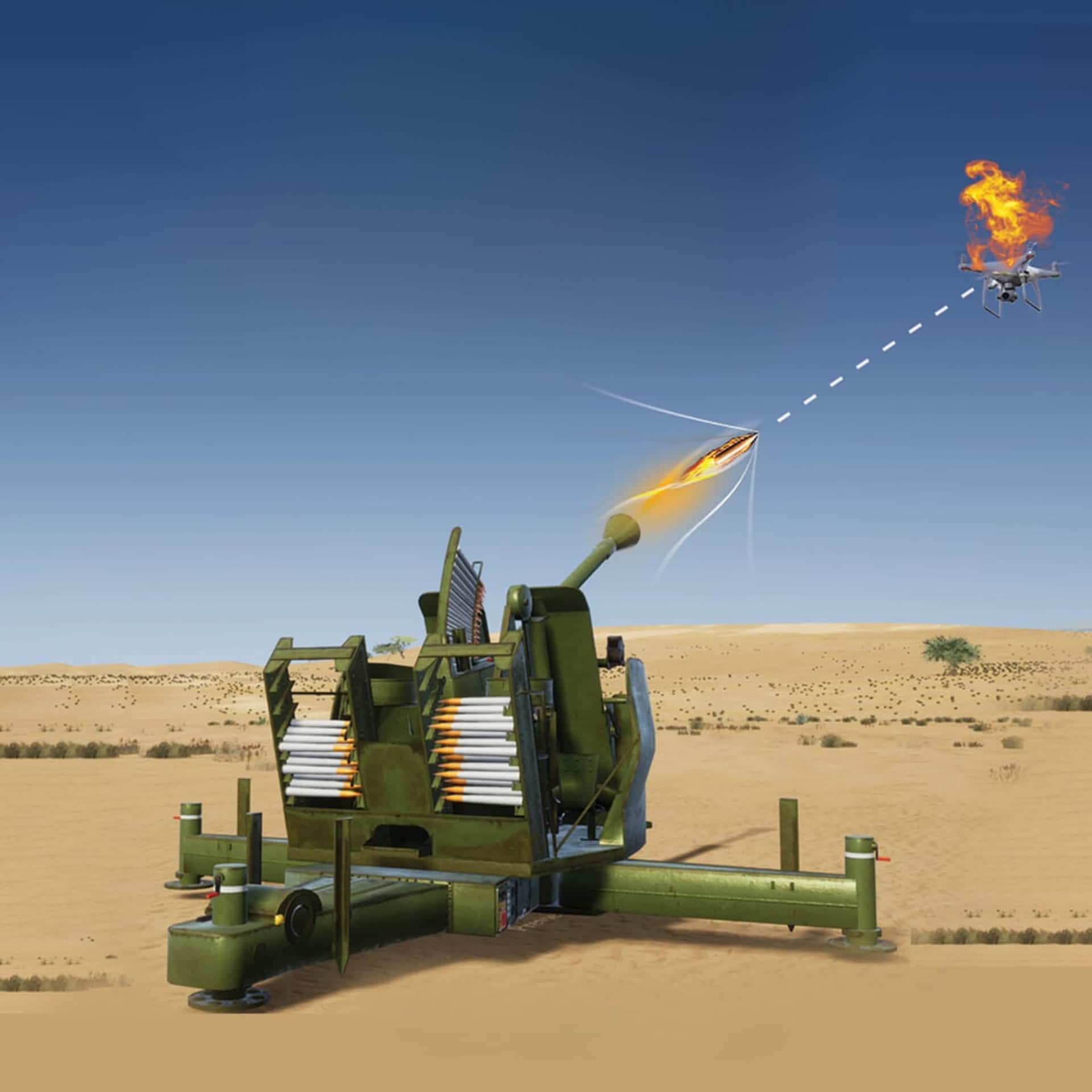
Legacy air defence guns such as the L-70 and ZU-23 proved particularly effective against small drones during the conflict. However, officials acknowledge that these successes were achieved through intense coordination and ad hoc measures that cannot be sustained indefinitely. The new grid is designed to institutionalise those wartime lessons into a permanent national capability.

In parallel, the Indian Army has begun planning the deployment of air defence guns in and around populated areas to protect civilian centres from future drone and aerial attacks. This marks a significant shift in doctrine, reflecting the reality that modern conflicts increasingly blur the line between frontlines and hinterlands.

Mission Sudarshan Chakra

The counter-drone grid forms a core pillar of Mission Sudarshan Chakra, which aims to build a comprehensive national air defence shield by 2035. Prime Minister Narendra Modi unveiled the mission during his Independence Day address in August 2025, stressing the need to safeguard critical infrastructure, population centres and strategic assets with indigenous, cutting-edge technology.

Defence Minister Rajnath Singh, speaking at the 68th Foundation Day of the Defence Research and Development Organisation earlier this month, said the organisation would play a decisive role in implementing the nationwide shield. He pointed out that DRDO-developed systems had already proven their worth during Operation Sindoor and expressed confidence in India’s ability to build an integrated, future-ready air defence ecosystem.

The responsibility for knitting together the Army, Navy and Air Force under this vision has been entrusted to the Chief of Defence Staff, reinforcing the government’s push for greater jointness among the services. Defence officials say the counter-drone grid is not a one-off project but an evolving architecture that will continuously absorb new sensors, weapons and artificial intelligence-based decision tools as threats change.

As drones become cheaper, smarter and more lethal, India’s move to establish a permanent, joint counter-drone network reflects a broader recognition that air defence can no longer focus solely on traditional platforms. By separating drone threats from conventional air defence and treating them as a distinct domain, New Delhi is betting on speed, integration and foresight to stay ahead in an increasingly crowded and contested sky.

Long or Short, get news the way you like. No ads. No redirections. Download Newspin and Stay Alert, The CSR Journal Mobile app, for fast, crisp, clean updates!

App Store –  https://apps.apple.com/in/app/newspin/id6746449540 

Google Play Store – https://play.google.com/store/apps/details?id=com.inventifweb.newspin&pcampaignid=web_share

Latest News

Popular Videos
