


India Approaches Naxal-Free Milestone as March 31 Deadline Concludes
The CSR Journal Magazine

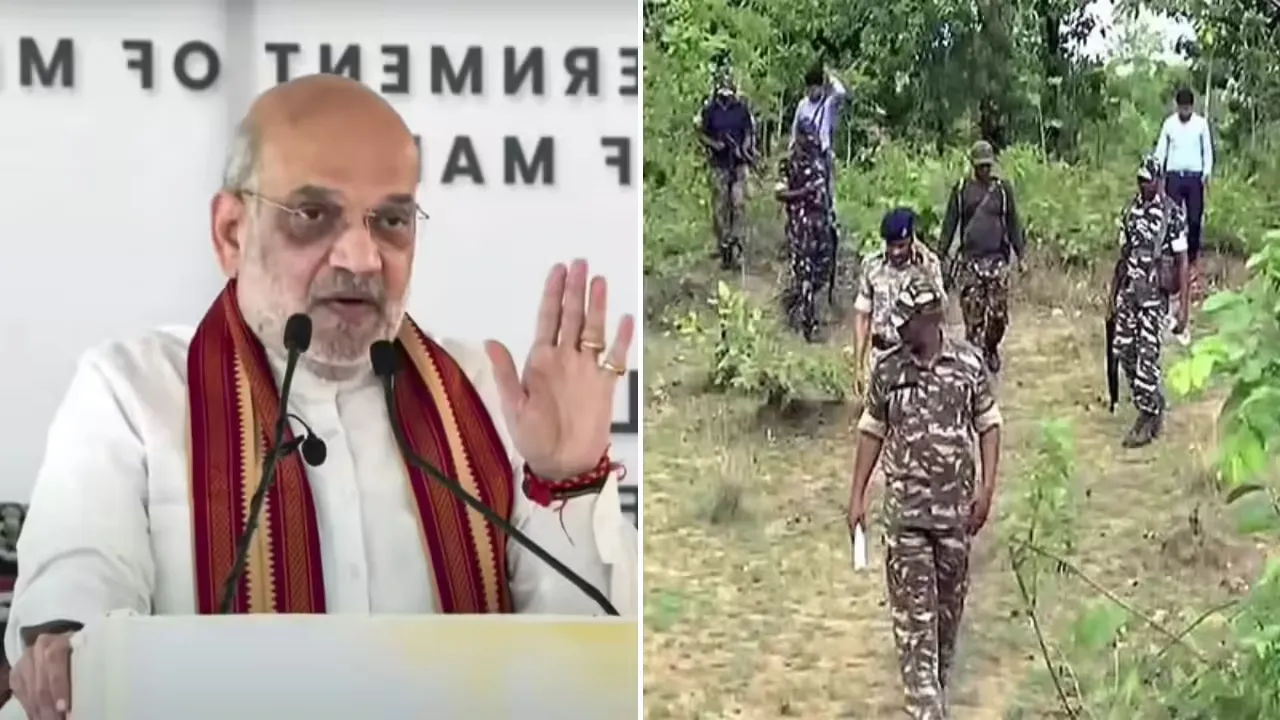
As the day draws to a close across the dense forests of Chhattisgarh, India stands at a pivotal juncture. The March 31, 2026 target set by Union Home Minister Amit Shah represented more than just a timeline; it served as a pivotal security benchmark and a stern notice to both Naxalites and the Indian populace. With this deadline now reached, questions abound regarding the nation’s proximity to eradicating Naxalism effectively. Shah emphasized in his recent address to the Lok Sabha that the anti-Naxal campaign has transitioned into its concluding phase, asserting that Naxalism has been nearly eradicated in Bastar, an area historically known as a stronghold for Naxalite influence. He noted the burgeoning infrastructure in the region, including roads, educational institutions, health centers, and welfare services, marking a significant turnaround for an area once devastated by extremist rule.

Origins of the Red Corridor

The emergence of the Red Corridor did not occur spontaneously; its inception can be traced back to 1967 in Naxalbari, West Bengal, where a peasant revolt sparked what would be recognized as Naxalism. Initially localized, this movement soon proliferated into some of India’s most marginalized and tribal-dominated regions, gradually extending into areas of Chhattisgarh, Jharkhand, Odisha, Maharashtra, Madhya Pradesh, Andhra Pradesh, Telangana, and small segments of Kerala and Karnataka. Over time, this string of unrest became known as the Red Corridor. The movement evolved from a mere protest into a violent armed resistance against the Indian state, as Naxalist factions established control over remote locales, targeting security forces, disrupting infrastructure, and resorting to extortion, while often compelling local populations, including minors, into their fold.

Reduction of Affected Districts

The scope of the Naxalist movement has considerably diminished in recent years. Data indicates that the number of districts affected by Left-Wing Extremism (LWE) has seen a decline, dropping from 126 to 90 in April 2018, then to 70 by July 2021, and further diminishing to 38 by April 2024. Among these, the number of districts experiencing severe impact has fallen from 12 to merely 6, confined to areas such as Bijapur, Kanker, Narayanpur, and Sukma in Chhattisgarh, West Singhbhum in Jharkhand, and Gadchiroli in Maharashtra. The once expansive Red Corridor is now significantly restricted. Within the remaining 38 affected districts, “districts of concern” have reduced from 9 to 6, which include Alluri Sitarama Raju and Balaghat, among others. Moreover, regions categorized as other LWE-affected districts have also decreased, illustrating a notable contraction of Naxalist influence.

Declining Violent Incidents and Casualties

Recent figures reflect a sharp decline in violent incidents linked to the Naxalist movement. Between 2004 and 2014, violent occurrences totaled 16,463, while from 2014 to 2024, this figure halved to 7,744. Furthermore, fatalities among security personnel plummeted from 1,851 to 509 during the same period, coinciding with a drop in civilian deaths from 4,766 to 1,495. In 2025 alone, security forces neutralized 270 Naxalites and apprehended 680, demonstrating a continued trend of disengagement from violence. Over the past decade, more than 8,000 Naxalites have renounced their insurgent paths, corroborating the assertion that it remains confined to increasingly fragmented pockets.

Significance of the March 31 Deadline

The March 31 deadline symbolizes a decisive attempt by the government to conclude one of India’s most enduring internal security challenges. The insurgency has severely strained state functionality in many regions, impacting infrastructure and services for decades. Shah underscored that the crux of the issue extends beyond warfare; it is intricately linked to developmental progress in areas such as Bastar. While discussing various regions, he emphasized that certain areas that experienced stagnation in development were also the strongholds of Naxalism. This deadline represents more than mere security; it signifies an opportunity to reclaim governance in regions long overshadowed by violence.

Government’s Strategy for Development and Security

The Indian government’s strategy against Left-Wing Extremism

Long or Short, get news the way you like. No ads. No redirections. Download Newspin and Stay Alert, The CSR Journal Mobile app, for fast, crisp, clean updates!

App Store –  https://apps.apple.com/in/app/newspin/id6746449540 

Google Play Store – https://play.google.com/store/apps/details?id=com.inventifweb.newspin&pcampaignid=web_share

Latest News

Popular Videos
