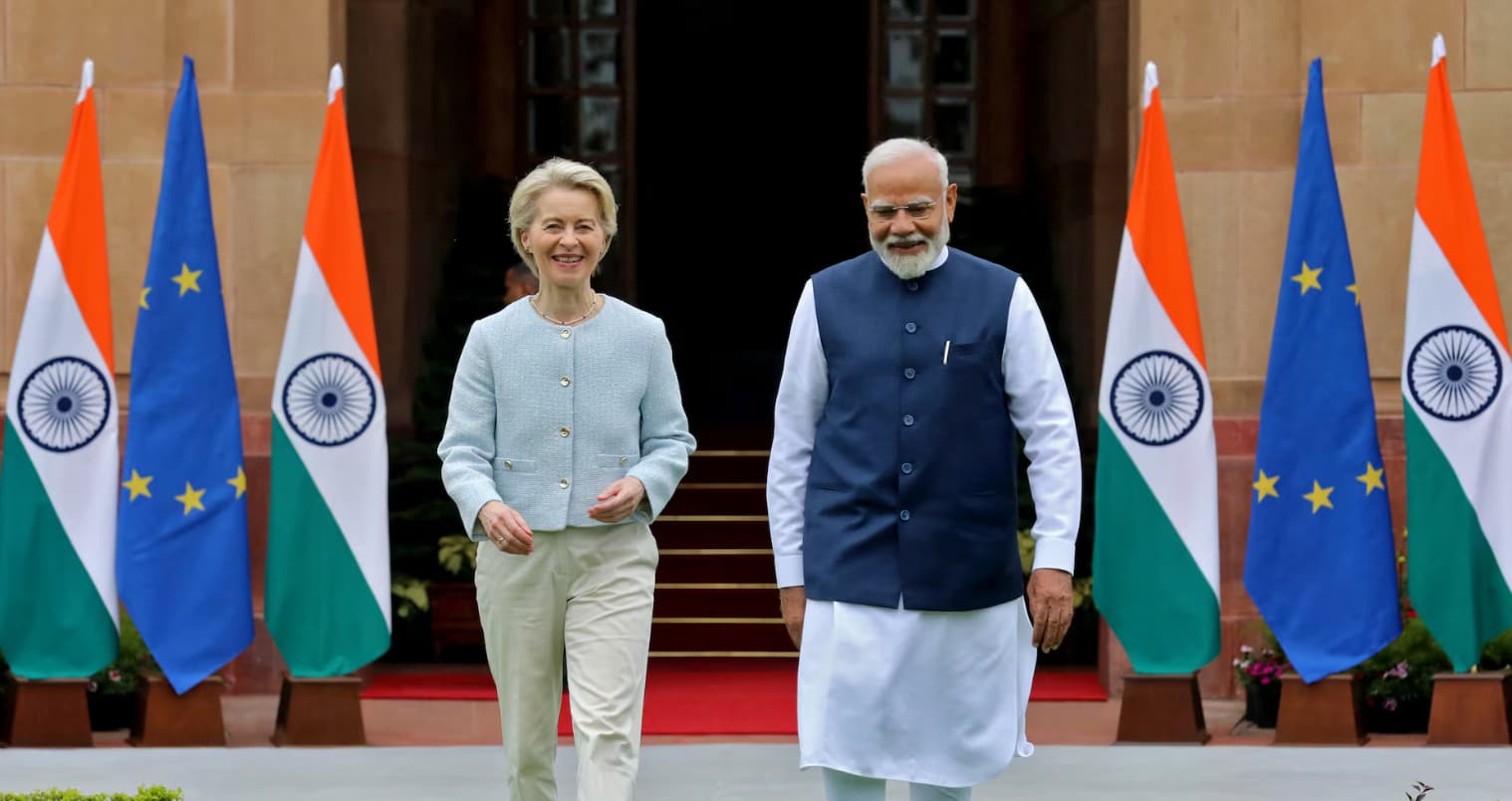
Prime Minister Narendra Modi on Tuesday announced the conclusion of the long-awaited India–European Union Free Trade Agreement, describing it as a historic milestone that would open new pathways for growth, investment and strategic cooperation between the two sides.
In a post on X, the Prime Minister said the agreement would be remembered as a defining moment in India-EU relations. “Today is a day that will be remembered forever, marked indelibly in our shared history. European Council President António Costa, European Commission President Ursula von der Leyen and I are delighted to announce the conclusion of the historic India-EU Free Trade Agreement,” he said.
The agreement is expected to come into force next year and is being positioned as one of the most ambitious trade deals signed by India in recent years, particularly at a time of heightened global trade tensions and supply chain realignments.
Trade, Investment And Strategic Cooperation At The Core
PM Modi said the free trade agreement would strengthen economic ties, create jobs and provide new opportunities for businesses across both regions. He added that it would also help build stronger and more resilient global supply chains.
“This agreement will drive trade, investment and innovation while strengthening our strategic relationship. It reflects our shared resolve to shape a stable, prosperous and future-ready economic relationship,” the Prime Minister said.
The announcement comes amid a challenging global trade environment, with India currently facing steep tariffs from the United States, including a 50 per cent duty linked to its continued purchase of Russian oil. Against this backdrop, the India–EU deal is being seen as a significant strategic counterbalance, offering Indian exporters access to one of the world’s largest and most affluent markets.
European Commission President Ursula von der Leyen echoed the significance of the agreement, calling it the “mother of all deals”. She said the pact had effectively created a free trade zone of nearly two billion people, underlining its scale and global importance.
“Europe and India are making history today. We have created a free trade zone of two billion people, with both sides set to benefit. This is only the beginning. We will grow our strategic relationship to be even stronger,” she said.
What The India-EU FTA Means For The Economy
The proposed India-EU Free Trade Agreement brings together two major economic powers. India is the world’s fourth-largest economy, while the European Union is the second-largest. Together, they account for nearly 25 per cent of global GDP and around one-third of global trade.
A central feature of the deal is preferential market access. More than 99 per cent of Indian exports are expected to enter the EU on favourable terms, a move that could significantly improve India’s export competitiveness in the European market. This is likely to benefit a wide range of sectors, from manufacturing and agriculture to services and technology.
The agreement is also expected to give a major push to India’s micro, small and medium enterprises, which often struggle with tariffs and regulatory barriers in overseas markets. Easier access to the EU could help these businesses scale up, attract investment and integrate more deeply into global value chains.
Jobs, MSMEs And Labour-Intensive Sectors To Gain
Labour-intensive industries are among the biggest expected beneficiaries of the India–EU trade deal. Exports worth an estimated $33 billion in sectors such as textiles, leather, marine products, and gems and jewellery are projected to receive a significant boost once the agreement is implemented.
Government sources have indicated that the FTA could generate substantial employment opportunities, particularly for women, artisans, youth and skilled professionals. By improving market access and reducing trade barriers, the deal is expected to encourage fresh investment in export-oriented industries and manufacturing hubs across India.
Beyond trade and jobs, the agreement is also seen as a strategic signal of closer alignment between India and the EU on economic stability, innovation and long-term growth. As global trade patterns continue to shift, the India–EU Free Trade Agreement positions both sides to play a stronger and more coordinated role in the global economy.