


app-store-logo
play-store-logo
February 21, 2026

India and Brazil Sign Agreement on Critical Minerals to Reduce Reliance on China
The CSR Journal Magazine

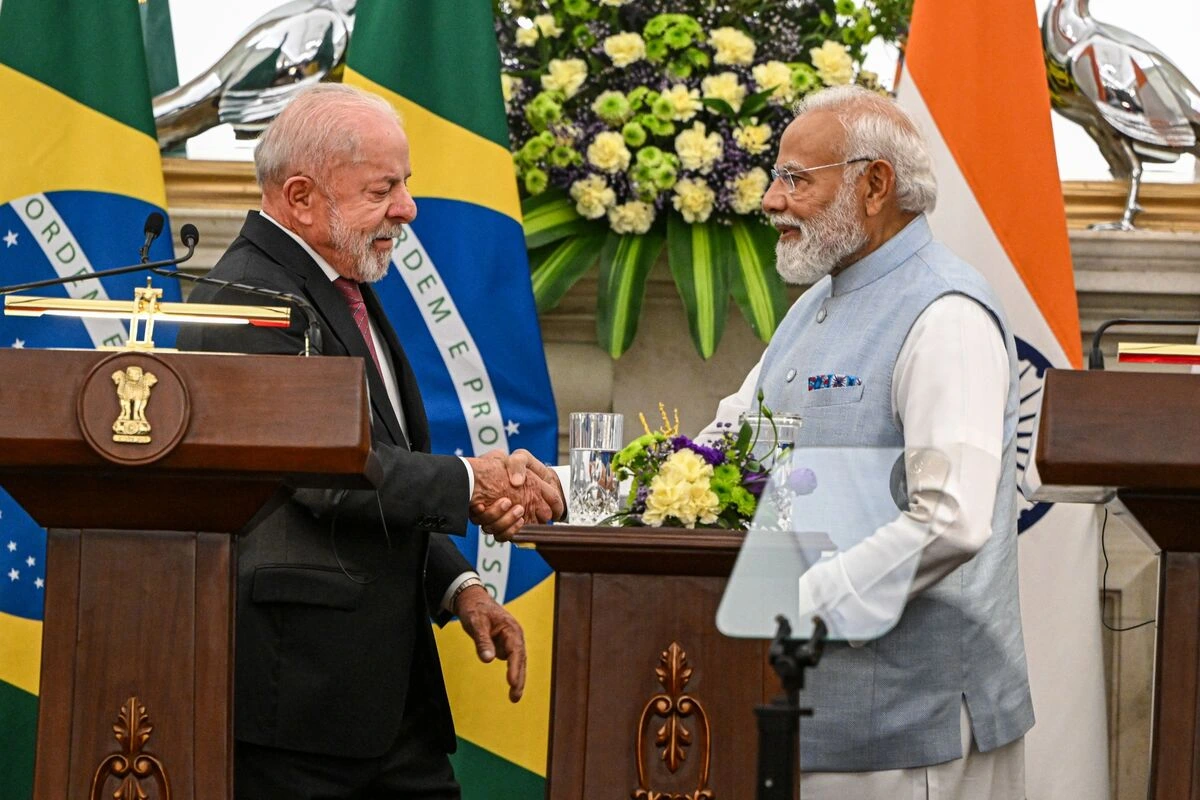
In a notable development aimed at enhancing economic collaboration, Indian Prime Minister Narendra Modi and Brazilian President Luiz Inacio Lula da Silva convened in New Delhi to formalize an agreement focused on critical minerals and rare earth elements. This agreement comes at a time when India is actively seeking to diversify its supply sources to lessen its dependence on China, which has dominated the global market for these essential materials.

Strengthening Resilient Supply Chains

Prime Minister Modi referred to the newly established accord as a crucial advancement towards building resilient supply chains. During the meeting held at Hyderabad House, both leaders discussed various opportunities to bolster trade and investment between their nations.

Brazil’s Key Role in Global Mineral Supply

Brazil holds the title of the second-largest reservoir of critical minerals globally, following China. These resources play a vital role in diverse applications such as electric vehicles, solar technology, smartphones, aviation, and defense systems. President Lula emphasized that expanding investments and collaboration in renewable energy and critical minerals forms the basis of the landmark agreement they have signed.

Growing Demand for Iron Ore

Though specifics regarding the mineral agreement remain limited at this stage, there is increasing demand for iron ore from Brazil, which stands as the second-largest producer and exporter of the commodity, trailing only Australia. This heightened demand aligns with India’s ongoing infrastructure projects and rapid industrial growth.

Expanding Global Partnerships

Rishabh Jain, an analyst associated with the Council on Energy, Environment and Water in New Delhi, remarked that India’s enhanced partnership with Brazil reflects a strategic move to engage in more extensive supply chain collaborations with various global partners, including the United States, France, and the European Union. Jain noted that strengthening alliances among nations in the Global South is essential for secure resource access and shaping international trade norms.

Broader Bilateral Agreements Signed

In addition to the critical minerals and rare earths agreement, India’s Foreign Ministry spokesperson revealed that nine other agreements were established during the meeting. These included memoranda focusing on various areas such as digital cooperation and health. Prime Minister Modi highlighted Brazil’s importance as India’s largest trading partner in Latin America.

Aiming for Significant Trade Growth

Modi expressed an ambitious commitment to elevate bilateral trade between the two nations beyond $20 billion within the next five years. He underscored that this trade dynamic is not just a numerical figure but a testament to the trust being built between the two countries. He added that collaboration between India and Brazil amplifies the voice of the Global South on the international stage.

Current Trade Figures

According to data from the Observatory of Economic Complexity (OEC), India’s exports to Brazil reached approximately $7.23 billion in 2024, with refined petroleum as the primary commodity. Conversely, Brazilian exports to India stood at about $5.38 billion, predominantly consisting of raw sugar. This exchange reflects the growing economic interdependence between the two nations.

Long or Short, get news the way you like. No ads. No redirections. Download Newspin and Stay Alert, The CSR Journal Mobile app, for fast, crisp, clean updates!

App Store –  https://apps.apple.com/in/app/newspin/id6746449540 

Google Play Store – https://play.google.com/store/apps/details?id=com.inventifweb.newspin&pcampaignid=web_share

Latest News

Popular Videos
