


app-store-logo
play-store-logo
March 15, 2026

Impact of Global Conflicts on Culinary Traditions
The CSR Journal Magazine

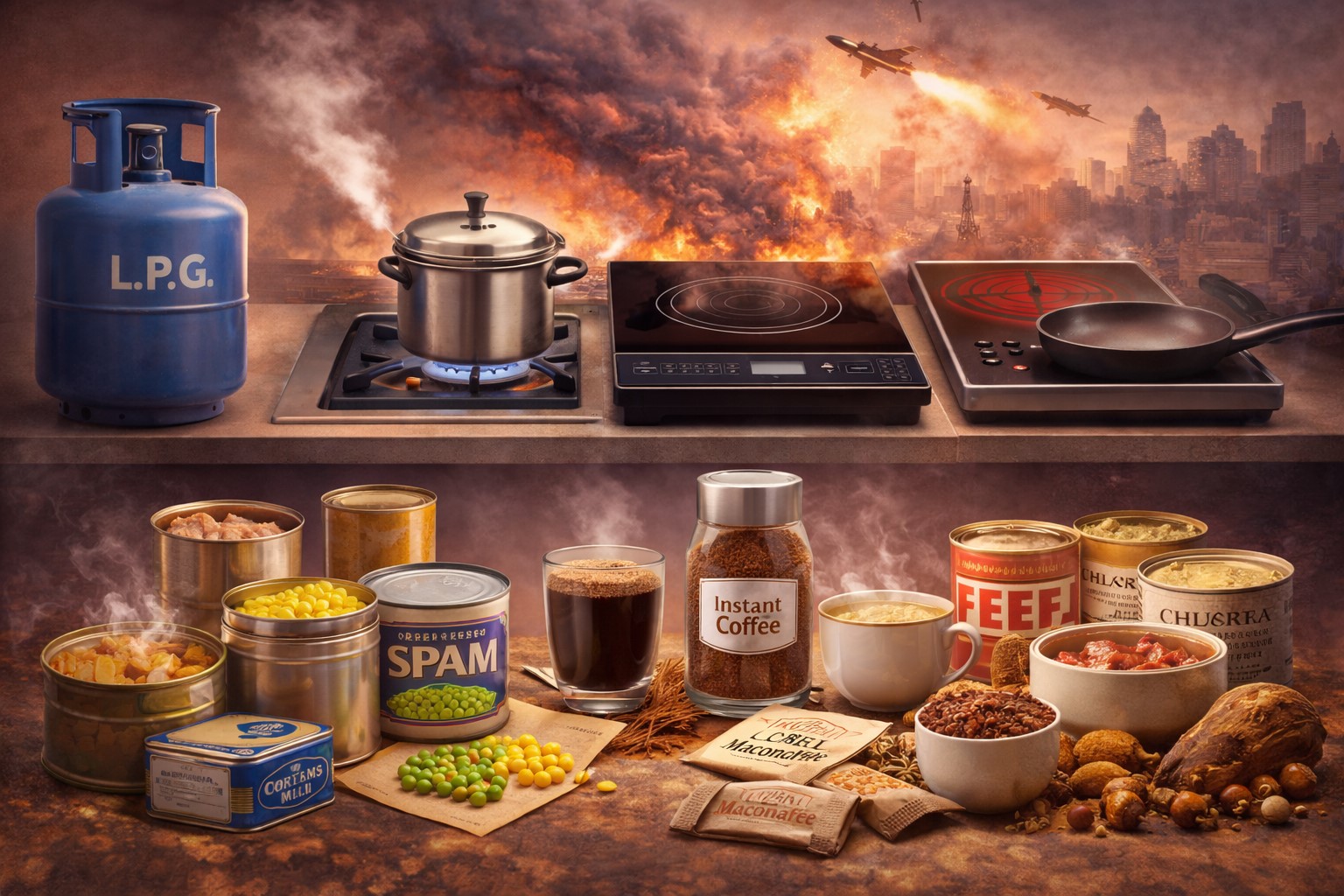
Recent geopolitical tensions have reignited discussions about cooking fuel in households across India, highlighting how external events can significantly disrupt domestic life. As concerns about LPG prices and potential shortages rise, families are revisiting alternative cooking methods, such as induction cooktops and electric stoves. This situation underscores a historical reality: wars not only provide temporary disruptions to food preparation but can also lead to lasting changes in what and how we eat.

Many commonplace items found in modern grocery stores owe their existence to wartime innovations born out of necessity. Foods like canned meals and instant coffee were developed to meet the needs of soldiers during prolonged campaigns, requiring nourishment that was both durable and easy to prepare under harsh conditions.

A Revolutionary Introduction

The narrative of wartime culinary innovation dates back to the early 19th century when militaries faced the challenge of sustaining troops over long durations. In 1795, the French government incentivized the creation of preservation methods to feed Napoleon’s forces. Nicolas Appert, a Parisian confectioner, addressed this challenge by inventing a process of sealing food in airtight containers and applying heat to postpone spoilage. This method laid the groundwork for modern canning.

Food historian Rachel Laudan noted that the advent of canning altered not only military logistics but also everyday culinary practices. By the mid-19th century, items like canned meats and vegetables became standard rations in military provisions. For instance, British soldiers during the Boer War and World War I received a mix of beef and vegetables in cans known as Maconochie, which has become synonymous with soldier sustenance. This military innovation eventually permeated into civilian life, leading to the availability of various canned goods in supermarkets today.

Resourceful Culinary Innovations

Conflicts also necessitate replacements for familiar ingredients that become scarce. The two World Wars disrupted supply chains, particularly for coffee. To adapt, Europeans resorted to brewing substitutes from roasted chicory, barley, acorns, and beetroot, collectively termed ersatz coffee. Food historian Lizzie Collingham points out that World War II’s shortages led civilians to create complex replacement systems similar to the flavors of unavailable products. Although many of these substitutes faded after the wars, some, like chicory coffee, have maintained cultural significance to this day.

Additionally, instant coffee became a staple during World War I as soldiers required a quick source of caffeine. The U.S. military purchased large quantities to send abroad, cementing its status as a mass-produced item. By World War II, instant coffee was a regular part of soldiers’ rations. After the war, the technology behind its production became integral to civilian daily routines, reflecting how military needs have influenced contemporary consumption habits.

A Culinary Symbol of War

The introduction of Spam in 1937 by Hormel Foods epitomizes the connection between military service and food innovation. During World War II, fresh meat proved difficult to transport, making Spam an essential ration, with over 150 million pounds distributed to Allied forces. Many soldiers formed a complicated relationship with Spam, feeling it was repetitively served. However, after the war, Spam found its way into the cuisines of various cultures, including Hawaii and South Korea, reflecting its global journey beyond the battlefield.

Condensed milk is another food item that traces its roots back to wartime need. Invented by Gail Borden in the mid-19th century, it gained popularity during the American Civil War, as it supplied soldiers with a stable milk alternative. Post-war, condensed milk transitioned into everyday cooking and remains a popular ingredient in desserts across cultures.

Culinary Evolution Through Conflict

Wars have not only shaped food preservation methods but have also driven the industrial processing of food. Innovations in dehydration and packaging developed for military purposes have redefined civilian eating habits, giving rise to a culture centered on convenience. The effects of conflict are often more subtle, extending beyond traditional views of battlefields and maps to influence what people consume in their kitchens today.

Long or Short, get news the way you like. No ads. No redirections. Download Newspin and Stay Alert, The CSR Journal Mobile app, for fast, crisp, clean updates!

App Store –  https://apps.apple.com/in/app/newspin/id6746449540 

Google Play Store – https://play.google.com/store/apps/details?id=com.inventifweb.newspin&pcampaignid=web_share

Latest News

Popular Videos
