


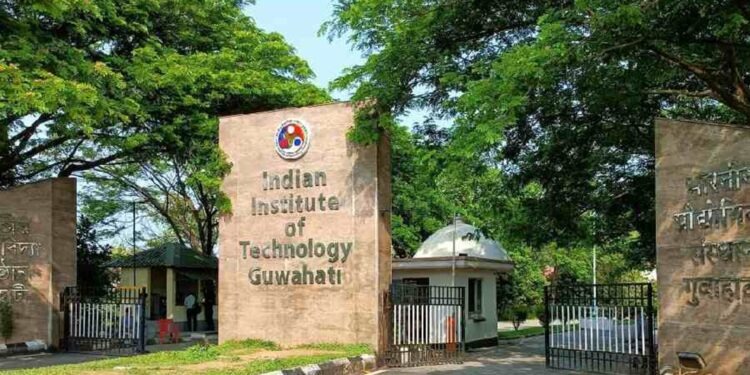

Researchers at the Indian Institute of Technology (IIT) Guwahati have developed an advanced predictive framework to assess glacial hazards in the Eastern Himalayas. The study has identified 492 potential locations where new glacial lakes are likely to form in the coming years as glaciers continue to retreat due to climate change.
Using high-resolution Google Earth imagery along with digital elevation models, the research team mapped these vulnerable sites, offering vital inputs for disaster-risk reduction, infrastructure planning and long-term water-resource management in ecologically fragile, high-altitude regions.
Supporting disaster risk reduction and planning
The newly developed framework is designed to capture complex terrain characteristics while also accounting for uncertainty in predictions. This makes its forecasts more realistic and operationally useful for policymakers and disaster-management agencies.
By identifying high-risk zones in advance, the model can support early-warning systems for Glacial Lake Outburst Floods (GLOFs). It can also guide safer decision-making regarding the location of roads, hydropower projects and human settlements in mountainous areas.
Professor Ajay Dashora from the Department of Civil Engineering at IIT Guwahati said the framework provides a practical tool to reduce risks faced by Himalayan communities and critical infrastructure. He added that the approach also helps researchers understand how mountain water systems may evolve as climate change accelerates glacier retreat.
Key role of terrain features
The findings, published in the journal Scientific Reports, highlight the critical influence of landform characteristics on glacial lake development. The study confirms that features such as nearby existing lakes, cirques, gentle slopes and retreating glaciers play a major role in determining where new lakes are likely to form—factors that earlier studies often underestimated.
During the research, the team evaluated three predictive approaches: Logistic Regression, Artificial Neural Networks and Bayesian Neural Networks. Among these, the Bayesian Neural Network emerged as the most accurate method for forecasting potential glacial lake formation.
Global relevance beyond the Himalayas
Beyond the Eastern Himalayas, the researchers noted that the framework has wider global relevance. It can be adapted for use in other glaciated mountain regions around the world, contributing to climate-resilient planning and global disaster-risk reduction efforts.
The team plans to further strengthen the framework by incorporating moraine development histories, automating data preparation processes and adding field-based validation. These improvements are expected to enhance predictive accuracy and expand the model’s applicability for large-scale monitoring of glacial hazards in high-altitude regions.
Long or Short, get news the way you like. No ads. No redirections. Download Newspin and Stay Alert, The CSR Journal Mobile app, for fast, crisp, clean updates!
App Store – https://apps.apple.com/in/app/newspin/id6746449540
Google Play Store – https://play.google.com/store/apps/details?id=com.inventifweb.newspin&pcampaignid=web_share