


app-store-logo
play-store-logo
February 26, 2026

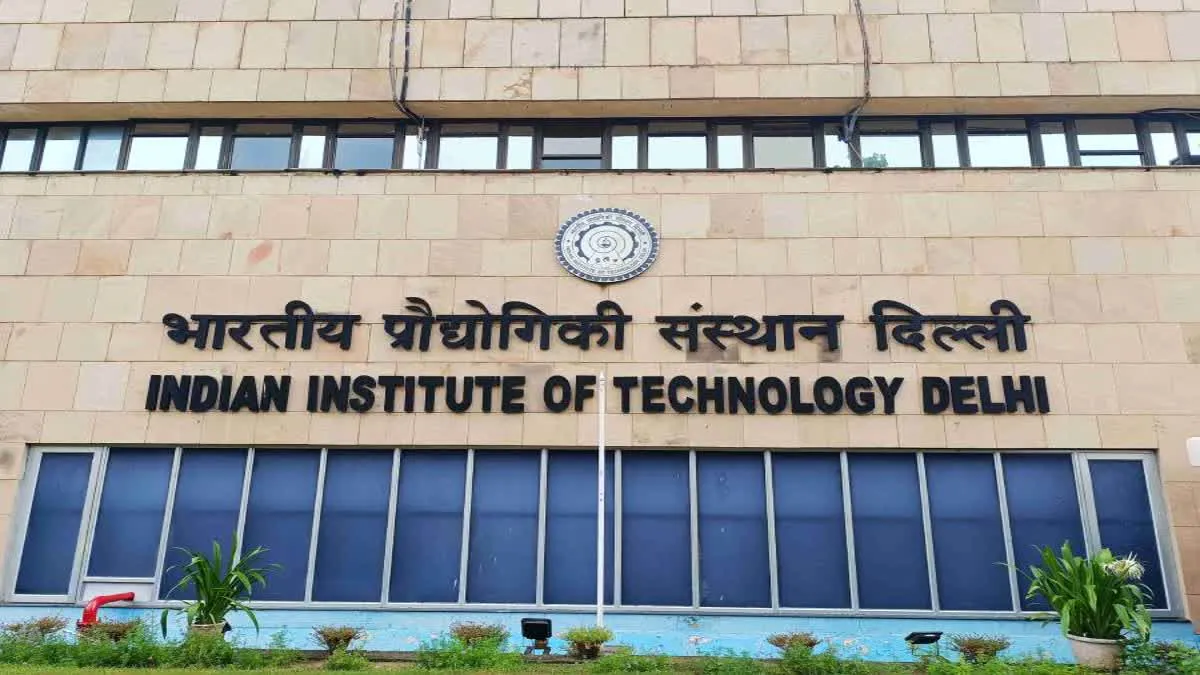
IIT Delhi Innovates High-Efficiency Air Conditioner to Cut Electricity Usage
The CSR Journal Magazine

Researchers from the Department of Mechanical Engineering at IIT Delhi have embarked on developing a high-efficiency air conditioner that could potentially reduce electricity consumption by approximately one-third. This initiative arises in response to escalating concerns regarding energy use related to cooling as temperatures rise. According to projections from the India Cooling Action Plan by the Ministry of Environment, Forest and Climate Change, the electricity demand for cooling is anticipated to triple by the year 2037-38. This projected increase raises issues over sustainability and economic implications for consumers, stressing natural resources and contributing to higher utility bills.

Innovative Approach to Cooling

The research initiative is led by Professor Anurag Goyal, alongside PhD scholar Ananthakrishnan K. Currently, the team is testing a laboratory-scale prototype that demonstrates the capability of significant energy savings. Traditional vapor-compression air conditioners achieve humidity removal through overcooling the air, a process that is notably energy-intensive. However, the research team has developed an innovative concept that incorporates a compact add-on module designed specifically to tackle moisture efficiently.

Efficient Moisture Management System

This add-on utilizes a liquid desiccant made from a salt solution to absorb water vapor from incoming outdoor air. A thin, selective polymer membrane serves as a barrier between the air and the desiccant solution, eliminating the risk of salt contamination in the building’s air—a common issue in existing liquid-desiccant systems. After moisture absorption, the solution needs to be dried to ensure its continuous reuse. The research team has devised a novel integration system that allows for this drying process without the need for a separate burner or electric heater. Instead, it repurposes heat released by the air conditioner’s condenser, redirecting it to a regenerator module to efficiently dry the salt solution.

Promising Energy Savings and Applications

The system is engineered to optimally synchronize the energy transfer between the vapor compression and desiccant modules across varying outdoor conditions. This hybrid design is expected to achieve energy savings ranging from 28 percent in highly humid regions to 41.5 percent in dry and arid areas, while maintaining equivalent indoor comfort levels. Professor Goyal expressed optimism regarding the potential for this sustainable cooling technology to be widely adopted in Indian structures, acknowledging its suitability for various climates within the country.

Publication of Research Findings

The research team’s findings have been documented in a study titled “Model-based analysis of a novel hybrid membrane-liquid desiccant air conditioner for high-efficiency space cooling,” which has been published in the Journal of Building Engineering. This publication outlines the methodologies and anticipated impact of their hybrid air conditioning system, reinforcing their innovative approach to addressing the looming challenges regarding cooling-related energy consumption in India.

Long or Short, get news the way you like. No ads. No redirections. Download Newspin and Stay Alert, The CSR Journal Mobile app, for fast, crisp, clean updates!

App Store –  https://apps.apple.com/in/app/newspin/id6746449540 

Google Play Store – https://play.google.com/store/apps/details?id=com.inventifweb.newspin&pcampaignid=web_share

Latest News

Popular Videos
