


app-store-logo
play-store-logo
December 25, 2025

Govt of India hails 2025 crackdown on CPI (Maoist), says March 31 deadline now within reach
The CSR Journal Magazine

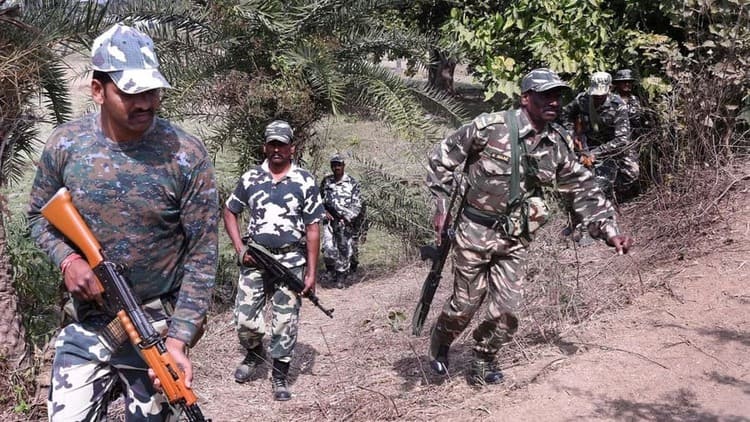
The Union government has projected 2025 as a decisive year in India’s long fight against Left Wing Extremism, asserting that sustained security operations have pushed the CPI (Maoist) to the brink of collapse. With Union Home Minister Amit Shah repeatedly setting March 31, 2026, as the deadline to eliminate Maoist violence from the country, official data from 2025 is being cited by the Centre as clear evidence that the target is now achievable.

According to figures compiled by the Ministry of Home Affairs (MHA), Maoist-linked violent incidents declined by nearly 70 per cent in 2025 compared to a decade ago, while deaths of civilians and security personnel dropped by over 80 per cent from their peak years. Officials say the CPI (Maoist) today remains confined to a handful of districts, a sharp contrast to its earlier influence across more than 120 districts at the height of the insurgency.

Sharp decline in violence

Government data shows that Maoist-related incidents fell to under 400 in 2025, down from more than 1,900 incidents reported in 2010. Civilian deaths dropped to double digits this year, compared to over 700 fatalities recorded at the peak of violence. Security force casualties, once a major concern, have also declined significantly, with officials attributing the drop to better training, equipment and intelligence-led operations.

“The Maoists’ capacity to carry out large-scale attacks has been broken,” a senior MHA official said. “What we are seeing now are isolated, low-intensity incidents rather than coordinated assaults.”

The Centre has highlighted the shrinking geographical footprint of CPI (Maoist) as one of its major achievements in 2025. As per official records, the number of “most affected” LWE districts has come down to fewer than 20, largely concentrated in parts of Chhattisgarh, Jharkhand and Odisha. This marks a dramatic reduction from over 90 such districts identified in 2010.

In core areas like Bastar in Chhattisgarh, security forces have established dozens of new forward operating bases, enabling continuous area domination. Improved road connectivity and telecom infrastructure have further restricted Maoist movement, cutting off traditional escape routes and supply lines.

Major blow to Maoist leadership

One of the Centre’s strongest claims for 2025 is the decimation of Maoist leadership. More than 250 hardcore Maoist cadres were neutralised or arrested this year, including several top commanders carrying rewards of Rs 1 crore or more. Security agencies say the loss of experienced leaders has severely weakened the organisation’s command-and-control structure.

In addition, over 1,200 Maoists surrendered across various states in 2025, encouraged by revised surrender and rehabilitation policies. These include financial assistance, housing, skill training and legal support. Officials say a growing number of cadres are opting out due to ideological disillusionment, internal distrust and sustained pressure from security forces.

The Centre credits the success of 2025 operations to a shift from conventional combing operations to precise, intelligence-driven strikes. Real-time intelligence sharing between central forces and state police, combined with the use of drones, satellite imagery and advanced surveillance equipment, has enabled forces to pre-empt attacks and target Maoist hideouts with greater accuracy.

Inter-state coordination has also improved, closing gaps that Maoists earlier exploited to move across borders between Chhattisgarh, Odisha, Telangana and Maharashtra.

Development undercuts Maoist support base

Alongside security operations, the government has pushed development as a key counter-insurgency tool. In 2025, more than 4,000 km of roads were constructed in LWE-affected areas, while mobile connectivity expanded to hundreds of remote villages. Schools, health centres and banking facilities were also strengthened under central schemes.

Officials argue that better access to welfare benefits through direct benefit transfers has reduced Maoists’ ability to exploit grievances related to poverty, isolation and lack of governance.

“Development has emerged as the strongest antidote to extremism,” an official said, adding that youth aspirations in tribal areas are increasingly incompatible with the Maoist ideology of armed struggle.

Union Home Minister Amit Shah has repeatedly stated that the Centre aims to end Maoist violence by March 31, 2026. The performance indicators of 2025 are now being presented as proof that the deadline is realistic.

The government believes that with Maoists operating in a defensive mode, the next three months will focus on flushing out remaining pockets, preventing regrouping and ensuring irreversible peace. Special emphasis is being placed on Bastar and adjoining forest regions, where the last remnants of armed cadres are believed to be hiding.

Caution against complacency

Despite the upbeat assessment, the Centre has cautioned that the threat has not been fully eliminated. Difficult terrain, forest cover and the possibility of Maoists shifting to urban networks remain challenges. However, officials insist that the organisation no longer poses a strategic threat to internal security.

As 2025 draws to a close, the Centre is positioning its crackdown on CPI (Maoist) as one of its most significant internal security achievements. If current trends continue, officials say India could witness the end of one of its longest-running insurgencies well before Amit Shah’s March 31 deadline—marking a historic shift in the country’s security landscape.

Long or Short, get news the way you like. No ads. No redirections. Download Newspin and Stay Alert, The CSR Journal Mobile app, for fast, crisp, clean updates!

App Store – https://apps.apple.com/in/app/newspin/id6746449540

Google Play Store – https://play.google.com/store/apps/details?id=com.inventifweb.newspin&pcampaignid=web_share

Latest News

Popular Videos
