


app-store-logo
play-store-logo
March 6, 2026

Generation Z Employees: Redefining Workplace Dynamics
The CSR Journal Magazine

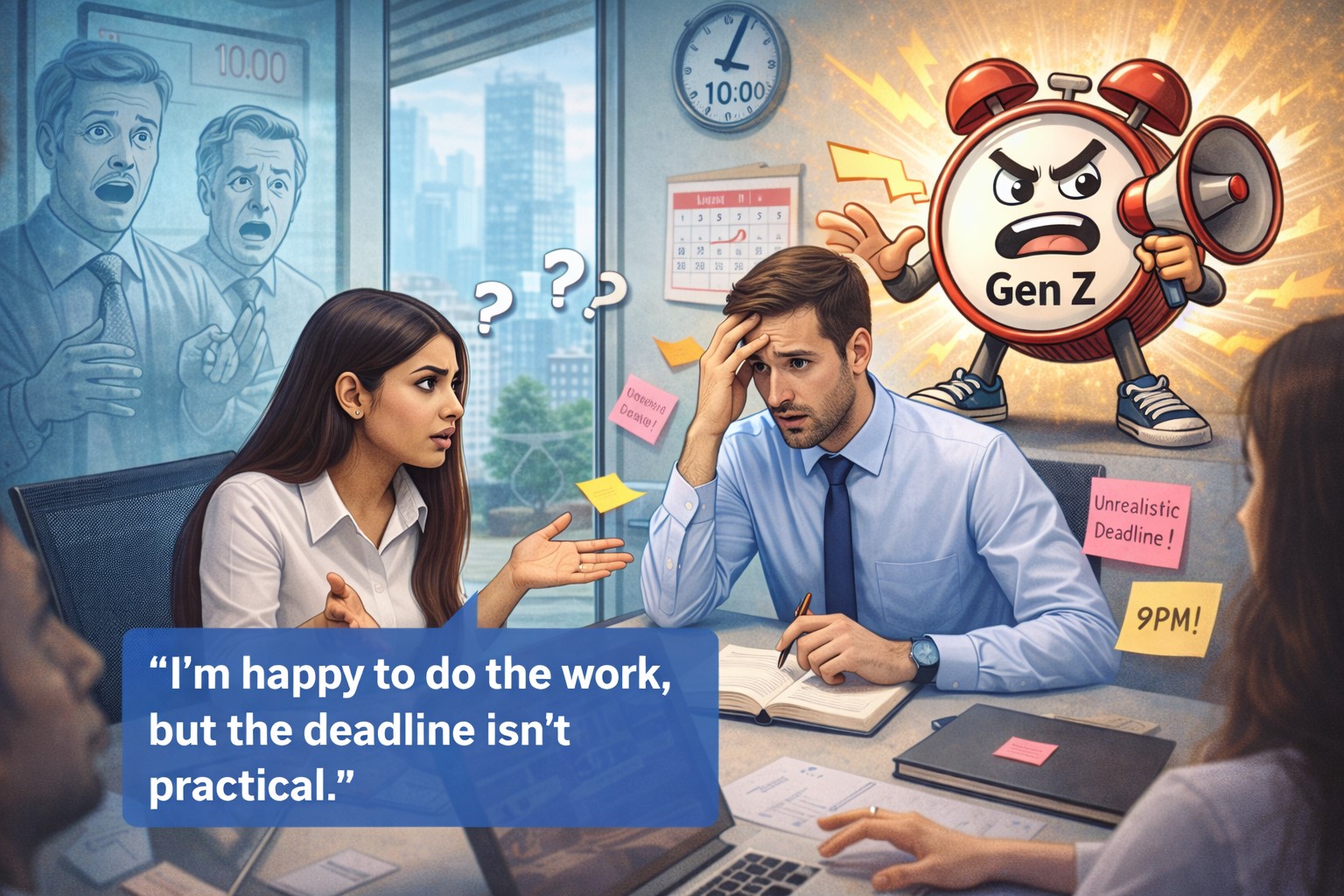
In a corporate setting, 23-year-old Stuti took a bold step that her Millennial manager considered daring during his early career. During a meeting, she candidly expressed that the project deadline was unrealistic, stating, “I’m happy to do the work, but the deadline isn’t practical.” This level of openness created an instant silence in the room. For older generations, questioning a manager’s directive shortly after joining was often unthinkable. However, for many Gen Z employees, such behavior is quickly becoming commonplace.

Generation Z’s Unique Perspective

Experts indicate that Generation Z, generally defined as individuals born between the mid-1990s and early 2010s, has entered the workforce under significantly different circumstances compared to their predecessors. Many in this cohort were influenced by the 2008 global financial crisis, the rapid digital transformation of workplaces, and the economic challenges posed by the Covid-19 pandemic. These experiences have contributed to a generation that prioritizes personal values and is less hesitant to challenge authority.

According to the Deloitte Global Gen Z and Millennial Survey, which included responses from thousands across many countries, younger employees are more inclined to make career choices based on their beliefs and expectations from employers. A notable 44% of Gen Z respondents reported leaving a job that lacked purpose, signaling their readiness to walk away from roles misaligned with their values. The findings also highlight that nearly 90% of Gen Z workers believe a sense of purpose is crucial to job satisfaction, implying a shift in workplace culture.

Valuing Mutual Respect

When asked about their approach, many members of Gen Z assert their conduct stems from a place of honesty rather than rebellion. “We’re not trying to be rude,” remarked Prashant, a 24-year-old marketing executive based in Bengaluru. “But respect should go both ways. If my boss can provide feedback, I should also feel entitled to express when something isn’t effective.” Another young professional from a Gurugram startup noted that discussing concerns feels natural. “Having grown up discussing various topics online, why should work be any different?”

This generation also tends to have discussions about once-taboo workplace issues, including mental health, burnout, and salary transparency. Such conversations are essential for fostering healthier workplace environments.

Millennials Reflect on Workplace Experiences

Millennials, now in their early 30s and 40s, perceive this shift from a different perspective. “When I began working, questioning management was rare,” explained Mansi, a 35-year-old product manager in Delhi. “The initial year was spent understanding workplace norms.” Many Millennials began their careers in the wake of the 2008 financial crisis, where job security felt precarious and competition was fierce. “In our experience, adaptation was key,” she added. “Late nights and minimal complaints were expected in hopes of recognition.” Such differences can sometimes create tensions between these generations.

Generational Dynamics in Leadership

For Generation X managers, now primarily in leadership positions, Gen Z’s assertiveness is both invigorating and unnerving. Atul Chopra, a 53-year-old HR head at a multinational firm, mentioned, “I admire their confidence; however, they sometimes challenge decisions without fully grasping the underlying processes.” Some managers express concerns that forthright communication might be misinterpreted as entitlement rather than assertiveness. Nonetheless, many acknowledge that this younger cohort is prompting a reevaluation of traditional workplace cultures.

Shifting Workplace Culture

Recent studies indicate that younger employees evaluate employers significantly differently than older generations. The Deloitte survey indicates that numerous Gen Z professionals are prepared to decline assignments or even jobs that conflict with their ethical principles. This research reveals a general shift: while work remains important, it is now only one of several priorities. Flexibility, purpose, mental well-being, and alignment with personal values have become high on the list of Gen Z expectations from employers. As such, these young professionals are increasingly unwilling to tolerate environments they find to be toxic or unjust.

The Evolving Nature of Work

The increasing presence of Generation Z in the global workforce over the next decade suggests a gradual shift away from conventional management styles toward more collaborative leadership approaches. Young professionals like Stuti are already experiencing these changes firsthand. “We’re not aiming to confront our bosses,” she clarified. “We simply wish for workplaces where our voices are valued.” This willingness to question authority appears to mark a new chapter in professional culture.

Long or Short, get news the way you like. No ads. No redirections. Download Newspin and Stay Alert, The CSR Journal Mobile app, for fast, crisp, clean updates!

App Store –  https://apps.apple.com/in/app/newspin/id6746449540 

Google Play Store – https://play.google.com/store/apps/details?id=com.inventifweb.newspin&pcampaignid=web_share

Latest News

Popular Videos
