


app-store-logo
play-store-logo
February 16, 2026

February 17 Solar Eclipse: Who Will See The Ring Of Fire And Who Won’t
The CSR Journal Magazine

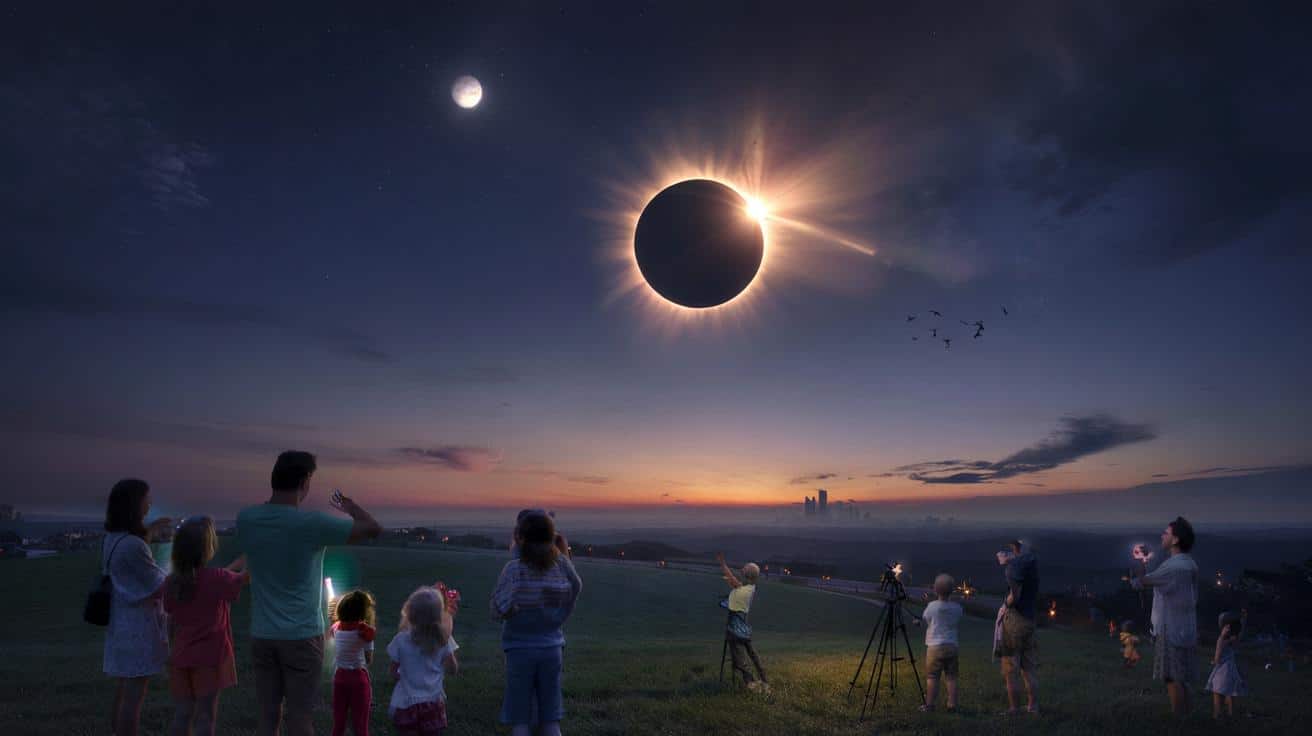
An annular solar eclipse will occur on February 17 as the Moon passes directly between Earth and the Sun but does not completely cover it, producing a dramatic glowing ring around the dark lunar silhouette.

Unlike a total solar eclipse, the Moon will appear slightly smaller in the sky during this event. As a result, a bright rim of sunlight will remain visible around its edges, forming the spectacular phenomenon popularly known as the “ring of fire”.

Antarctica Gets The Best View

The path of annularity, the narrow zone where the complete fiery ring is visible, will pass almost entirely over Antarctica. This makes the event extremely exclusive, with no major cities falling within the direct viewing corridor.

Scientists stationed at remote research facilities, including Concordia Research Station and Russia’s Mirny Station, are among the few people who will witness the full effect. At these locations, the ring of fire is expected to last about two minutes and twenty seconds.

Because of the eclipse’s southern trajectory, the phenomenon will not be visible anywhere in India. Observers in the country will need to rely on live streams from international space agencies and observatories to watch the event.

Partial Eclipse Across Southern Hemisphere

While the complete ring will be confined to Antarctica, several regions in the Southern Hemisphere will experience a partial solar eclipse. In these areas, the Moon will obscure only a portion of the Sun, making it appear as though a bite has been taken out of the solar disc.

Cities in southern Africa and nearby regions will get some of the better views. Durban in South Africa is expected to see about 16 percent coverage, while Port Louis in Mauritius could witness roughly 31 percent of the Sun being blocked. Antananarivo in Madagascar may see close to 20 percent coverage.

Other locations likely to observe a partial eclipse include Johannesburg, Pretoria, Gaborone, Maputo, Harare, Diego Garcia and several islands across the southern Indian Ocean.

Why India Will Not See It

The reason India will miss the spectacle lies in the geometry of the Earth Moon Sun alignment. The Moon’s shadow will sweep across the far southern part of the planet, leaving the Indian subcontinent completely outside the affected zone.

The eclipse will begin at 3:26 pm IST and end at 7:57 pm IST. However, skies over India will remain unchanged throughout this period.

Although the event cannot be viewed directly from the country, space agencies such as NASA are expected to provide live coverage, allowing skywatchers to experience one of the year’s most striking celestial displays safely from their screens.

Long or Short, get news the way you like. No ads. No redirections. Download Newspin and Stay Alert, The CSR Journal Mobile app, for fast, crisp, clean updates!

App Store –  https://apps.apple.com/in/app/newspin/id6746449540 

Google Play Store – https://play.google.com/store/apps/details?id=com.inventifweb.newspin&pcampaignid=web_share

Latest News

Popular Videos
