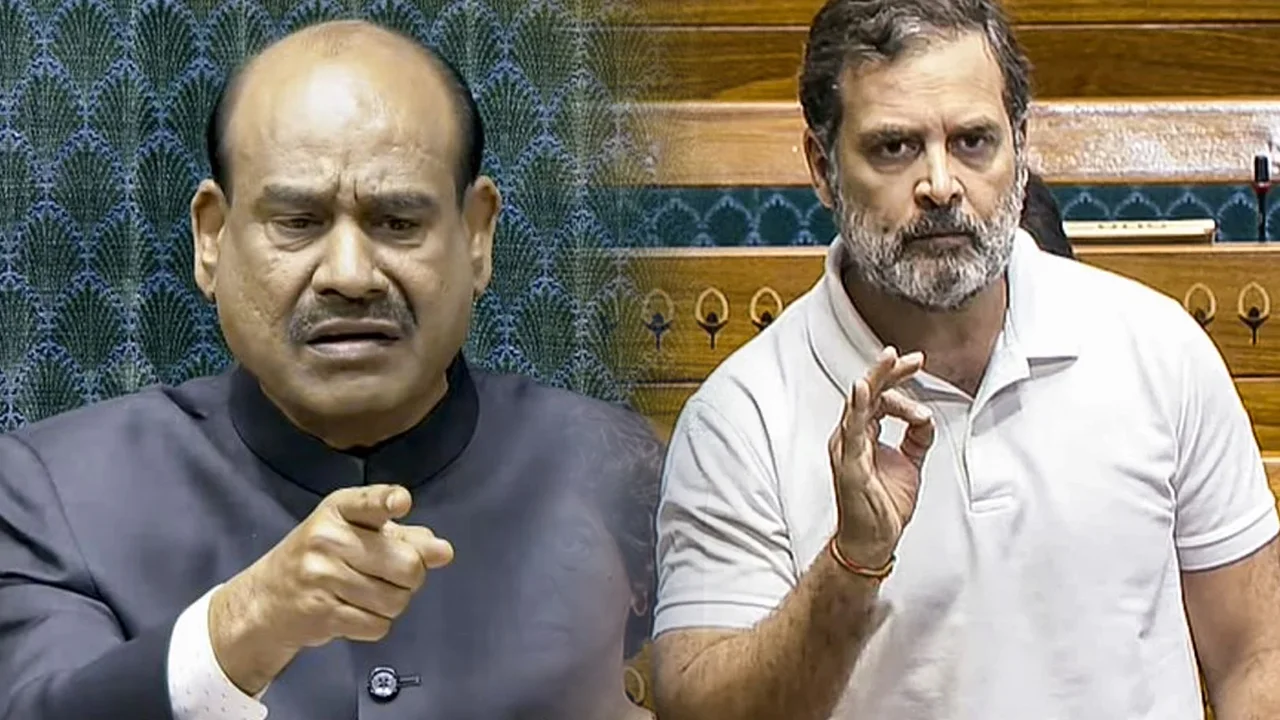
In a significant escalation of tensions with the BJP-led National Democratic Alliance (NDA) government, the Congress party has introduced a no-confidence motion against Lok Sabha Speaker Om Birla. The opposition alleges that Birla has displayed biased behaviour, particularly during the ongoing Budget session, citing instances of denying speaking time to Rahul Gandhi, the Leader of the Opposition, and suspending multiple MPs.
Details of the Motion
The motion, supported by 118 opposition members, accuses Birla of stifling debate by preventing Gandhi from addressing key issues. Moreover, it criticizes him for failing to take action against BJP MP Nishikant Dubey, who allegedly made unfounded allegations against Congress women MPs, and for enacting the suspension of eight opposition lawmakers. The notice cites Article 94(c) of the Constitution, which outlines the procedure for the removal of the Speaker, emphasising the partisan manner in which Birla has allegedly conducted parliamentary proceedings.
Response from Opposition MPs
Congress MP Manickam Tagore described the motion as a necessary measure under “extraordinary circumstances” and affirmed the opposition’s commitment to constitutional norms. He emphasised that the decision to move the motion reflects a deep concern regarding the treatment of opposition voices in the Parliament.
Recent Events Leading to the Motion
The heightened conflict in Parliament arose during the Budget session, particularly when Speaker Om Birla intervened to prevent Gandhi from quoting an unpublished memoir by former Army Chief General MM Naravane. Tensions escalated when Gandhi attempted to discuss the memoir’s implications concerning the 2020 Galwan Valley clash with China. Birla subsequently suspended eight Congress MPs for their disruptive behavior during this critical discussion.
Opposition Claims and Counterclaims
A group of Congress women MPs recently addressed a letter to Birla, condemning him for allegedly making “false and defamatory allegations” against them. This was met with a contrasting letter from BJP women MPs, who accused their Congress counterparts of crossing acceptable boundaries in parliamentary conduct. The BJP lawmakers urged the Speaker to take substantial action against those involved in the disruptive incidents.
Constitutional Framework of the Motion
Article 94(c) of the Indian Constitution defines the process for initiating a no-confidence motion against the Speaker. It stipulates that a Speaker may only be removed from office through a resolution passed by a majority of the House, requiring at least fourteen days’ notice before such a resolution can be moved.
Procedural Steps for the Motion
Under the Lok Sabha’s Rules of Procedure, any House member can propose the removal of the Speaker by submitting a written notice, including the full text of the resolution, to the secretary-general. The resolution must clearly outline specific charges against the Speaker and must be concise and non-defamatory.
Challenges Facing the Opposition
Despite garnering support from 118 MPs, the motion’s future remains uncertain. The Deputy Speaker must determine whether the motion meets the required criteria for consideration. Furthermore, the opposition faces an uphill battle in the 543-member House, where the NDA commands a substantial majority with 293 seats compared to the opposition’s 238 seats.
Historical Precedents
While no-confidence motions against Speakers are rare, they have occurred previously. The first instance was in 1954 against GV Mavalankar, and similar motions were made against Sardar Hukum Singh in 1966 and Balram Jakhar in 1987. However, these attempts were ultimately unsuccessful, as the motions did not receive the necessary support within the House.
Current Political Climate
As the opposition navigates this complex political landscape, the introduction of the no-confidence motion serves not only as a challenge to Speaker Birla’s authority but also as an avenue for the opposition to publicly articulate their grievances and assert their presence in parliamentary discussions.