


app-store-logo
play-store-logo
January 27, 2026

Explained: All The Ways The India–EU Free Trade Agreement Benefits India
The CSR Journal Magazine

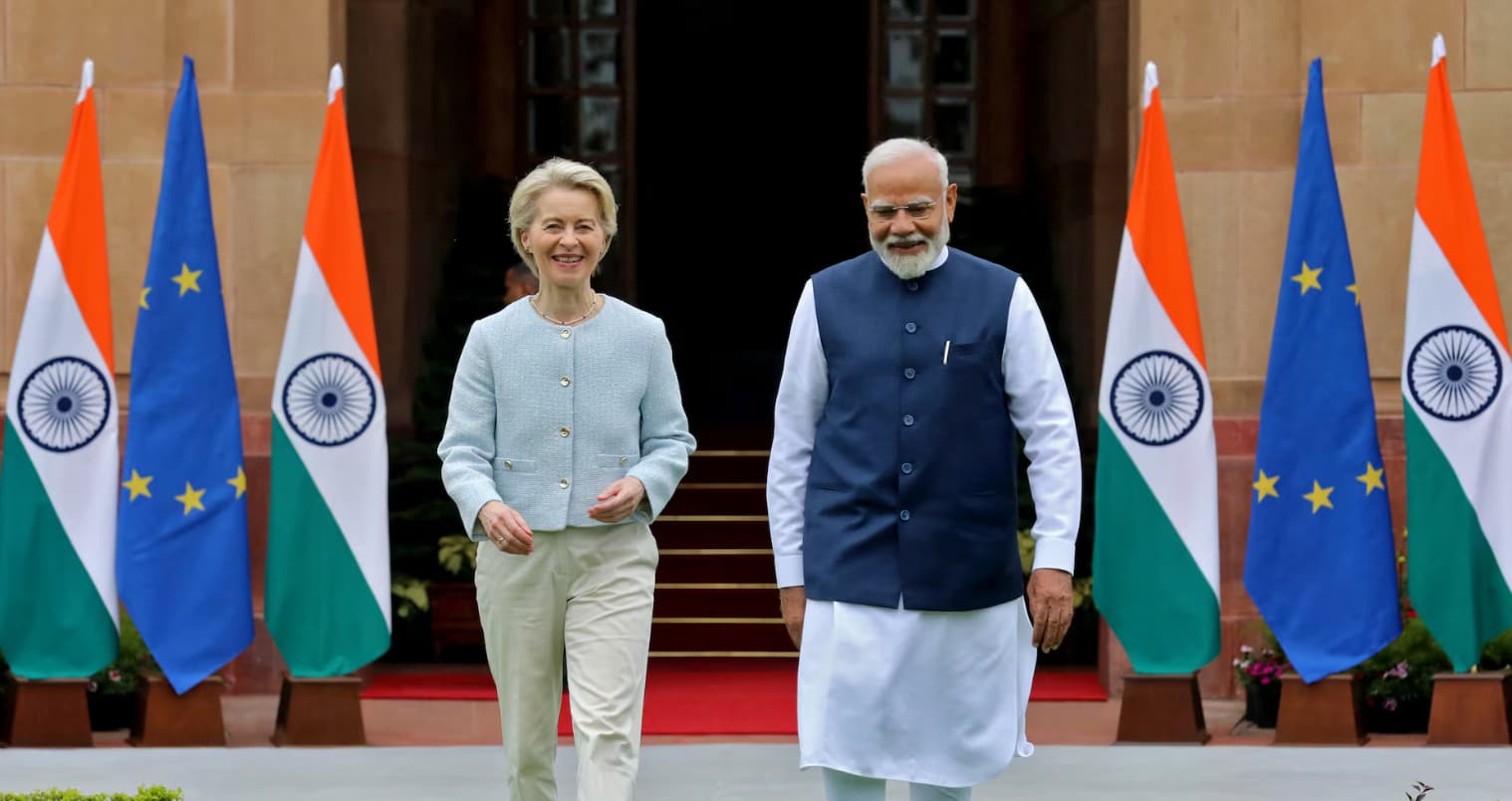
India and the European Union have concluded negotiations on the India–EU Free Trade Agreement, marking one of the most ambitious trade deals India has signed. The agreement comes at a crucial time as India seeks to diversify its export markets amid rising global trade uncertainties, including the imposition of steep tariffs by the United States.

At the signing and exchange of the political declaration concluding negotiations, Prime Minister Narendra Modi called the moment historic, saying that two major democratic powers were adding a decisive chapter to their relationship. The deal is expected to come into force next year, following legal vetting and ratification.

Why The India-EU FTA Matters For India

The European Union is one of India’s largest trading partners. In 2024–25, bilateral merchandise trade stood at Rs 11.5 lakh crore or $136.54 billion, with Indian exports at Rs 6.4 lakh crore or $75.85 billion and imports at Rs 5.1 lakh crore or $60.68 billion. Services trade reached Rs 7.2 lakh crore or $83.10 billion during the same period.

Together, India and the EU account for around 25 per cent of global GDP and nearly one-third of world trade. The scale of the agreement gives India access to a vast, high-income market while strengthening its position in global supply chains.

All The Key Benefits Of The India–EU Free Trade Agreement For India

The India–EU FTA delivers a wide range of economic, trade and strategic benefits for India, including the following:

– Over 99 per cent of Indian exports by trade value will receive preferential access to the European Union market, significantly improving export competitiveness.

– The European Union will liberalise 96.8 per cent of its tariff lines, while India will open 92.1 per cent of its tariff lines, ensuring deep and balanced tariff reduction.

– Labour-intensive sectors such as textiles, apparel, leather, footwear, marine products, gems and jewellery, handicrafts, engineering goods and automobiles will see tariffs of up to 10 per cent eliminated on exports worth nearly $33 billion.

– The agreement is expected to generate employment opportunities for workers, artisans, women, youth and professionals, particularly in export-oriented industries.

– Micro, small and medium enterprises are likely to benefit from easier access to the EU market, lower trade barriers and improved integration into global value chains.

– India’s tariffs on EU goods will be reduced to zero for 93 per cent of bilateral trade value over a 10-year period, while the EU will phase out tariffs on Indian goods over seven years.

– Sensitive sectors such as automobiles, steel and agriculture have been protected through exclusions or calibrated liberalisation, safeguarding domestic producers.

– In automobiles, a quota-linked liberalisation framework will allow European premium vehicles into India while encouraging local manufacturing and future exports from India.

– Indian consumers are expected to benefit from increased competition, access to advanced technologies and improved product quality.

– The agreement makes significant progress in services trade and establishes a comprehensive mobility framework to ease cross-border movement of skilled Indian professionals.

– The EU has committed to uncapped mobility for Indian students, strengthening education and talent exchanges.

– India will gain flexibility under the EU’s carbon border tax regime if similar treatment is extended to other trading partners.

– India is seeking and is likely to benefit from higher steel export quotas to the EU as an FTA partner.

– The pact enhances opportunities for agriculture and processed food exports, improving competitiveness for products such as tea, coffee, spices, fresh fruits and vegetables, and processed foods.

– Key domestic interests have been protected by ring-fencing sensitive agricultural sectors including dairy, cereals, poultry, soymeal and selected fruits and vegetables.

– The agreement strengthens India’s role as a dependable global supplier and supports supply chain diversification away from concentrated markets.

– It also covers modern trade disciplines such as digital commerce, rules of origin, customs procedures, trade facilitation and targeted support for small businesses.

Overall, the India–EU Free Trade Agreement is expected to act as a catalyst for export growth, job creation, innovation and long-term economic resilience, reinforcing India’s position in global trade amid shifting geopolitical and economic dynamics.

Long or Short, get news the way you like. No ads. No redirections. Download Newspin and Stay Alert, The CSR Journal Mobile app, for fast, crisp, clean updates!

App Store –  https://apps.apple.com/in/app/newspin/id6746449540 

Google Play Store – https://play.google.com/store/apps/details?id=com.inventifweb.newspin&pcampaignid=web_share

Latest News

Popular Videos
