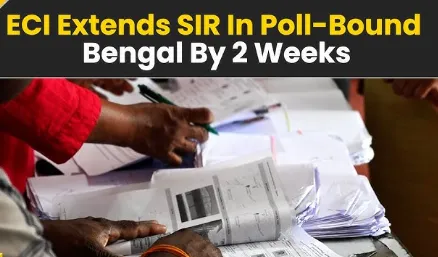
The Election Commission of India (ECI) announced on Tuesday the extension of the special intensive revision (SIR) deadline in West Bengal by an additional two weeks. This decision affects the timeline for voter roll preparations in the state, which is currently governed by the Trinamool Congress (TMC). The revised voter roll revision process will now continue until February 21, with the publication of the final electoral rolls scheduled for February 28.
Compliance with Supreme Court Directions
The ECI’s action was taken in alignment with a Supreme Court ruling issued on February 9. Originally, the final voters’ list was set to be made public on February 14, following which elections were anticipated. In a communication directed to West Bengal’s Chief Electoral Officer, the ECI detailed the changes to the ongoing SIR process. The letter outlined the revised schedule: hearings concerning notices are to be completed by February 14, document scrutiny and resolution of related cases will conclude by February 21, while the rationalization of polling stations will be finalized by February 25. Health checks are expected to be completed by February 27, leading to the publication of the final electoral roll on February 28.
Supreme Court’s Stance on Voter Roll Verification
The Supreme Court, while emphasizing the imperative of not halting the SIR process across twelve states, has also expressed willingness to consider suggestions aimed at ensuring that genuine voters are not omitted from the electoral rolls. The Chief Justice of India, leading the bench, extended the initial February 7 deadline for document submissions by voters who were issued notices by the Election Commission, including around 1.36 crore voters identified as having “logical discrepancies.” The bench has requested a personal affidavit from the West Bengal Director General of Police concerning allegations of interference by TMC officials in the SIR process.
State Government’s Compliance with Court Orders
In a notable session involving West Bengal Chief Minister Mamata Banerjee, the court criticized the state government for its delay in providing names of 8,500 group B cadre officials intended to assist electoral revision officers (EROs) and assistant EROs in the document verification process. The court’s admonition prompted the West Bengal government to quickly submit the necessary list during the proceedings, committing to verify the qualifications of the mentioned officials.
Addressing Concerns Over Voter Exclusion
During the hearings, concerns raised by Banerjee’s counsel regarding potential mass exclusions of voters due to the SIR process were met with skepticism by the court. The defense suggested that a significant number of cases involving “logical discrepancies” stemmed from minor errors, such as name misspellings caused by translation issues. The bench dismissed these fears as speculative, assuring that officials selected from the newly provided list would assist in addressing cases affected by simple clerical errors.