


Earth Braces For Impact From Powerful Solar Storm
The CSR Journal Magazine

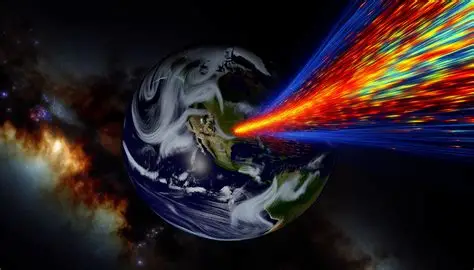
Earth is preparing for a solar storm on October 11 due to two significant eruptions from the Sun, which have sent charged particles towards the planet. A solar storm is defined as the release of energy and materials from solar activity, particularly through events known as coronal mass ejections (CMEs). These CMEs consist of vast clouds of electrically charged particles and magnetic material that, when they reach Earth, can induce disturbances in the planet’s magnetic field, leading to geomagnetic storms.

The National Oceanic and Atmospheric Administration (NOAA) categorises geomagnetic storms on a scale from G1, indicating minor storms, to G5, signifying extreme conditions. Each level indicates the potential for disruption, with higher numbers correlating with more severe impacts. In addition, separate scales are employed for solar radiation storms (rated S1 to S5) and radio blackouts (ranked R1 to R5), each representing different types of space weather occurrences.

Impact Anticipated on October 11

According to NOAA’s Space Weather Prediction Center, the G2 watch is related to the expected arrival of solar material from the eruptions that occurred on October 7 and 8. Of the two events, the second eruption is travelling at a higher velocity and is anticipated to combine with the first eruption before reaching Earth. Although the forecast suggests a moderate disturbance, precise impacts will be assessed as the solar material approaches, with additional measurements taken at that time.

At G2 levels, the repercussions tend to be more noticeable at higher latitudes, which could lead to voltage shifts in power systems and require satellite operators to implement operational adjustments. Furthermore, radio signals might exhibit weaknesses in certain regions, with potential ramifications for the accuracy of satellite navigation systems during the geomagnetic storm. Notably, colourful auroras created by interactions between charged particles and gases in Earth’s upper atmosphere may be visible farther away from the polar regions than usual.

Consequences for India and Future Predictions

The forecast for India indicates that there is no significant direct threat to daily life due to the anticipated solar storm. The projected G2 storm level does not imply widespread power outages or breakdowns in communication. Additionally, the expected auroras will likely not be observable across the country. As it stands, the current watch by NOAA is subject to change depending on the evolving conditions as the solar material travels towards Earth.

In conclusion, while solar storms can have notable effects on various technological systems, the specific impact on India during this event is expected to be minimal. Monitoring will continue to ensure that any changes in the storm’s trajectory or intensity can be appropriately addressed. Continued observation will be essential for understanding the eventual outcomes as the solar particles near Earth, and both authorities and the public are urged to stay informed as conditions develop.

Long or Short, get news the way you like. No ads. No redirections. Download Newspin and Stay Alert, The CSR Journal Mobile app, for fast, crisp, clean updates!

App Store –  https://apps.apple.com/in/app/newspin/id6746449540 

Google Play Store – https://play.google.com/store/apps/details?id=com.inventifweb.newspin&pcampaignid=web_share

Latest News

Popular Videos
