


app-store-logo
play-store-logo
January 17, 2026

Did Bollywood abandon AR Rahman, or did Rahman abandon Bollywood first?
The CSR Journal Magazine

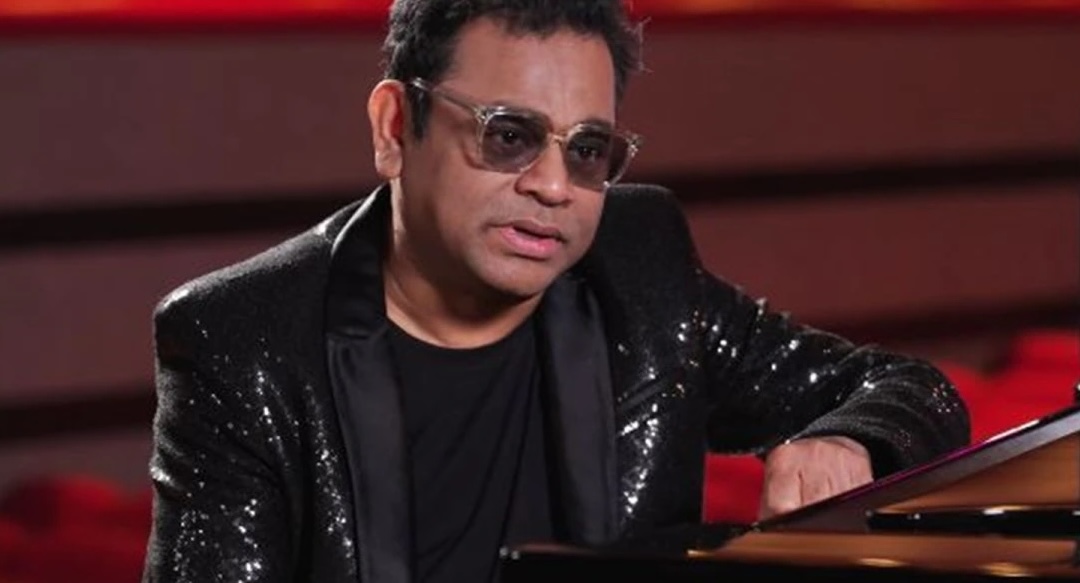
In a recent interview marking his first public appearance after announcing his separation, A. R. Rahman spoke candidly about depression, professional withdrawal and a sharp decline in his work in Bollywood over the past eight years. The Oscar-winning composer attributed the slowdown to a shift in industry power away from creative voices, saying decisions are now driven by non-creative executives rather than artistic merit.

Rahman said he no longer actively pursues work and prefers projects to come to him organically, adding that the absence of frequent assignments has also allowed him more time at home. He suggested that the space for composers who believe in building cohesive albums has shrunk in an industry increasingly focused on quick, algorithm-friendly releases. He also hinted, cautiously, at feeling like an outsider, implying that unspoken biases may influence who gets opportunities in contemporary Bollywood.

The remarks struck a chord across the film industry, not just as a personal reflection but as a broader critique of how Hindi film music now functions.

From Inevitability to Gradual Absence

For more than two decades, Rahman’s name carried an almost guaranteed cultural weight in Hindi cinema. From the early 1990s to the mid-2010s, his music defined generations, reshaped popular taste and elevated films far beyond their scripts or box-office prospects.

Albums such as Roja, Bombay, Dil Se, Lagaan and Rockstar were not merely successful. They became part of everyday life, played across homes, public spaces and national moments. At a time when Bollywood music was often criticised for predictability and imitation, Rahman introduced originality, emotional depth and global musical vocabulary.

That era of inevitability, however, began to fade after 2015. While Rahman never formally exited Bollywood, his presence became sporadic and his work less central to mainstream conversation. The shift was subtle but unmistakable.

The Creative Inconsistency Question

Rahman’s interview has revived a long-standing debate within industry circles. Is his Bollywood decline primarily the result of structural change, or does it also reflect inconsistency in his own post-2015 Hindi film output?

After Tamasha (2015), several of his Bollywood albums failed to leave a lasting impression. Projects such as Mohenjo Daro, OK Jaanu, 99 Songs and Heropanti 2 were widely criticised for lacking the innovation and emotional resonance associated with his earlier work. Even loyal admirers concede that many of these soundtracks felt muted, generic or disconnected from the evolving musical landscape.

This has complicated the narrative around Rahman’s remarks. While corporatisation, streaming algorithms and the rise of multi-composer albums have undoubtedly altered Bollywood’s music economy, critics argue these factors alone do not explain why Rahman himself delivered uneven work when opportunities did arise.

The question therefore extends beyond marginalisation. It raises the possibility that Rahman, through selective engagement and inconsistent project choices, gradually disengaged from Bollywood even as the industry itself was changing.

Political Reactions Alter the Conversation

Rahman’s reference to feeling like an outsider also drew reactions beyond the film industry, bringing his religious identity into the public debate. Born into a Hindu family as A. S. Dileep Kumar, Rahman converted to Islam in the early 1980s along with his family, a transition he has spoken about in the past as deeply personal and spiritual rather than political.

Against this backdrop, a leader of the Vishwa Hindu Parishad publicly suggested that the composer should consider “ghar wapsi”, or a return to Hinduism, if he wished to regain Bollywood opportunities. The comment explicitly linked professional success in Hindi cinema to religious identity.

The remark was widely criticised for reinforcing precisely the kind of bias Rahman appeared to allude to in his interview, although he did not directly reference the statement or respond to it publicly. Rahman has remained silent on the issue since.

The episode shifted the focus of the discussion away from music and creative relevance to questions of identity and politics, further polarising reactions to what had initially been a reflective conversation about industry change and artistic decline.

Success in South Indian Cinema

Notably, Rahman’s creative decline appears largely confined to Bollywood. His recent work in South Indian cinema has continued to receive widespread acclaim, particularly on large-scale, prestige projects that demand musical ambition and narrative depth.

The contrast has prompted observers to argue that the issue may not be artistic fatigue but context. In southern industries, Rahman continues to collaborate with filmmakers who prioritise music as a storytelling force. In Bollywood, many of his recent appearances have seemed transactional or lacking the creative urgency that once defined his work.

Legacy Secure, Relevance Under Scrutiny

Rahman’s place in Indian cinema history remains unchallenged. Few composers have altered the soundscape of Hindi films as decisively or as enduringly. Yet his interview has underscored how fragile creative dominance can be in an industry driven by rapid structural and cultural change.

Whether Bollywood abandoned Rahman, or whether Rahman gradually stepped away from Bollywood’s evolving realities, remains open to interpretation. What is clear is that the relationship between the composer and the industry he once transformed is no longer defined by inevitability, but by distance.

Long or Short, get news the way you like. No ads. No redirections. Download Newspin and Stay Alert, The CSR Journal Mobile app, for fast, crisp, clean updates!

App Store –  https://apps.apple.com/in/app/newspin/id6746449540 

Google Play Store – https://play.google.com/store/apps/details?id=com.inventifweb.newspin&pcampaignid=web_share

Latest News

Popular Videos
