


app-store-logo
play-store-logo
February 10, 2026

Delhi Faces Severe Pollution Crisis Amid Citizen Advocacy and Government Action
The CSR Journal Magazine

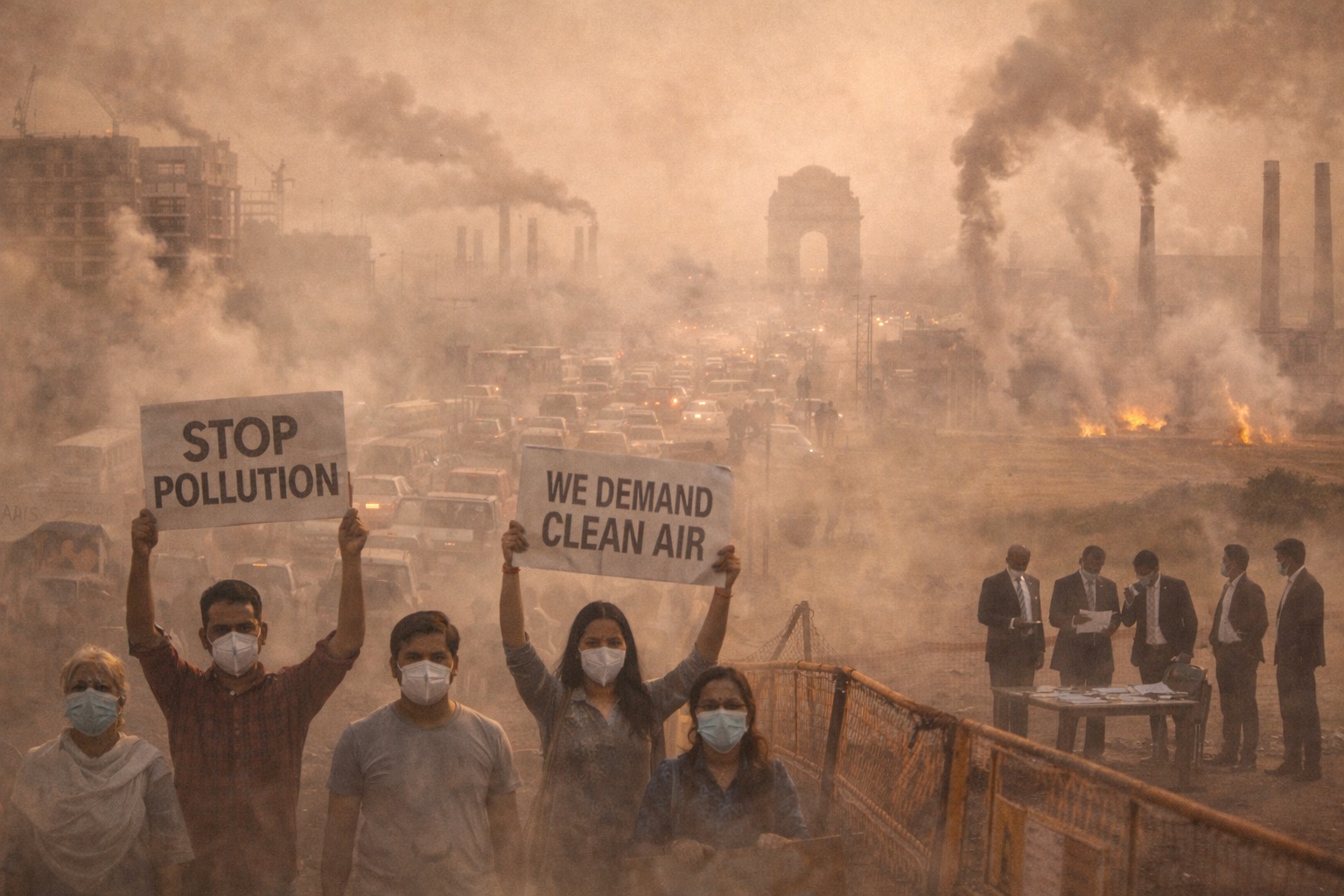
Residents of Delhi are acutely aware of the persistent pollution affecting the city, a multifaceted issue stemming from vehicular and industrial emissions, construction dust, and the burning of waste. The annual winter months see an exacerbation of air quality due to smoke drifting in from agricultural fires in the neighboring states of Punjab and Haryana. This alarming situation has prompted notable public discourse, including a recent acknowledgment of its severity by Chief Justice of India, Justice Surya Kant, who expressed concerns about the impact of pollution on his health after a brief outdoor walk.

Citizen Advocacy and Government Response

In response to escalating air quality issues, a gathering of approximately 400 individuals convened at India Gate, promoting slogans such as “Freedom from Smog” and emphasizing the dire need for cleaner air. Although the protests garnered attention, they concluded with several participants facing arrests. In an effort to address the crisis, government authorities have revised their Graded Response Action Plan (GRAP) to implement stricter measures more proactively.

On October 23 2025, an emergency review was conducted at the Prime Minister’s Office with key bureaucrats from various ministries and states. Ongoing plans are based on pollution data that has become outdated over the last seven years. P.K. Mishra, principal secretary to the Prime Minister, emphasized the importance of updating emissions inventories alongside targeted efforts to control dust along major thoroughfares.

Expert Contributions and Initiatives

On December 6 2025, Delhi Chief Minister Rekha Gupta announced the establishment of a specialized committee focused on pollution mitigation, led by Leena Nandan, a former Union environment secretary. The group comprises retired officials from the Central Pollution Control Board (CPCB) and professors from Indian Institutes of Technology (IIT). The aim is to gather feasible scientific solutions and actionable recommendations to tackle the air quality crisis.

Despite previous administrations claiming success in improving air quality, critics argue that overall conditions continue to deteriorate. Factors such as particulate matter (PM2.5) levels illustrate this complexity, often reaching dangerous thresholds, considerably more severe during winter months.

Pollution Sources: Vehicles, Industries, and Construction

Vehicle emissions remain one of the significant contributors to Delhi’s pollution landscape, alongside industrial outputs and dust from construction activities. The Supreme Court’s directive to remove older, high-emission vehicles has seen inadequate compliance, with a significant number still in operation. Officials have indicated that the replacement of older vehicles should be strictly monitored, raising concerns about verification systems currently in use.

A concerning issue within this framework is the pollution-under-control (PUC) certification process, which has been compromised by malpractice. An audit highlighted numerous vehicles that received certification without meeting emissions regulations, revealing a broken system needing urgent reform.

Delving deeper into industrial pollution, while most registered factories claim to utilize cleaner energy sources, unregistered units continue to operate without proper oversight. This uneven landscape suggests that enforcement action has been minimal, allowing illegal operations to persist.

The Impact of Dust and Waste Management

Construction and dust contribute significantly to particulate emissions in Delhi, exacerbating the air quality crisis. Rapid urban expansion often leads to extensive dust generation during infrastructure projects, with inadequate compliance and monitoring measures in place. The Delhi government has employed staff to oversee noise and dust management; however, critics argue that regulatory enforcement is lacking.

Waste management also plays a role, with the city processing only a fraction of its daily waste output, leading to increased landfill emissions. Suggestions from experts involve encouraging the implementation of Dust Control Bonds for construction projects and transitioning to localized waste management.

Agricultural Practices and Air Quality Monitoring

Although reports suggest a decline in the practice of agricultural burning in nearby regions, the reality on the ground remains complex. Many farmers continue to burn stubble during night hours to avoid detection, resulting in significant underreporting of incidents. Proposed measures to enhance monitoring technologies could help address these inequities.

The uneven distribution of air quality monitoring sensors across the city has led to significant data gaps, highlighting the need for enhanced surveillance to obtain an accurate picture of pollution levels across various districts.

The overarching challenge lies in the lack of effective implementation of existing plans, alongside a resistance among residents to make necessary lifestyle changes. As the city battles persistent pollution, comprehensive, coordinated actions appear essential for meaningful long-term improvements.

Long or Short, get news the way you like. No ads. No redirections. Download Newspin and Stay Alert, The CSR Journal Mobile app, for fast, crisp, clean updates!

Latest News

Popular Videos
