


Defence Secretary Highlights Akash Missile System as a Success Story
The CSR Journal Magazine

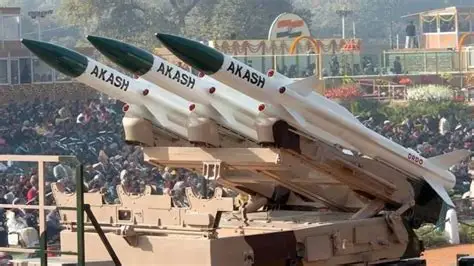
The Akash Surface-to-Air Missile (SAM) system has been acknowledged by Defence Secretary Rajesh Kumar Singh as a significant milestone in India’s journey towards self-reliance in military technology. This acknowledgement follows an extensive emphasis on the development of domestic capabilities in the defence sector. Speaking to ANI in New Delhi, Singh pointed out that the Akash system has now entered a stabilised production phase, supported by robust domestic demand and an increasing presence in international defence markets.

Singh stated, “Akash is one of our success stories. It illustrates the progress of our indigenous missile design and production capabilities. It effectively engages high-speed aerial targets.” The Defence Secretary noted that in addition to fulfilling the needs of the Indian Armed Forces, the system has gained traction in the export market, particularly in Central Asia.

Expansion of Exports Beyond Borders

The Akash missile system has established itself as a reliable tool against various aerial threats, including drones and missiles. Armenia was the system’s initial customer, signing a deal in 2022 for multiple Akash-1S batteries, with deliveries slated to commence in late 2024. Following Armenia, both Tajikistan and Turkmenistan have also emerged as buyers, enhancing India’s presence in markets traditionally dominated by Russian arms.

Rajesh Kumar Singh elaborated on the system’s production stability, indicating ongoing procurement by the Indian military alongside additional export orders. He noted, “We have received orders for our services, and I am confident that there will be more interest from various regions, which we are actively pursuing.” The successful export of the Akash system signifies a potential shift in the defence landscape of the region.

The Akash system, which can engage supersonic targets at ranges reaching up to 30 kilometres and even up to 50 kilometres for newer variants such as Akash-NG, represents an advancement in India’s defence capabilities, utilising ramjet propulsion and command guidance systems.

Future Outlook and Expectations for Defence Exports

In a previous statement made earlier in September, Defence Secretary Singh highlighted the cost advantages that position India favourably in the global defence market. He anticipates that defence exports could reach Rs 50,000 crore within the next two years. During his address at the 13th PAFI Annual Forum 2026, he referenced BrahMos as a notable export product, along with increasing opportunities in artillery and mounted gun systems.

Singh pointed to rising demand for private sector products based on DRDO technology, alongside the Akash missiles. He mentioned various Southeast Asian countries that are showing interest in India’s advanced defence systems. This indicates a growing global confidence in Indian-made defence equipment.

The history of the Akash missile dates back to 1983, conceived under the leadership of renowned scientist Dr APJ Abdul Kalam. Initially named in 1984, the project faced numerous challenges over the years, eventually becoming a cornerstone of India’s strategic defence initiatives. Its successful development and deployment reflect the dedication of its creators, enhancing national security against threatening aerial targets.

Long or Short, get news the way you like. No ads. No redirections. Download Newspin and Stay Alert, The CSR Journal Mobile app, for fast, crisp, clean updates!

App Store –  https://apps.apple.com/in/app/newspin/id6746449540 

Google Play Store – https://play.google.com/store/apps/details?id=com.inventifweb.newspin&pcampaignid=web_share

Latest News

Popular Videos
