


app-store-logo
play-store-logo
January 23, 2026

Culture or Cost-Cutting? Inside Amazon’s Plan to Fire 16,000 More Next Week
The CSR Journal Magazine

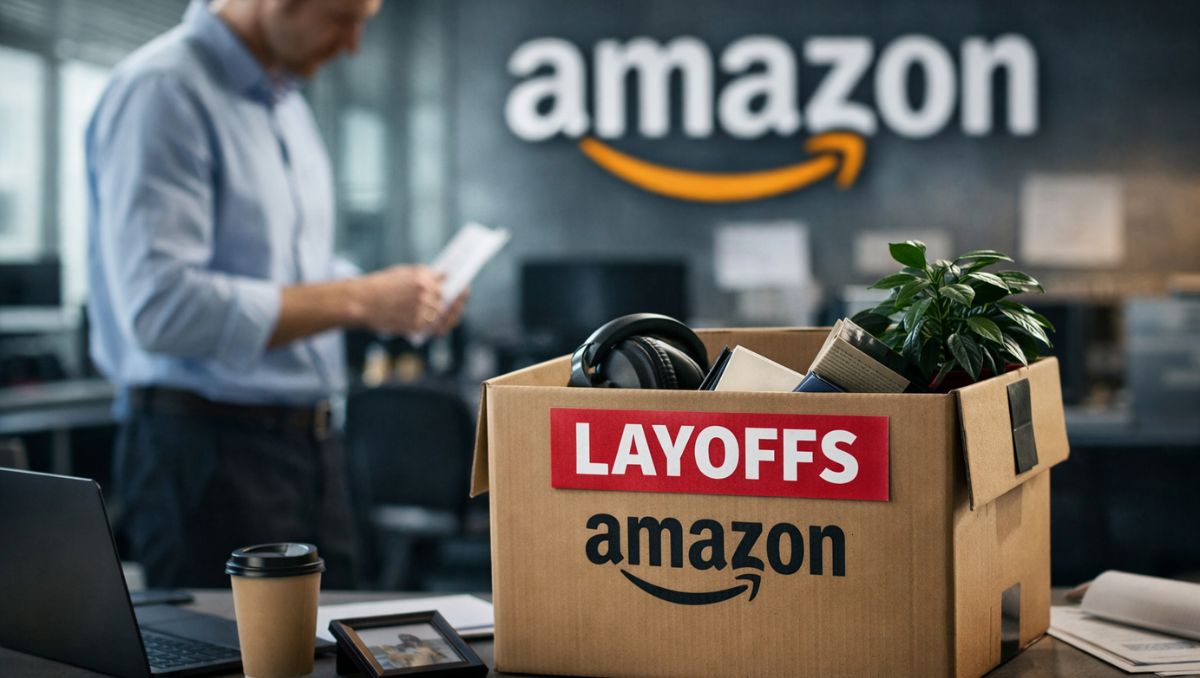
Amazon is preparing to terminate the employment of up to 16,000 additional corporate staff as early as next Tuesday, but the justification from the top leadership has shifted from technology to the intangible. While the tech industry has largely blamed artificial intelligence for the recent bloodbath of redundancies, Amazon CEO Andy Jassy has pointed the finger at a different culprit: the company’s own internal culture. This second phase of a massive restructuring will bring the total number of white-collar job losses to 30,000, representing nearly 10 percent of the company’s corporate workforce.

The decision has sent shockwaves through divisions including Amazon Web Services (AWS), Prime Video, and Human Resources. For months, employees speculated that the rise of automation was making their roles redundant. However, Jassy recently told analysts that the move is “not really financially driven” and “not even really AI-driven.” Instead, he has declared a war on the bureaucracy that he believes has infected the e-commerce giant, transforming it from a nimble pioneer into a sluggish corporate behemoth.

The War on ‘Pre-Meetings’ and Management Fiefdoms

What exactly is the “culture” that Jassy finds so unacceptable? Internal communications and recent executive addresses reveal a deep-seated frustration with what Jassy calls “management fiefdoms.” For years, the path to a promotion at Amazon was often seen as managing larger and larger teams. Jassy has now explicitly rejected this, stating that there is no longer an “award for having a big team.” The company is moving to increase the ratio of individual contributors to managers by at least 15 percent, effectively thinning the ranks of middle management.

The unacceptable “Day 2” culture, as founder Jeff Bezos famously termed it, is defined by stasis and internal focus. Jassy has highlighted the absurdity of the current structure, where employees are trapped in “pre-meetings for the pre-meetings for the decision meetings.” This layer of “fingerprinting,” where multiple managers feel the need to review and approve a project before it moves forward, is being dismantled. The goal is a return to “Day 1”- a state of high-velocity decision-making where “two-way door” decisions are made quickly by those doing the actual work, rather than being bogged down by administrative oversight.

Mandatory Presence and the ‘Bureaucracy Mailbox’

To enforce this cultural reset, Amazon has moved beyond just layoffs. The company recently implemented a strict five-day in-office mandate, a move critics call a “backdoor layoff” designed to trigger voluntary resignations. Jassy has denied this, insisting that physical presence is the only way to restore the “scrappiness” and “urgency” required of a startup. For Amazon’s leadership, a culture of remote work and hybrid flexibility is no longer acceptable, as they believe it weakens the “ownership” and collaboration necessary for rapid innovation.

In an unusual move, Jassy even established a “Bureaucracy Mailbox,” an alias where employees can directly flag unnecessary processes or redundant rules. While the mailbox has reportedly led to over 450 process changes, it has also highlighted how deeply entrenched the red tape has become. The message to the 16,000 people facing the ax next week is clear: the company values “builders” over “administrators.” Those whose primary function was to act as a bridge between layers of management are finding themselves on the wrong side of Jassy’s cultural ledger.

A Historic Downsize for a Leaner Future

This final phase of job cuts marks the most significant workforce reduction in Amazon’s 30-year history, surpassing even the major layoffs of 2022 and 2023. By the time this round concludes, the company will have effectively trimmed 30,000 white-collar roles in just a few months. While the scale is unprecedented, it accounts for only a small portion of Amazon’s 1.58 million global employees, the majority of whom remain in the “blue-collar” world of warehouses and logistics where “culture” is measured in delivery speeds rather than management ratios.

Investors have largely cheered the move, seeing it as a necessary correction to the pandemic-era hiring spree that saw Amazon’s corporate headcount swell. However, for the thousands of professionals in Seattle, Bengaluru, and London, the “cultural fix” feels like a harsh rejection of the very systems they were hired to build. As the company prepares for its fourth-quarter earnings report, the world is watching to see if a flatter, leaner Amazon can actually recapture the “Day 1” spirit or if it is simply cutting its way to a different kind of corporate stagnation.

Long or Short, get news the way you like. No ads. No redirections. Download Newspin and Stay Alert, The CSR Journal Mobile app, for fast, crisp, clean updates!

App Store –  https://apps.apple.com/in/app/newspin/id6746449540 

Google Play Store – https://play.google.com/store/apps/details?id=com.inventifweb.newspin&pcampaignid=web_share

Latest News

Popular Videos
