


app-store-logo
play-store-logo
March 5, 2026

Class of 2026 Faces Tough Job Market Amid Hiring Slowdown
The CSR Journal Magazine

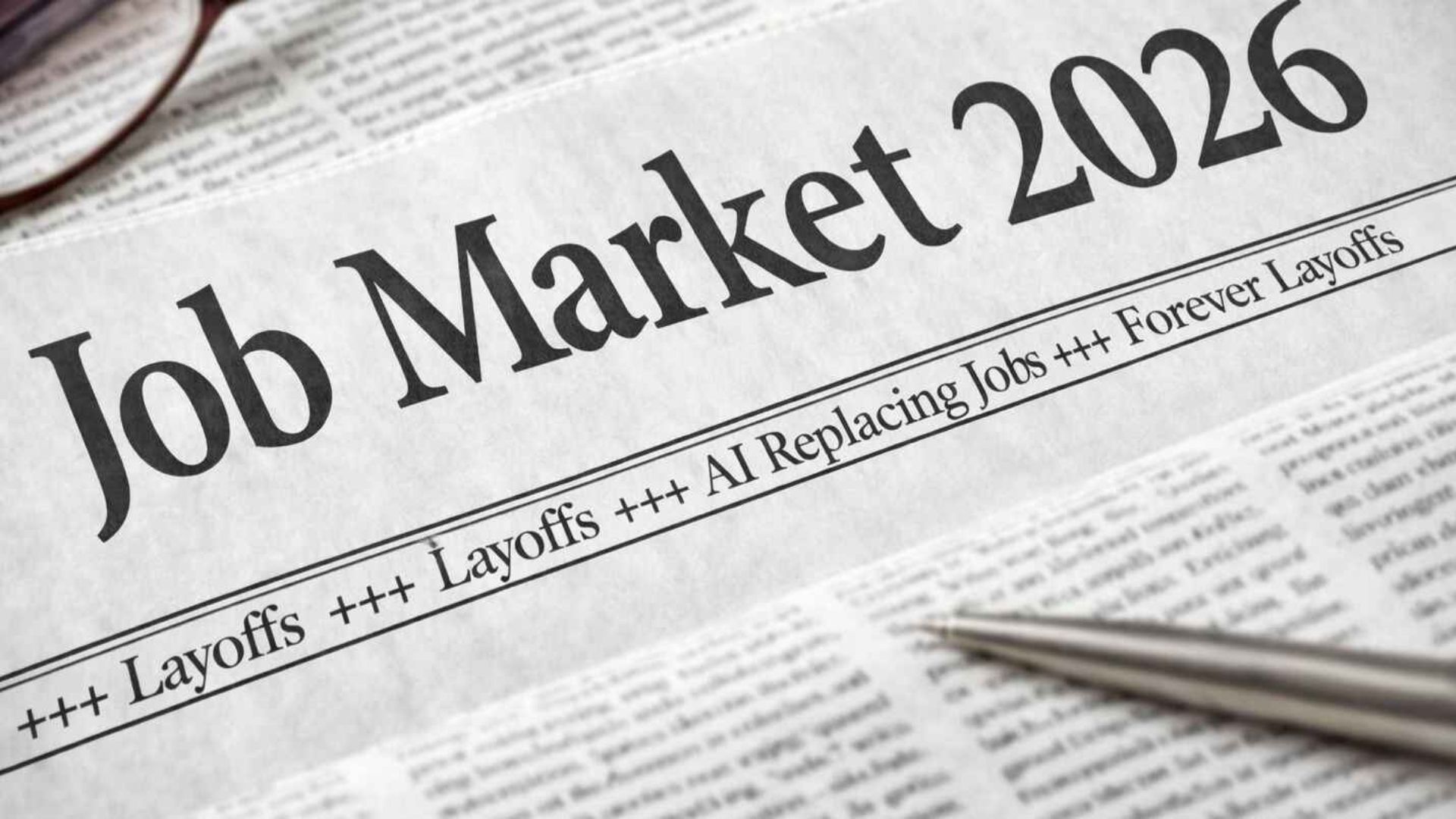
As the graduating class of 2026 prepares to enter the workforce, the landscape appears more challenging than in recent years. Hiring rates have diminished, particularly for entry-level positions, and the rapid evolution of artificial intelligence is altering job descriptions more swiftly than educational institutions can adapt their curricula. This prompts many students to consider not only what to study but also the potential for stable employment upon graduation. Insights from the National Association of Colleges and Employers (NACE) provide crucial data regarding hiring trends, revealing a selective approach by employers who are still willing to offer higher salaries for specific fields.

Current Economic Context

The findings come during a fragile economic period in the United States. Data from the Bureau of Labor Statistics indicates that the country experienced a mere addition of 181,000 jobs in 2025, a significant decrease from 1.46 million in 2024. The job market is reportedly strained for recent graduates, as highlighted in the Cengage Group’s 2025 Graduate Employability Report, which lists the conditions as potentially the most challenging for entry-level job seekers in five years. Only 30% of graduates secured positions in their fields, and over 75% of employers reported hiring the same number or fewer entry-level staff compared to the previous year. In this constrained environment, the importance of specific degrees has intensified, as employers implement more precise hiring strategies.

In-Demand Degrees for 2026 Graduates

NACE’s analysis identified the bachelor’s degrees with the highest demand for the 2026 graduating class, based on hiring intentions from various firms. The following degrees emerged as most sought-after: Finance (61.3%), Mechanical Engineering (61.3%), Computer Science (60%), Accounting (58.7%), Business Administration/Management (58.7%), Electrical Engineering (51.3%), Information Sciences and Systems (48%), Logistics/Supply Chain (44.7%), Marketing (44%), and Human Resources (40%). This data illustrates a trend in hiring preferences focused on degrees that emphasize quantitative skills and operational expertise, with finance and engineering highlighting essential facets of capital management and production optimization.

Trends in Salaries Amidst Hiring Slowdown

Interestingly, while hiring levels are anticipated to largely hold steady, starting salaries across many disciplines are projected to rise. Notably, social sciences are the exception, indicating a drop in expected salaries. Graduates in computer science are expected to receive the highest average starting salary at approximately $81,535, reflecting a 6.9% increase from the previous year’s figure of $76,251. Early career earnings are significant since studies from the National Bureau of Economic Research suggest that each additional $1,000 earned at the first job correlates with an increase of around $700 in annual earnings five years later. Hence, the initial job offer can significantly influence long-term financial outcomes.

Implications for Liberal Arts Education

The absence of social sciences from the list of most in-demand degrees, along with projections of declining salaries, could reignite discussions regarding the value of liberal arts education. While the findings do not imply that critical thinking skills are unimportant, they suggest that during cautious hiring cycles, employers tend to prefer candidates equipped with technical or immediate financial capabilities. Even fields such as marketing and human resources, despite their lower demand ranking, now require proficiency in data analysis and systems knowledge. In a workforce increasingly influenced by artificial intelligence, employers are prioritizing graduates who can effectively manage risks and interpret data. For the class of 2026, while opportunities may be reduced, they are not eliminated; precision is becoming the new competitive edge in the job market.

Long or Short, get news the way you like. No ads. No redirections. Download Newspin and Stay Alert, The CSR Journal Mobile app, for fast, crisp, clean updates!

App Store –  https://apps.apple.com/in/app/newspin/id6746449540 

Google Play Store – https://play.google.com/store/apps/details?id=com.inventifweb.newspin&pcampaignid=web_share

Latest News

Popular Videos
