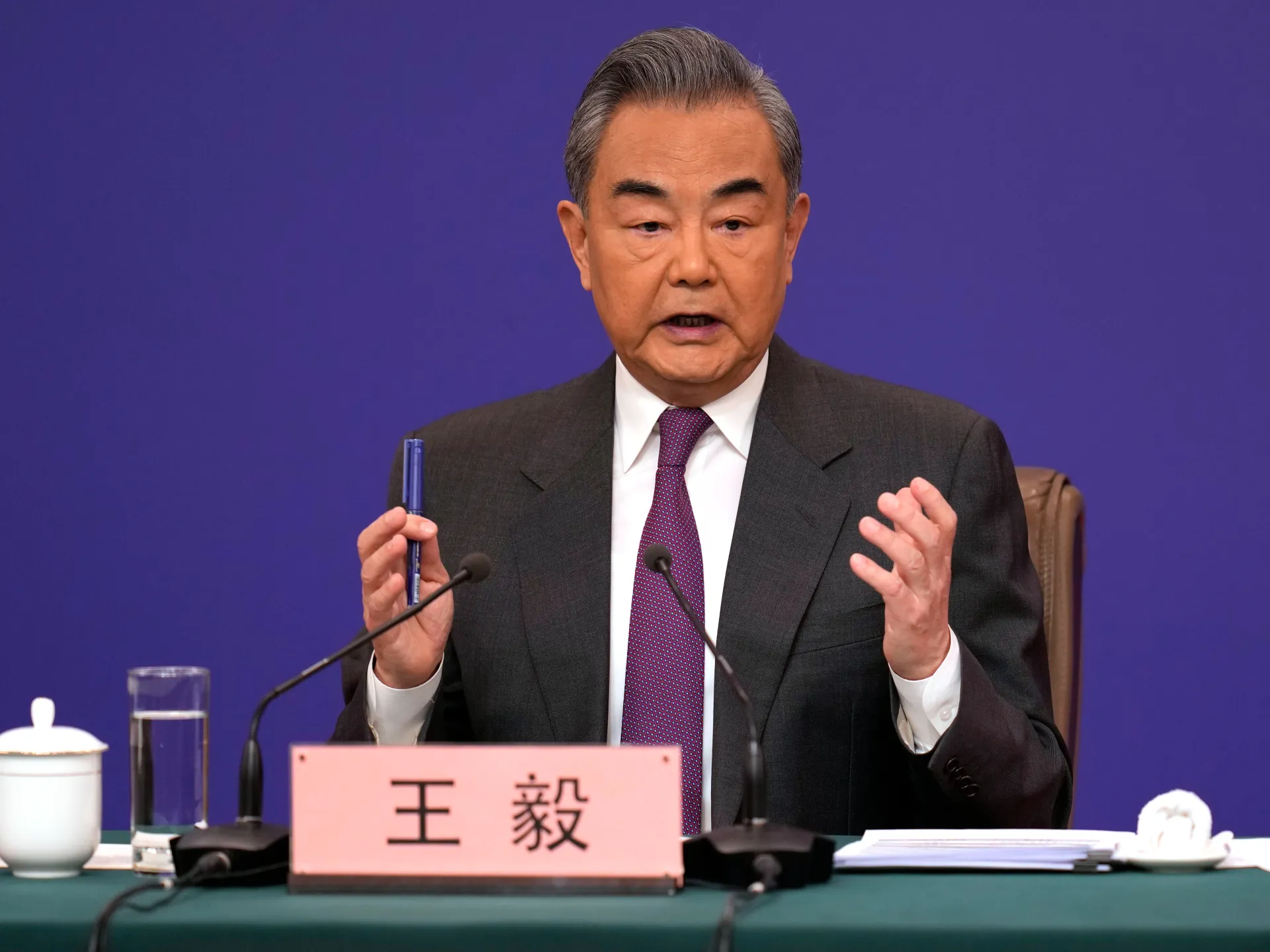
China’s Foreign Minister Wang Yi issued a stern warning to the United States regarding its involvement in Taiwan during his speech at the Munich Security Conference in Germany. He expressed concerns that U.S. actions aimed at intervening in Taiwan could provoke a serious confrontation with Beijing.
Accusations of Instigation and Policy Shifts
Wang emphasised that the U.S. might adopt a future policy toward China that seeks to “instigate and plot to split China through Taiwan,” which he described as a dangerous crossing of China’s “red line.” He conveyed that if such a course is pursued, it could very likely escalate tensions between China and the United States.
China’s Position on Taiwan
The Chinese government maintains that Taiwan, which operates with self-rule, is an integral part of its territory. Beijing has indicated that it might resort to military action to bring Taiwan under its control if necessary. In contrast, the United States is viewed as Taiwan’s key international ally and primary supplier of arms. Any military confrontation involving Taiwan would see heavy reliance on U.S. support.
Call for Pragmatism in Bilateral Ties
While Wang hoped for a “positive and pragmatic” approach to bilateral relations, he made it clear that China is also prepared to encounter various risks stemming from U.S. policy actions. His remarks highlight the ongoing complexities in U.S.-China relations, particularly concerning Taiwan.
Comments on Sino-Japanese Relations
In addition to discussions regarding Taiwan, Wang addressed the deteriorating relations between China and Japan, which have become increasingly tense since Prime Minister Sanae Takaichi assumed office in October. Wang expressed concern about the political climate in Japan, suggesting that the populace should not be misled by right-wing groups or those attempting to revive militaristic ideologies.
Warning to Japan on Militarism
Wang cautioned that Japan should heed the warnings from peace-loving nations. He advised that if Japan continues on a path towards militarism, it would ultimately lead to “self-destruction.” This statement underscores the fragile state of Sino-Japanese relations amidst ongoing regional tensions.
Geopolitical Tensions on the Rise
The statements made by Wang highlight the increasing geopolitical tensions in East Asia, especially concerning Taiwan and Japan’s military posture. As both the United States and Japan navigate their respective policies, the risk of miscalculation and escalation remains a pressing concern for regional stability.
A Broader Context of U.S.-China Relations
The dialogue between China and the U.S. continues to evolve, with Taiwan remaining a critical flashpoint. Ongoing diplomatic interactions are essential to address these issues constructively and seek resolutions that foster peace and stability in the region.