


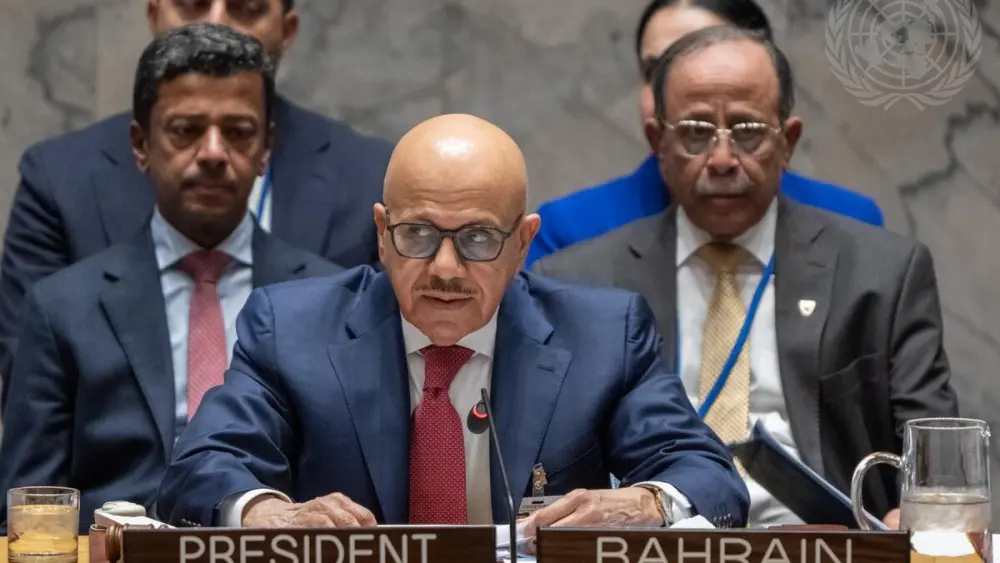

On April 8, the United Nations Security Council witnessed a significant development as Russia and China vetoed a resolution put forth by Bahrain aimed at reopening the vital Strait of Hormuz. The 15-member council saw 11 members voting in favor of the resolution, two against, and two abstaining. Pakistan and Colombia chose not to vote.
This resolution called for Iran to immediately halt all attacks on merchant vessels and to ensure unhindered navigation in the Strait, while also demanding an end to assaults on civilian infrastructure, especially water supply systems and oil and gas facilities.
Background of the Resolution
This draft resolution was largely formulated through cooperative efforts by Bahrain alongside other Gulf Cooperation Council (GCC) nations, including Kuwait, Oman, Qatar, Saudi Arabia, and the United Arab Emirates, in addition to Jordan. The intent behind the resolution was to address the rising tensions in the region, particularly regarding threats to maritime safety in one of the world’s busiest shipping lanes.
Reactions to the Veto
Following the veto, Bahrain’s Minister for Foreign Affairs, Abdullatif bin Rashid Al Zayani, expressed disappointment over the council’s decision not to endorse the resolution. He articulated concerns that the failure to adopt such a measure conveyed an inappropriate message to the international community regarding the persistence of threats to essential global maritime routes. Al Zayani emphasized the necessity for decisive action from the international community to address such threats effectively.
Objections by Russia and China
In response to the resolution, Russia articulated that it represented a “fundamentally erroneous and dangerous approach” to the regional situation. Russian Ambassador Vassily Nebenzia particularly criticized the resolution for failing to address what he termed the “illegal attacks” conducted by the United States and Israel against Iran. Meanwhile, China argued that the draft fell short of addressing the underlying issues fueling the conflict, asserting that it lacked a comprehensive and balanced portrayal of the situation. Chinese Ambassador Fu Cong noted the importance of addressing significant concerns raised by council members before rushing to a vote.
Global Implications and US Position
The United States reaffirmed its support for the Gulf nations, contrasting their stance with that of Russia and China, which it accused of siding with a regime that aims to exert control over the Gulf region. U.S. Ambassador Michael Waltz emphasized the strategic importance of the Strait of Hormuz, suggesting that its security should not be compromised by the actions of any single state. This development comes in the context of heightened tensions, particularly following inflammatory remarks by the U.S. President. These remarks, made via social media, hinted at potential drastic shifts in geopolitical dynamics and warned of severe consequences should conflicts escalate.
Context of Ongoing Tensions
The backdrop of this UN resolution and subsequent vetoes is marked by a complicated military standoff involving the United States and Iran. Reports have indicated military actions targeting key Iranian infrastructure. As the situation unfolds, the international community remains vigilant, monitoring developments closely in hopes of preventing further escalation and ensuring the safety of navigation through pivotal waterways.