


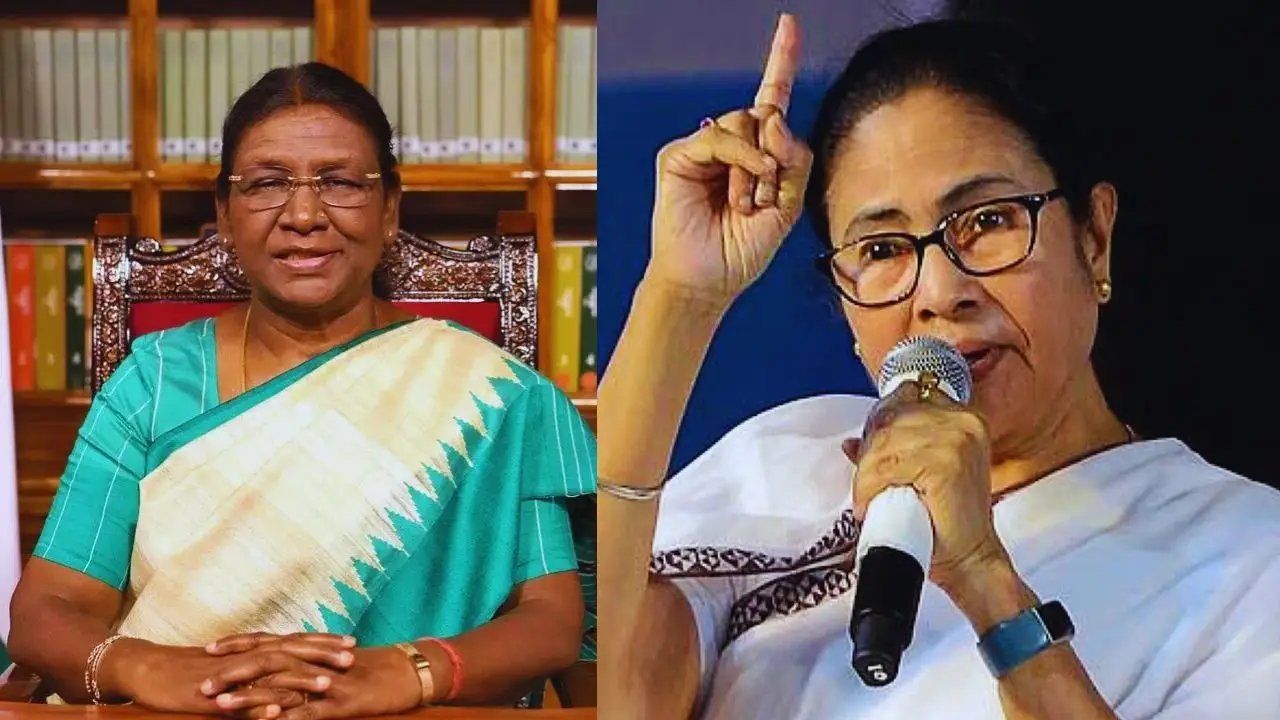

Tensions between the Union Government and the West Bengal administration have hit a boiling point following a major protocol controversy during President Droupadi Murmu’s visit to Siliguri on March 7, 2026. In a firm response to the incident, the Ministry of Home Affairs (MHA) has initiated steps to bring two senior state officials ,Darjeeling District Magistrate (DM) Manish Mishra and the Siliguri Commissioner of Police (CP) under central deputation.
The Controversy: A Presidential Displeasure
The standoff stems from President Murmu’s recent visit to North Bengal to attend the 9th International Santal Conference. During the event, the President expressed public dissatisfaction regarding the administrative arrangements. Notably, she questioned why the conference venue was shifted from Bidhannagar to a more remote location near Bagdogra airport, suggesting that the change hindered tribal participation.
Furthermore, the President highlighted a perceived breach of protocol, noting that neither Chief Minister Mamata Banerjee nor any senior state cabinet minister was present at Bagdogra Airport to receive her upon arrival. Only the Mayor of Siliguri was in attendance. During her address, the President remarked, “Mamata is like my younger sister. I do not know why she is angry with me,” while also expressing concern that administrative hurdles had prevented many members of the tribal community from attending the conference.
Center’s Move and Legal Standing
Citing serious violations of the ‘Blue Book’ the confidential manual governing security and protocol for the nation’s highest dignitaries , the Union Home Ministry has demanded a detailed explanation from the state government. By seeking the central deputation of the Darjeeling DM and the Siliguri CP, the Center is asserting its authority over officers responsible for the administrative lapses.
The move is grounded in the IPS (Cadre) Rules, 1954. Under Rule 6(1), which has been upheld by the Supreme Court, the Union Government holds overriding power regarding the deputation of All India Service officers, even in cases where the state government disagrees.
Potential Consequences
The request from the MHA puts the West Bengal government in a difficult position. If the state refuses to relieve these officers for central service, they could face significant career repercussions:
Professional Bar: Officers refusing central deputation may be prohibited from any future central postings for a period of five years.
Career Progression: For officers from the 2011 batch and beyond, a minimum of two years of central deputation is now a mandatory requirement for empanelment as an Inspector General (IG).
As the state government evaluates its response, the issue has transformed into a major political flashpoint, with both sides trading accusations over the sanctity of constitutional protocols ahead of the upcoming assembly elections.