


CBSE Introduces AI and Computational Thinking Curriculum for Class 3 Students
The CSR Journal Magazine

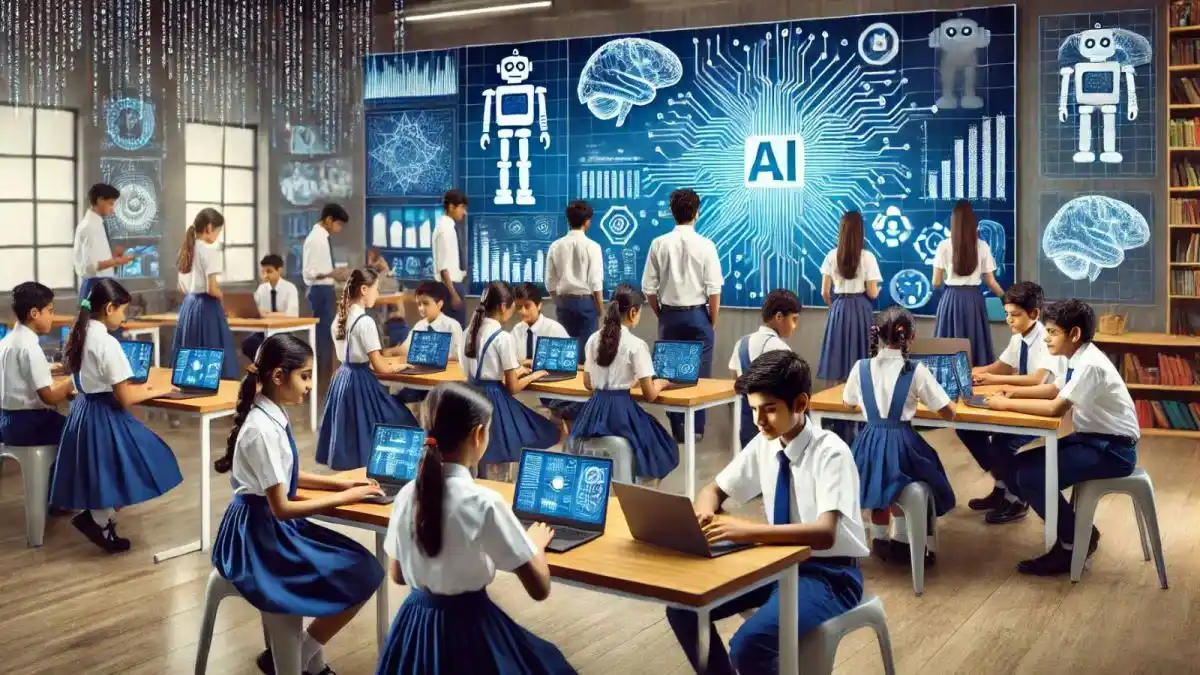
The Central Board of Secondary Education is implementing a revised curriculum on Computational Thinking and Artificial Intelligence for students from Classes 3 to 8, commencing in the 2026-27 academic year. The initiative was unveiled by Union Education Minister Dharmendra Pradhan during an event at Vigyan Bhawan, New Delhi. This initiative is designed to make education more relevant to the technological advancements shaping society.

Objective of the Curriculum

The new educational framework aims to provide students with structured learning experiences related to emerging technologies. It includes detailed guidelines for teachers and effective assessment tools for students, ensuring a comprehensive understanding from the outset. Minister Pradhan highlighted that the curriculum embodies the principles of “AI for Education, AI in Education,” emphasizing its role in fostering critical thinking, innovation, and problem-solving skills among students.

Focus on Early Exposure to AI

The curriculum emphasizes the development of skills such as logical reasoning, problem-solving abilities, and an understanding of artificial intelligence’s applications in day-to-day life. The goal is to cultivate students who are prepared for engaging responsibly with technology, rather than being mere consumers. Additionally, it seeks to promote digital literacy, ethical decision-making, and innovative thinking in young learners.

Alignment with National Education Policy

This new educational program is aligned with the National Education Policy 2020 and the National Curriculum Framework for School Education 2023. The learning objectives and outcomes have been developed in accordance with these frameworks. The phased introduction of Computational Thinking provides a foundational understanding, allowing students to progress to more complex AI concepts as they advance through their studies.

Preparation for an Uncertain Technological Future

Jayant Chaudhary remarked on the necessity for educational frameworks that prepare students for unpredictable technological changes. Emphasizing that AI is significantly altering knowledge creation and decision-making processes, he stated that it is crucial for students to evolve from passive users of technology to proactive creators and responsible leaders. Early engagement in computational thinking will equip children with the confidence to adapt to learning in various contexts.

Innovative Teaching and Assessment Methods

The instructional approach for this curriculum will be centered around activity-based and experiential learning methods. Students will engage with material through games, puzzles, and practical exercises. Teachers will assist in simplifying complex problems and facilitating understanding of concepts through visual aids such as charts and diagrams. Assessments will prioritize practical evaluations over rote memorization, employing written tests, collaborative activities, and observation journals to monitor student progress.

Integration Across Subjects

The new curriculum is expected to blend learning across mathematics, science, and humanities while strengthening foundational skills in digital literacy and technology use. By instilling these competencies, the curriculum aims to develop a generation of learners who can navigate and innovate in an increasingly digital world.

Long or Short, get news the way you like. No ads. No redirections. Download Newspin and Stay Alert, The CSR Journal Mobile app, for fast, crisp, clean updates!

App Store –  https://apps.apple.com/in/app/newspin/id6746449540 

Google Play Store – https://play.google.com/store/apps/details?id=com.inventifweb.newspin&pcampaignid=web_share

Latest News

Popular Videos
