


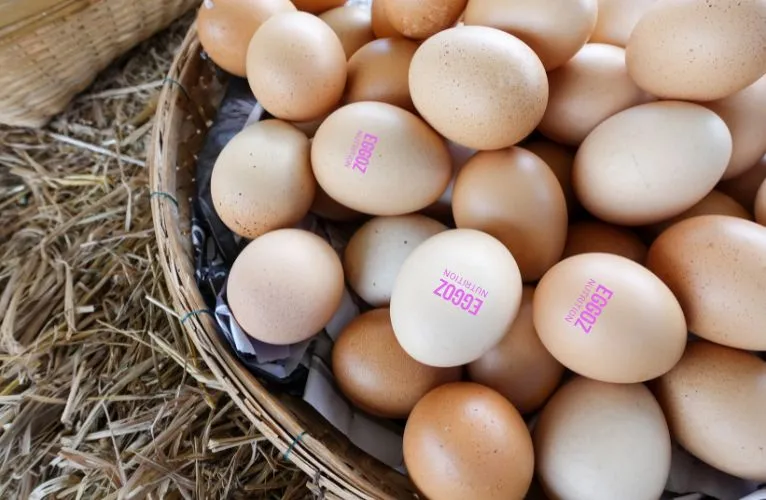

A recent viral video from the YouTube channel Trustified has caused a stir in the Indian food market, accusing a popular premium egg brand, Eggoz Nutrition, of selling eggs contaminated with a potentially dangerous chemical. This claim has sparked widespread concern, especially among consumers who trust the brand for its “antibiotic-free” and “chemical-free” promises. The chemical in question is AOZ, a metabolite of nitrofuran, a substance banned in many countries for its potential carcinogenic and genotoxic effects. But how serious are these claims? Should consumers panic, or is this an overblown issue?
The Allegations: What the Trustified Video Claims
The controversy began with a Trustified video that pointed to a specific batch of Eggoz eggs. According to the video, tests revealed traces of AOZ at 0.74 micrograms per kilogram. This level, while below India’s permissible limit of 1 microgram per kilogram, is still concerning given that nitrofuran, the parent compound of AOZ, is prohibited in many countries due to its potential to alter DNA and increase the risk of cancer.
The findings were quickly picked up by netizens and food safety experts, fueling outrage among consumers. For many, this raised the unsettling question: if these eggs, sold at a premium with promises of purity, could be contaminated with a banned substance, what does that say about the wider food industry?
Eggoz’s Defense: “Our Eggs Are Safe”
Eggoz Nutrition wasted no time in addressing the claims. The brand posted a detailed statement on Instagram, assuring consumers that their eggs meet all safety standards as per the Food Safety and Standards Authority of India (FSSAI). The company also emphasised that the presence of AOZ in the tested batch was within the legally acceptable limit and that its products are free from antibiotics. To further calm public concerns, Eggoz committed to additional testing through an independent NABL-accredited laboratory.
In a statement, the company declared: “We are aware of a video that is currently being shared and understand that it may have raised some questions and concerns. We want to reassure our consumers that our eggs are safe for consumption and comply with the standards set by the Food Safety and Standards Authority of India (FSSAI). We take every care to maintain quality and safety at our farms and across the entire value chain.”
The Doctor Speaks: A Cautious Perspective
Medical experts have also weighed in on the controversy. Dr. Manan Vora, an orthopedic surgeon and content creator, shared his thoughts in a video posted on December 9. While he acknowledged the shock of discovering banned substances in Eggoz eggs, he emphasised that the situation does not warrant panic. “Eggs can cause cancer – you will see this all over your timeline today. Let me tell you what the truth is,” Dr. Vora said. He clarified that the detected substance, though concerning, was not at a level that would pose an immediate health risk.
Dr. Vora also questioned why India’s regulatory body, FSSAI, allows any residue of banned substances in food at all. “Other countries have an absolute zero tolerance for these substances, and they should not be allowed at all,” he remarked. He further pointed out the inconsistency in India’s regulations, where certain levels of these chemicals are still deemed acceptable. “What we need to ask FSSAI is why there is a level one when other countries have a zero tolerance for these substances?”
Should You Be Worried About Eating Eggs?
The debate around Eggoz eggs boils down to two main issues: the presence of a banned substance and the broader question of food safety in India.
While the detected AOZ levels were under India’s legal limit, the controversy has brought attention to the lack of transparency in food sourcing and testing. The fact that a premium brand like Eggoz, which prides itself on offering “clean” eggs, could be caught up in such an issue raises doubts about the true quality of food products available in the market.
However, experts are quick to point out that this situation is not indicative of a broader threat posed by eggs in general. The controversy is specific to one test on one batch of eggs from a single brand. “This doesn’t mean that we say eggs cause cancer in general,” Dr. Vora reminded viewers.
The Larger Issue: Trust and Transparency in Food Safety
At the heart of the Eggoz controversy is a breakdown of trust between consumers and the food industry. Many consumers choose premium brands like Eggoz because they believe they are getting a higher-quality product, free from chemicals and antibiotics. When a brand that markets itself as being “chemical-free” is exposed for having traces of a banned substance, it undermines the trust consumers place in such labels.
This situation highlights a broader issue in the Indian food industry: the need for greater transparency and more rigorous food safety regulations. While India has its own standards, they may not always align with those of other countries that enforce stricter rules. As Dr. Vora pointed out, India’s current food safety laws allow for certain residue levels of banned chemicals, a policy that may not be adequate to protect consumers.
What Should Consumers Do Now?
In the wake of the Eggoz controversy, here are some steps you can take to ensure the safety and quality of the eggs you consume:
-
Opt for Certified and Transparent Brands: Look for brands that share their testing reports and clearly outline their sourcing and production practices. Certified organic or pasture-raised eggs are generally safer options.
-
Support Local Farms: Small-scale, local farms often have shorter supply chains and more direct oversight. While not perfect, local farms may offer a more reliable source of eggs with fewer chemicals.
-
Be Cautious of Premium Labels: Just because a brand markets itself as “premium” doesn’t mean it’s free of hidden contaminants. Always read labels carefully and pay attention to how brands respond to controversies.
-
Cook Eggs Thoroughly: While cooking will not remove chemical residues, it can reduce the risk of bacterial contamination. Make sure your eggs are cooked thoroughly before eating.