



Finance Minister Nirmala Sitharaman presented the Union Budget 2026 in the Lok Sabha on Sunday, beginning her speech at 11 am and concluding at 12.25 pm, against the backdrop of global economic uncertainties, geopolitical tensions, and heightened market volatility. With investors tracking budget signals in real time, Sitharaman outlined a wide-ranging policy roadmap spanning the social sector, agriculture, rural livelihoods, tourism, skilling, and high-value farming. The Budget placed emphasis on job creation, income growth, regional balance, and institutional reforms, even as domestic markets remained sensitive to global cues.
Follow The CSR Journal’s live updates of Budget 2026 below.
Follow all the updates here:
Budget 2026 Live Updates: Finance Minister Nirmala Sitharaman Concluded her 9th Consecutive Budget Speech in Loksabha
Finance Minister Nirmala Sitharaman concluded her 9th consecutive budget speech in Loksabha at 12:25 PM on Sunday, Feb 1, 2026. The speech lasted for 1 hour 25 minutes. This is much shorter than the longest budget speech she delivered in the year 2020, which lasted for 2 hours 42 minutes.
Budget 2026 Live Updates: Rs 20,000 Crore Push For Carbon Capture Technologies
Union Finance Minister Nirmala Sitharaman proposed an outlay of Rs 20,000 crore over the next five years to support Carbon Capture, Utilisation and Storage (CCUS) technologies.
The funding is aimed at scaling up CCUS projects and improving technology readiness, enabling wider end-use applications across key sectors of the economy.
Budget 2026 Live Updates: Government To Set Up 1,000 Clinical Trial Sites, Launches Bharat Vistar And She Marts
Finance Minister Nirmala Sitharaman on Sunday announced that the government will establish a network of more than 1,000 accredited clinical trial sites across the country, expanding capacity beyond major metropolitan centres and strengthening India’s clinical research ecosystem.
She also proposed a credit-linked subsidy programme to support livestock farmer producer organisations, with the aim of generating employment and boosting rural entrepreneurship.
In her Budget speech, Sitharaman unveiled Bharat Vistar, a multilingual AI-based tool designed to integrate the agri-stack and provide farmers with better access to data and advisory services. She also announced the launch of She Marts, community-owned retail outlets aimed at empowering local women entrepreneurs and improving market access for their products.
Budget 2026 Live Updates: Fiscal Deficit Pegged At 4.4% For FY26, Seen At 4.3% In FY27
Union Budget 2026 Live: Finance Minister Nirmala Sitharaman told the House that the government has met its commitment made in 2021–22 to bring the fiscal deficit below 4.5 per cent of GDP by 2025–26.
The revised estimate for the fiscal deficit in 2025–26 stands at 4.4 per cent of GDP, in line with the Budget Estimate for the year. For 2026–27, the fiscal deficit is projected to decline further to 4.3 per cent of GDP, reflecting continued fiscal consolidation.
Budget 2026 Live Updates: Lakpati Didi Programme Enters Next Phase Of Women-Led Enterprises
Union Budget 2026 Live Updates: Building on the momentum of the Lakpati Didi programme, Finance Minister Nirmala Sitharaman announced measures to help women transition from credit-linked livelihoods to full-fledged enterprise ownership.
Under the expanded push, self-help entrepreneur marts will be set up as community-owned retail outlets within cluster-level federations. These marts will be backed by enhanced and innovative financing mechanisms, enabling women entrepreneurs to scale up businesses, access markets, and take the next step in their entrepreneurial journey.
Budget 2026 Live Updates: Coconut, Cashew, Cocoa And Sandalwood To Drive High-Value Agriculture Push
The government will promote high-value agriculture as a key pillar of farm income growth, productivity enhancement, and employment generation. Support will be extended to crops such as coconut, sandalwood, cocoa, and cashew, as well as tree crops in the North-East and hill regions including almonds, walnuts, and pine nuts.
India’s status as the world’s largest producer of coconuts was highlighted, with nearly 30 million people dependent on coconut farming for their livelihoods. A dedicated mission-mode programme will be launched to enhance the competitiveness of coconut products by increasing production and productivity. Interventions will include replacing senile and non-productive trees with high-yielding varieties and improving processing infrastructure.
Dedicated programmes for cashew and cocoa aim to achieve self-reliance in raw material production, strengthen processing, and expand exports, with a goal of positioning Indian cocoa products in premium global markets by 2030.
Sandalwood, described as deeply linked to India’s social and cultural heritage, will receive renewed attention. In partnership with state governments, the Centre will promote first-harvest processing to revive the Indian sandalwood ecosystem and restore its global standing. High-density cultivation of walnuts, almonds, and pine nuts will also be expanded to raise farm incomes and attract youth into value-added agriculture.
Budget 2026 Live Updates: Agriculture, Fisheries And Livestock Get Push To Raise Farm Incomes
The government outlined a broad strategy to increase farmer incomes through productivity enhancement and entrepreneurship, with special attention to regional balance, youth empowerment, and support for vulnerable groups. The focus is on expanding livelihood opportunities through training, skilling, and improved access to institutional support.
Special emphasis has been placed on accelerating development in the North-East and coastal regions, particularly through fisheries and allied activities. An Integrated Development Programme for 500 reservoirs and Amrit Sarovarswill be rolled out to strengthen inland fisheries, improve market linkages, and encourage participation from startups and women-led groups.
To promote rural entrepreneurship, a credit-linked subsidy programme will be introduced for the livestock, dairy, and poultry sectors. The initiative aims to enhance the creation of livestock and poultry farmer producer organisations, generate quality employment, and diversify rural incomes.
The Budget also proposes measures to empower youth through access to livelihood opportunities and training, while ensuring support systems for vulnerable communities, including access to mental health and trauma care in rural areas. To strengthen farm-level decision-making, the government announced the launch of Bharat Vistaar, an integrated digital platform that will combine AgriStack portals with advisory packages from the Indian Council of Agricultural Research. The platform is expected to improve productivity, reduce risk, and provide customised advisory support to farmers.
Budget 2026 Live Updates: Sports Talent Development Pathway To Be Strengthened Through Training, Science And Infrastructure
The government proposed the creation of a structured sports talent development pathway, anchored by foundational training centres that will support athletes from the grassroots level upward. These centres will focus on early identification, coaching, and long-term athlete development.
A key emphasis will be placed on the systematic development of coaches and support staff, alongside deeper integration of sports science and technology to improve performance, injury management, and recovery.
To strengthen the overall sports ecosystem, the government will provide platforms for athlete exposure, expand sports infrastructure, and support the development of modern training facilities. These measures are aligned with the broader vision of Sabka Saath, Sabka Vikas under the goal of Viksit Bharat, positioning sports as a pathway for opportunity, excellence, and inclusive growth.
Budget 2026 Live Updates: Skilling, Digital Mapping And Eco-Tourism To Drive Travel Sector Growth
The Union Budget has placed tourism at the centre of its employment and growth strategy, underlining its role in job creation, foreign exchange earnings, and local economic development. The government outlined a mix of institution-building, skilling, digital documentation, and eco-tourism initiatives aimed at strengthening the sector across the country.
Announcing the measures, Finance Minister Nirmala Sitharaman said the tourism sector has the potential to play a significant role in employment generation, forex earnings, and expanding local economies. To support this, the government will establish a National Institute of Hospitality by upgrading the National Council for Hotel Management and Catering Technology. The institute will work in close coordination with academia, industry, and government to raise training quality and professional standards in hospitality.
Skilling at the grassroots level will be a key focus. The Finance Minister announced a pilot scheme to upskill 10,000 tourist guides across 20 iconic sites through a standardised, high-quality 12-week hybrid training programme, to be conducted in collaboration with the Indian Institute of Management.
To strengthen the digital backbone of tourism, the government will create a National Destination Digital Knowledge Grid to digitally document places of cultural, spiritual, and heritage significance. This initiative is expected to generate employment opportunities for local researchers, historians, content creators, and technology partners.
The Budget also places strong emphasis on eco-tourism and nature-based travel. Highlighting India’s potential to offer world-class trekking and hiking experiences, the government will develop sustainable mountain trails in Himachal Pradesh, Uttarakhand, and Jammu and Kashmir, as well as in the Araku Valley in the Eastern Ghats and Pudigai Malai.
In addition, the government will create dedicated wildlife tourism trails. These include turtle trails along nesting sites in Odisha, Karnataka, and Kerala, as well as bird-watching trails around Pulicat Lake.
Together, these initiatives are expected to position tourism as a major driver of inclusive growth, employment, and sustainable development.
Budget 2026 Live Updates: Orange Economy, Design Education And Academic Infrastructure
The government highlighted the rapid growth of India’s orange economy, covering animation, visual effects, gaming and comics (AVGC). The sector is projected to require nearly two million professionals by 2030, underscoring the need for large-scale skilling and institutional support.
To address this demand, the government will support the Indian Institute of Creative Technology in Mumbai to strengthen the AVGC content creation ecosystem. Dedicated programmes will be introduced across secondary schools nationwide and 500 colleges, even as the industry continues to face a shortage of trained Indian designers.
To boost design education and innovation, the government proposed setting up a new National Institute of Design, aimed at strengthening design capability and talent development across sectors.
In higher education, the Centre will support states in developing five university clusters near major industrial and logistics hubs. These planned academic zones will host multiple universities, colleges, and research institutions, including STEM-focused institutions, to align education with industry and employment needs.
To improve access and inclusion in higher education, viability gap funding (VGF) will be used to support infrastructure such as girls’ hostels, with a proposal to establish one girls’ hostel in every district. Measures will also focus on improving learning environments and addressing challenges faced by women students.
The Budget also places emphasis on science education and outreach, particularly through immersive learning. Facilities for astronomy and space science education at the school level will be set up or upgraded, alongside major national projects including the National Large Solar Telescope, National Large Optical Telescope, the Himalayan Chandra Telescope, and the Cosmos-II Planetarium, aimed at strengthening India’s scientific research and public engagement in science.
Budget 2026 Live Updates: Livestock Sector Gets Boost As Budget Targets Vet Capacity And Infrastructure
The government highlighted the importance of the livestock sector, noting that it contributes close to 16 per cent of farm income, including for poor and marginal households.
To address capacity gaps, the availability of veterinary professionals will be increased by more than 20,000 in the coming years. To support this expansion, the government proposes to roll out a loan-linked capital support scheme for the establishment of veterinary and para-veterinary colleges, veterinary hospitals, diagnostic centres, and training facilities.
The initiative will encourage private sector participation, and collaboration between Indian and foreign institutionswill also be facilitated to improve education quality, clinical exposure, and research standards in the veterinary ecosystem.
Budget 2026 Live Updates: Services, Technology And Healthcare Get Major Policy Push In Budget
The government said the financial and investment ecosystem will continue to be strengthened through existing schemes, including those that incentivise market issuances, while maintaining support for small and medium towns to broaden economic participation.
As part of ease-of-doing-business reforms, individual persons resident outside India (PROIs) will be permitted to invest in listed Indian companies through the portfolio investment scheme. The investment limit for an individual PROI will be raised from 5 per cent, while the aggregate investment limit for all individual PROIs will be increased to 24 per cent, widening access to Indian capital markets.
The Budget also places strong emphasis on emerging technologies, particularly artificial intelligence and other 21st-century technologies, with the stated objective of ensuring technology benefits farmers, women in STEM, and young people seeking new opportunities. The government highlighted ongoing support through initiatives such as the IndiaAI Mission, the National Quantum Mission, the Anusandhan National Research Fund, and expanded public research funding.
Under what the government described as its “second curve” of development, the focus will be on fulfilling aspirations and building capacities, particularly after millions have exited multidimensional poverty over the past decade. A renewed emphasis will be placed on the services sector as a pathway for employment and upward mobility in a youthful economy.
To this end, a high-powered committee on services will be set up to recommend measures to position services as a core driver of growth, employment, and exports, with the ambition of securing a 10 per cent share in global services trade by 2047. The committee will also assess the impact of technologies such as AI on jobs and skills, and identify priority interventions across key service segments.
In healthcare and allied services, the government announced the creation of new skilled career pathways. Existing institutions for allied health education will be strengthened, and new institutions will be established in both government and private sectors. These will cover disciplines including optometry, radiology, anaesthesia technology, operation theatre technology, and applied psychology. Over the next five years, additional allied health professional institutions will be added to expand capacity.
A national skilling system for geriatric and allied care services will be developed under the National Skills Qualifications Framework, leveraging digital platforms to train multi-skilled caregivers. Around 1.5 lakh caregivers are expected to be trained in the coming year, including in the operation of medical assistive devices.
To promote medical value tourism, the government will launch a scheme to support states in setting up five medical tourism hubs in partnership with the private sector. These hubs will function as integrated centres combining medical care, education, research, and ancillary services.
The Budget also underscored India’s growing global profile in traditional medicine. Building on international recognition for yoga following its promotion at the United Nations by Prime Minister Narendra Modi, the government said it aims to replicate similar global acceptance for Ayurveda. Measures include setting up three new all-India institutes of Ayurveda, upgrading two existing institutes, strengthening drug testing laboratories, and enhancing certification systems.
The WHO Global Centre for Traditional Medicine in Jamnagar will also be upgraded to strengthen evidence-based research and global standards for traditional medicine, supporting exports and benefiting farmers, processors, and youth linked to the sector.
Budget 2026 Live Updates: Boosting Corporate and Municipal Bond Markets
To align foreign investments with India’s evolving economic priorities, the government plans to strengthen the corporate bond market by introducing a market-making framework with access to funds and derivatives on corporate bond indices.
Additionally, total return swaps on corporate bonds will be introduced. To promote the municipal bond market, larger cities issuing high-value bonds will be incentivised with Rs 100 crore for a single bond issuance exceeding Rs 1,000 crore, building on the existing Amrit scheme.
Budget 2026 Live Updates: Financial Sector Reforms To Support Next Phase Of Growth
The Finance Minister said India’s financial sector is entering a position of strength, marked by strong balance sheets, record profitability, improved asset quality, and expanded financial coverage across villages. At this stage, the government believes the system is well placed to evaluate forward-looking reforms needed to sustain growth.
To guide the next phase, the government proposes setting up a high-level committee on banking for Viksit Bharat. The committee will undertake a comprehensive review of the banking sector, focusing on growth requirements while safeguarding financial stability, financial inclusion, and consumer protection.
The role of non-banking financial companies (NBFCs) in the Viksit Bharat vision has also been outlined, with clear targets for credit disbursement. Measures will be taken to help public sector NBFCs achieve scale and improve operational efficiency. As an initial step, reforms are proposed in select institutions, including those linked to cooperation and rural electrification.
The government also signalled changes in foreign exchange management and non-debt instruments, aimed at creating a more contemporary and flexible framework aligned with India’s evolving economic priorities.
Together, these measures are intended to strengthen the financial system’s ability to support long-term growth, inclusion, and resilience.
Budget 2026 Live Updates: High-Speed Rail Corridors And CER Funding To Power Tier 2 And Tier 3 City Growth
he Budget places a renewed emphasis on tier 2 and tier 3 cities, positioning them as engines of growth, innovation, and opportunity. By strengthening modern infrastructure and basic civic amenities, the government aims to further unlock the economic potential of these emerging urban centres.
To drive agglomeration-led growth, the government will map City Economic Regions (CERs) based on their specific economic strengths, geographic advantages, and industrial linkages. These regions are intended to function as integrated economic clusters rather than isolated urban centres.
Each City Economic Region will receive ₹5,000 crore over five years, with funding linked to reforms and a results-based financing mechanism to ensure efficient utilisation and measurable outcomes.
To support integrated urban and regional development, the government will also develop seven high-speed rail corridorsconnecting major city clusters:
-
Mumbai – Pune
-
Pune – Hyderabad
-
Hyderabad – Bengaluru
-
Chennai – Bengaluru
-
Delhi – Varanasi
-
Varanasi – Siliguri
Together, these measures are expected to deepen regional integration, significantly reduce travel times, and create new growth corridors beyond India’s largest metropolitan centres.
Budget 2026 Live Updates: Infrastructure Push Scaled Up With Higher Capex, Freight Corridors, Waterways And Green Technologies
-
Capital Expenditure Hike: Public infrastructure spending has risen sharply over the past decade, from ₹2 lakh crore in 2014–15 to ₹11.5 lakh crore in 2025–26. To sustain momentum, capital expenditure is proposed to be increased to ₹12.2 lakh crore in the coming financial year.
-
Growth Of Tier 2 And Tier 3 Cities: Infrastructure expansion has helped tier 2 and tier 3 cities emerge as new growth centres, supported by improved connectivity and financing instruments.
-
Risk Mitigation For Private Investment: To boost private sector participation, enhanced credit guarantee mechanisms for lenders will be used to reduce risks in infrastructure development.
-
Asset Monetisation: Building on the success of asset monetisation, the government proposes to accelerate the recycling of capital from completed infrastructure assets, including railways.
-
Dedicated Freight And Logistics Corridors:
-
New dedicated freight corridors will be established to strengthen connectivity between key economic regions.
-
Over the next five years, 20 new national waterways will be operationalised.
-
-
National Waterways Expansion:
-
Development will begin with National Waterway-5 in Odisha, connecting mineral-rich Talcher and industrial centres such as Kalinganagar to the ports of Paradip and Dhamra.
-
Dedicated training institutes will be set up to develop skilled manpower for inland waterways, benefiting local youth.
-
-
Ship Repair And Coastal Cargo:
-
A ship repair ecosystem will be developed at Varanasi and Patna.
-
Coastal cargo services will be promoted to shift freight towards waterways and increase the share of inland water transport to 12 per cent by 2047.
-
-
Tourism And Manufacturing Support: Incentives will be provided to promote tourism-linked infrastructure and indigenous manufacturing of related equipment.
-
Green Infrastructure And Carbon Capture:
-
Viability gap funding (VGF) will be introduced to support carbon capture, utilisation, and storage (CCUS).
-
In line with the roadmap launched in December 2025, CCUS technologies will be advanced across five sectors—power, steel, cement, refineries, and chemicals.
-
An outlay of ₹20,000 crore over five years has been proposed for this initiative.
-
Budget 2026 Live Updates: 200 Legacy Industrial Clusters To Be Revived As MSMEs Get ₹10,000 Crore Equity Boost
-
Rejuvenation Of Legacy Industrial Clusters: The government has proposed the rejuvenation of 200 legacy industrial clusters to improve cost competitiveness, efficiency, and productivity, and to help create future industrial champions.
-
Three-Pronged MSME Growth Strategy: Recognising MSMEs as a vital engine of economic growth, a three-part approach has been proposed to help them scale up and compete effectively.
-
Equity Support For MSMEs: A dedicated ₹10,000 crore SME Growth Fund will be introduced to provide equity support and nurture future MSME champions.
-
Top-Up To Self-Reliant India Fund: The Self-Reliant India Fund, set up in 2021, will be topped up to continue supporting micro enterprises and ensure sustained access to risk capital.
-
Expanded Credit Support: More than ₹7 lakh crore has already been made available to MSMEs, with measures aimed at helping them fully leverage this support.
-
Improving Payment And Liquidity Mechanisms:
-
Mandating electronic transaction settlement platforms for government purchases from MSMEs.
-
Strengthening invoice discounting through the TReDS platform with support from credit guarantee mechanisms.
-
Encouraging information-sharing with financiers on government procurement from MSMEs.
-
Introducing trade receivables as asset-backed securities to improve liquidity and faster settlement of transactions.
-
-
Professional Support And Compliance Assistance: Professional institutions will design short, practical training modules to develop a cadre of accredited professionals, or “corporate mitras”, who will help MSMEs meet compliance requirements and improve ease of doing business.
Budget 2026 Live Updates: Capital Goods And Textiles Get Major Policy Push In Budget Proposals
-
Capital Goods Capability: The government highlighted capital goods capability as a key driver of productivity and quality across sectors.
-
High-Tech Tool Rooms: Central public sector enterprises will establish high-tech tool rooms, supported by AI-enabled automated service bureaus to locally design, test, and manufacture high-precision components.
-
Construction And Infrastructure Equipment: A new scheme will be introduced to enhance construction and infrastructure capabilities, focusing on high-value, technologically advanced equipment such as lifts for multi-storey buildings, firefighting systems in multiplexes, and equipment for metros and high-altitude roads.
-
Container Manufacturing: Budgetary support will be provided to develop a globally competitive container manufacturing ecosystem.
-
Integrated Textile Programme: An integrated programme is proposed for the labour-intensive textile sector.
-
National Fibres Scheme: A National Fibres Scheme will cover man-made fibres, natural fibres such as silk and wool, and new-age fibres.
-
Textile Expansion And Employment Scheme: The scheme aims to modernise the textile sector through technology upgradation and the creation of common testing and certification centres.
-
Handloom And Handicrafts: Existing handloom and handicraft schemes will be integrated and strengthened to ensure targeted support for artisans.
-
Tex-Eco Initiative: The Tex-Eco initiative will promote globally competitive and sustainable textiles.
-
SAMARTH 2.0: SAMARTH 2.0 will be launched to modernise and strengthen the textile skilling ecosystem and upgrade institutions.
-
Mega Textile Parks: The government plans to set up mega textile parks through a challenge-based mode.
-
Mahatma Gandhi Gram Swaraj Initiative: A new initiative will support global market linkages, branding, training, skilling, quality processes, and production, benefiting weavers.
Budget 2026 Live Updates: Manufacturing, Pharma, Semiconductors And Critical Minerals Get Major Push
-
Manufacturing Hubs: The government has proposed setting up manufacturing hubs with an outlay of ₹10,000 crore over the next five years to strengthen capabilities in equipment, biologics, and biosimilars.
-
Biomanufacturing And Research: The strategy includes a bio-manufacturing initiative with three new national education and research institutions, known as NIPERs, the upgradation of seven existing NIPERs, and the creation of 1,000 accredited clinical trial sites across India.
-
Drug Regulation Reforms: The Central Drugs Standard Control Organisation will be strengthened to meet global standards and improve approval timelines through a dedicated specialist cadre.
-
Semiconductors: Building on India Semiconductor Mission 1.0, the government will launch ISM 2.0 to support the production of equipment, materials, intellectual property, and strengthen supply chains, alongside industry-led research and training centres.
-
Electronics Components: The Electronics Components Manufacturing Scheme, launched in April 2025, has seen strong investment interest. The government proposes to raise its outlay to ₹40,000 crore to capitalise on this momentum.
-
Rare Earth Magnets: A scheme launched in November 2025 will support mineral-rich states such as Odisha, Kerala, Andhra Pradesh, and Tamil Nadu to promote mining, processing, research, and manufacturing of rare earth permanent magnets.
-
Chemical Parks: To reduce import dependence, a new scheme will support states in setting up chemical parks through a challenge-based route on a cluster-based plug-and-play model.
Budget 2026 Live Updates: We are inspired by three Kartavya, says Finance Minister
“We are inspired by three Kartavya.
Our first Kartavya is to accelerate and sustain economic growth and competitiveness, and to build resilience to volatile global dynamics.
Our second Kartavya is to fulfil the aspirations of our people and build their capacity, making them strong partners in the development journey.
Our third Kartavya, guided by a nationwide vision of Sabka Saath, Sabka Vikas, is to ensure that every community, region, and sector has access to resources, amenities, and opportunities,” says Finance Minister Nirmala Sitharaman.
Budget 2026 Live Updates: Finance Minister Nirmala Sitharaman Starts Budget Presentation at 11: 00 AM
Budget 2026 Live Updates: What changes when Budget day falls on a holiday?
When Budget day falls on a holiday, the presentation itself goes ahead as scheduled, but several systems adjust to ensure markets and institutions can respond in real time.
Parliament convenes despite the holiday, with the Finance Minister presenting the Budget in the Lok Sabha as per constitutional procedure. To facilitate immediate reaction, stock exchanges may hold a special trading session even if the day is otherwise a market holiday, as seen when the Budget is presented on a Sunday.
Banks, government offices, and most private institutions usually remain closed unless a special notification is issued. However, digital services such as banking apps, online filings, and official Budget document releases continue uninterrupted. Overall, while the ceremony and policy process remain unchanged, market operations and public access are selectively adapted for the day.
Budget 2026 Live Updates: The Big Focus Areas To Look Out For in the Budget Today
Today’s Union Budget is expected to prioritise job creation, with a focus on generating employment opportunities for the millions of Indians entering the workforce each year.
Another key theme is likely to be insulating the economy from global uncertainties, including geopolitical risks and tariff-related tensions, as Finance Minister Nirmala Sitharaman outlines the government’s macroeconomic strategy.
The government is also expected to step up capital expenditure on infrastructure such as roads, ports, and railways, expand incentive schemes aimed at boosting exports, and introduce reforms to the import-duty structure to support domestic manufacturing and competitiveness.
Budget 2026 Live Updates: Union Minister Gajendra Singh Shekhawat Says Budget 2026 Will be a Step Towards 'Viksit Bharat'
#WATCH | #UnionBudget2026 | Union Minister Gajendra Singh Shekhawat says, "Have faith. The goal with which the Govermment has been working for the last 11 years, to make this Viksit Bharat - since 2014 all Budgets have been the steps towards that goal. This Budget too will be… pic.twitter.com/vfe64ZEk5c
— ANI (@ANI) February 1, 2026
Budget 2026 Live Updates: Congress Leader Priyanka Gandhi when asked about budget expectations
VIDEO | Delhi: “I don’t have many expectations, but let’s see...,” says Congress leader Priyanka Gandhi when asked about budget expectations.#Budget2026WithPTI #UnionBudgetWithPTI
(Full video available on PTI Videos - https://t.co/n147TvrpG7) pic.twitter.com/B44Y9cPAjc
— Press Trust of India (@PTI_News) February 1, 2026
Budget 2026 Live Updates: Budget 2026 gets Cabinet nod
The Union Cabinet, chaired by Prime Minister Narendra Modi, on Sunday approved the Union Budget 2026–27, which will be presented by Finance Minister Nirmala Sitharaman at 11 am.
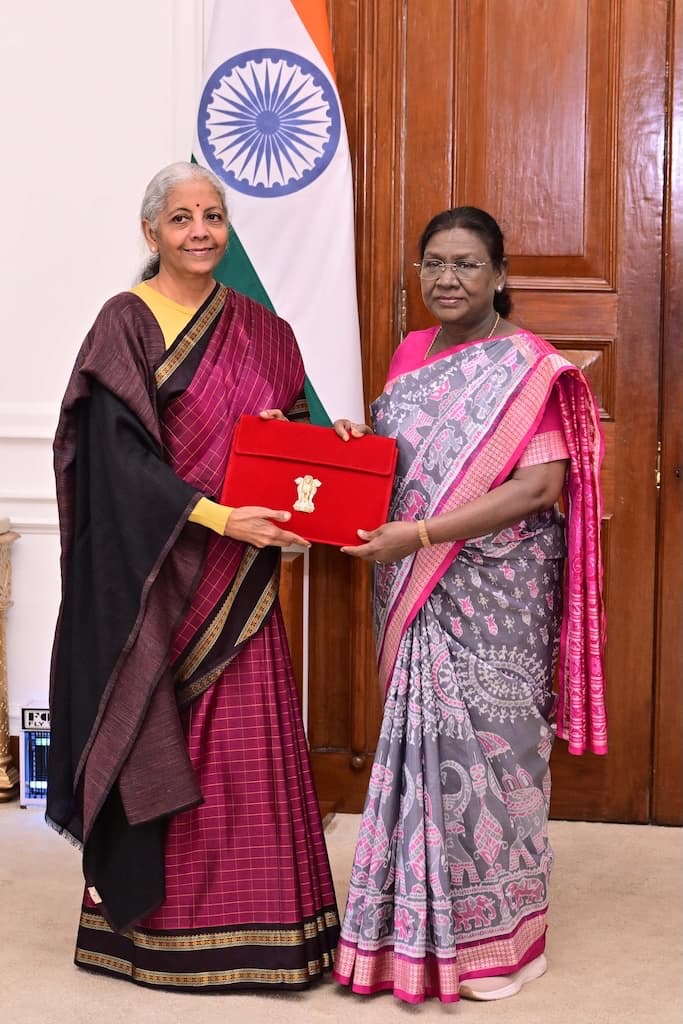
Ahead of the Budget presentation in Parliament, Sitharaman met President Droupadi Murmu at Rashtrapati Bhavanand handed over a copy of the digital Budget. Continuing a long-standing tradition, the President offered ‘dahi-cheeni’ (curd and sugar) to the Finance Minister, an auspicious gesture ahead of the crucial exercise.
Sitharaman was seen carrying her trademark ‘bahi-khata’, a tablet wrapped in a red cloth embossed with the golden national emblem.
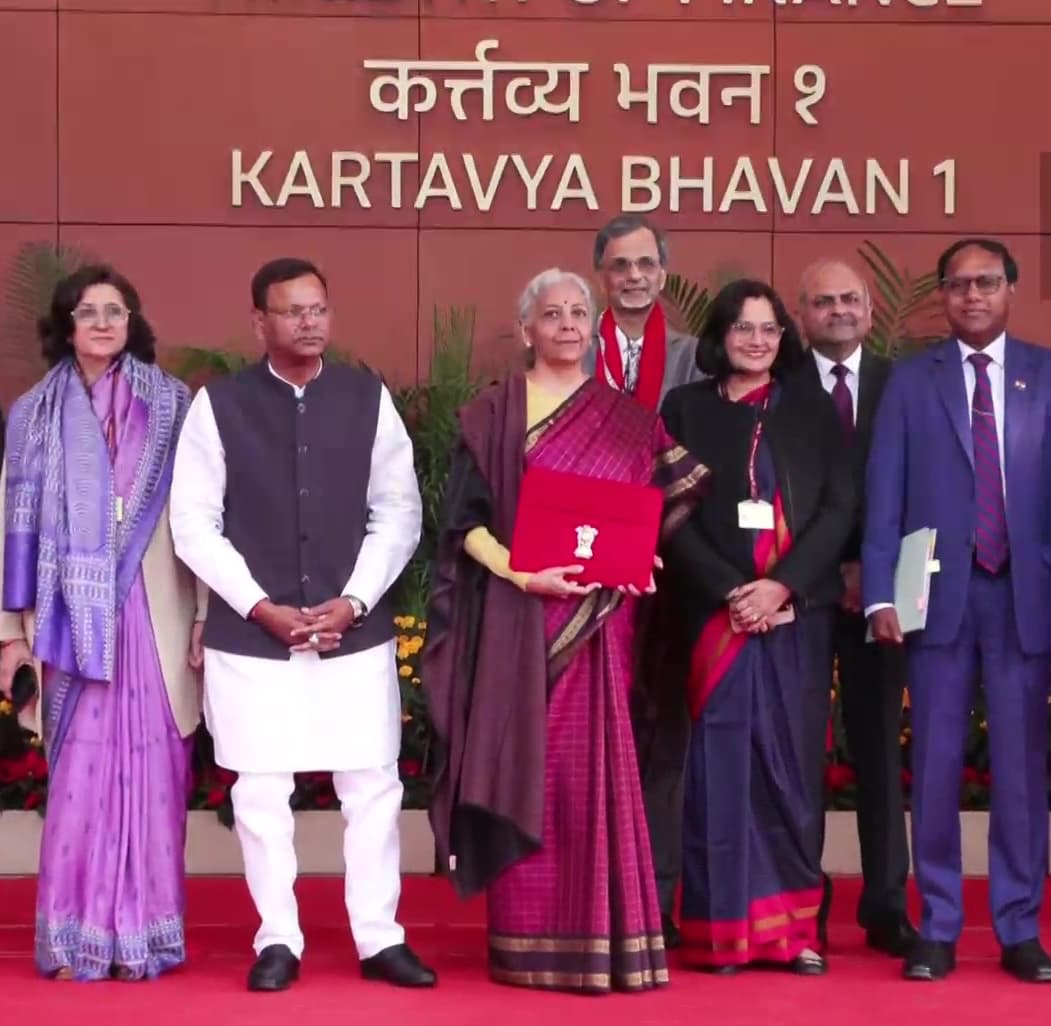
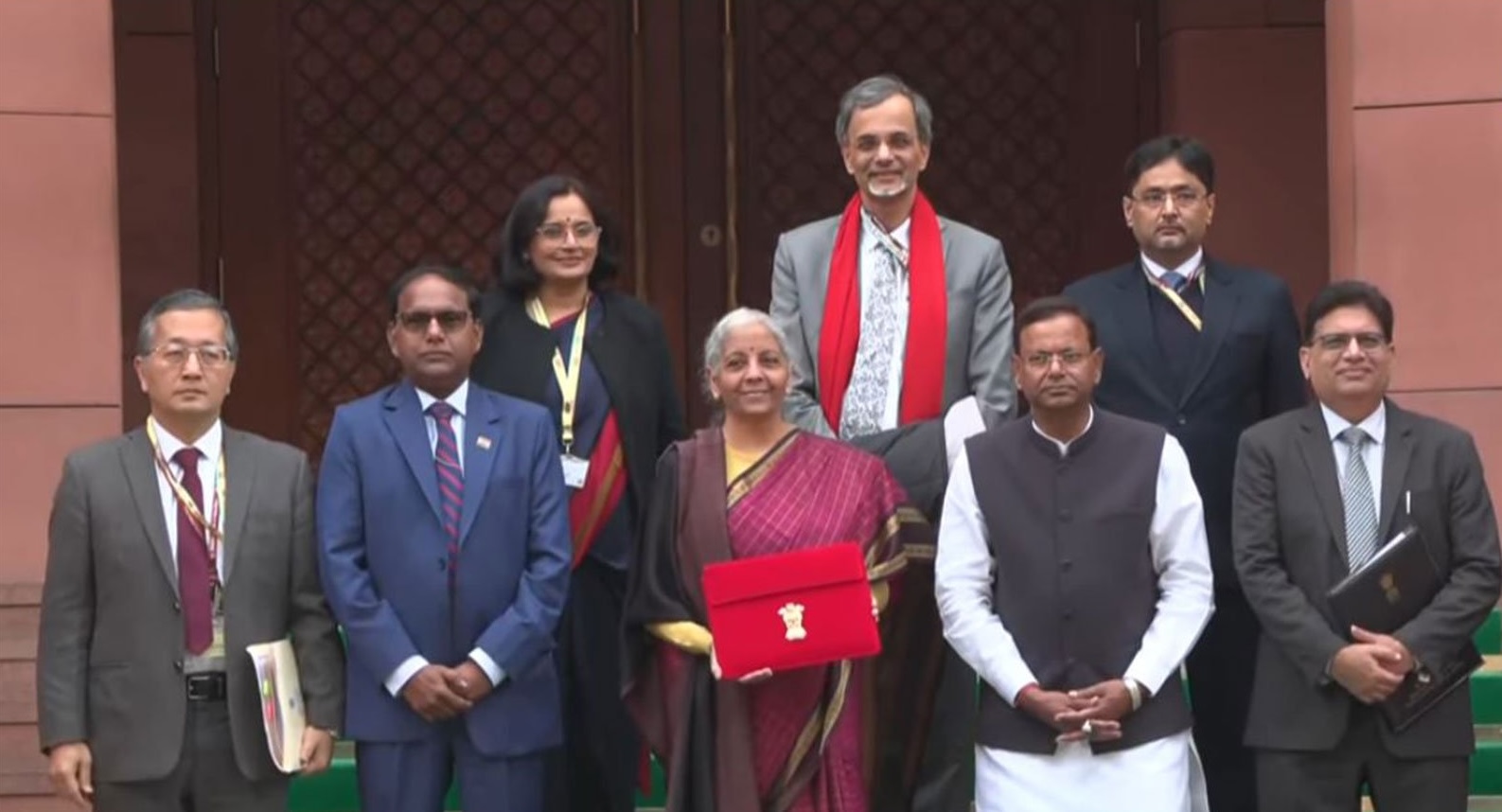
She was accompanied by Minister of State for Finance Pankaj Chaudhary, Chief Economic Adviser V Anantha Nageswaran, Central Board of Direct Taxes Chairman Ravi Agrawal, and other senior officials from the Finance Ministry.
Sitharaman is set to present her ninth consecutive Union Budget in the Lok Sabha, equalling the record of former Finance Minister P Chidambaram and surpassing that of Pranab Mukherjee.
Budget 2026 Live Updates: Is Today a Market Holiday for Sunday?
Indian stock markets are open for trading today, Sunday, February 1, to coincide with the presentation of the Union Budget 2026 by Finance Minister Nirmala Sitharaman.
Although Sunday is typically a non-working day, equity and commodity markets are operating to allow investors to respond immediately to Budget announcements. Both the National Stock Exchange of India and the Bombay Stock Exchange are holding a full trading session, mirroring their regular weekday schedule.
This makes February 1 a rare exception in India’s market calendar, with live trading taking place on a Sunday.
Budget 2026 Live Updates: FM Nirmala Sitharaman arrives at Parliament to attend Cabinet meeting ahead of Budget presentation
Credit: ANI
Budget 2026 Live Updates: PM Modi arrives at Parliament ahead of Budget presentation
Budget 2026 Live Updates: Why The Finance Minister Meets The President Before Budget Day
Union Budget 2026 Live Updates: On the morning of February 1, the Finance Minister calls on the President at Rashtrapati Bhavan to seek formal approval before presenting the Union Budget in Parliament.
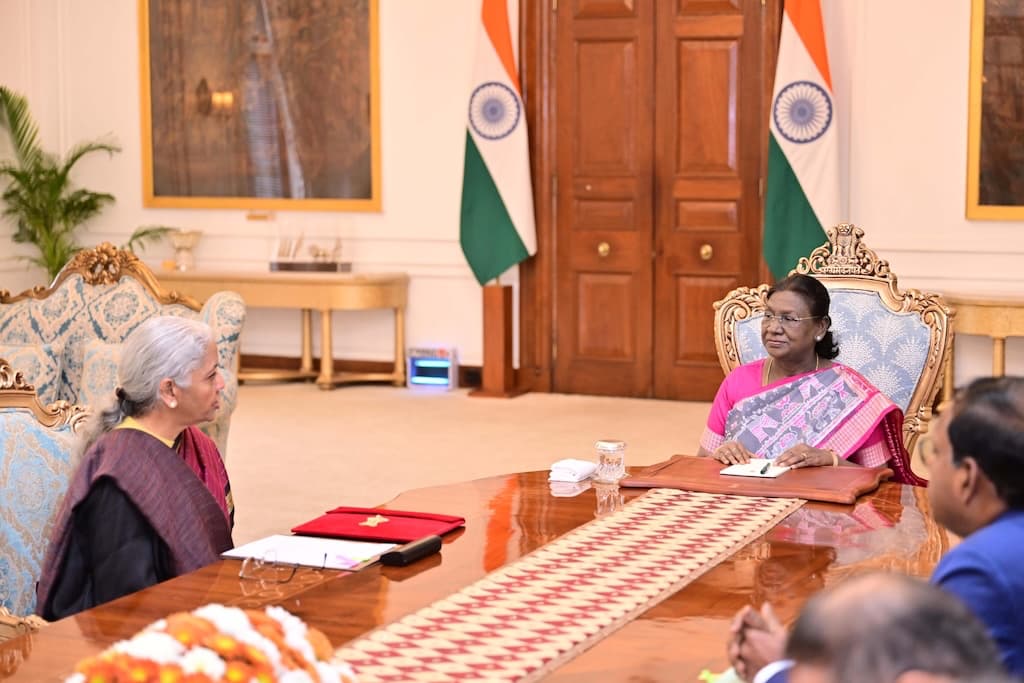
As per long-standing tradition, the President offers curd and sugar to the Finance Minister, a gesture considered auspicious and symbolic of wishing success ahead of a major responsibility. The customary meeting is scheduled to take place today as well.
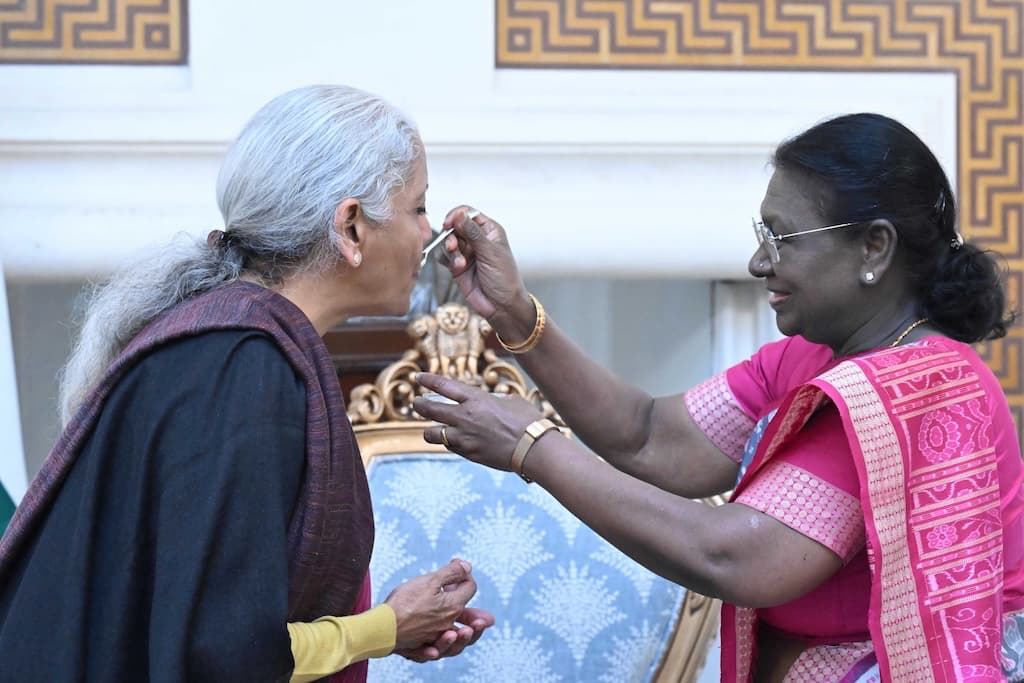
Budget 2026 Live Updates: Finance Minister Nirmala Sitharaman, Along with her Team, calls on President Droupadi Murmu
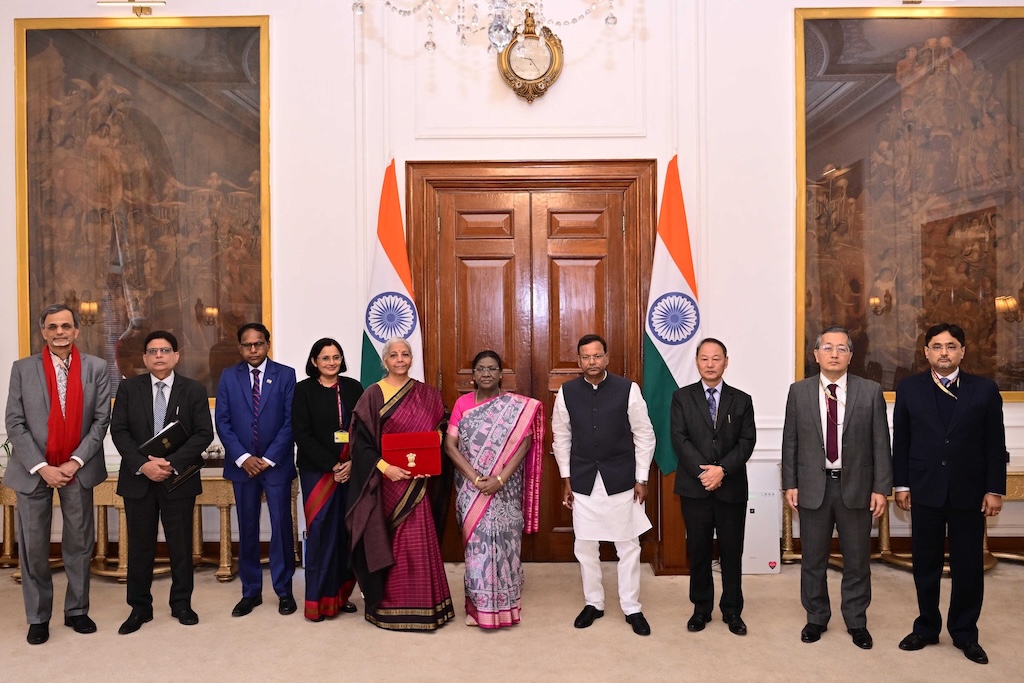
Budget 2026 Live Updates: Finance Minister Nirmala Sitharaman Along With her Team with the Budget Tablet
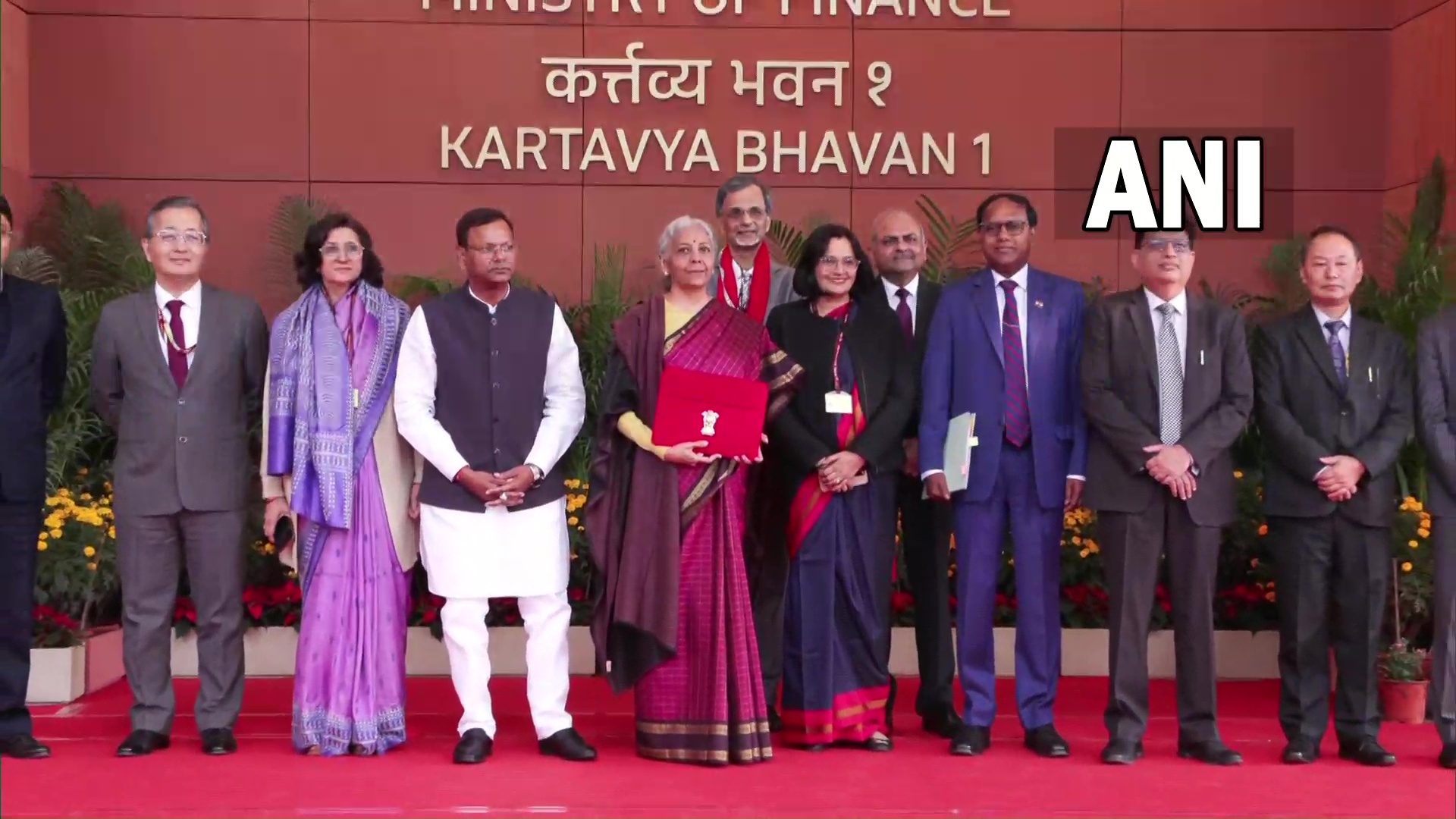
Credit: ANI
Budget 2026 Live Updates: What Are The Key Components Of The Budget?
Union Budget 2026 Live Updates: The Union Budget is structured around several core elements that outline the government’s financial position, spending priorities, and economic outlook. The key components include:
- Revenue Budget: Details the government’s revenue receipts, such as taxes and non-tax income, along with revenue expenditure required for day-to-day operations.
- Expenditure Budget: Presents total government spending, including both revenue expenditure and capital expenditure across sectors.
- Fiscal Deficit: Indicates the gap between total expenditure and total receipts, reflecting the government’s borrowing requirements.
- GDP Growth Projections: Provides official estimates and assumptions on economic growth for the coming financial year.
- Policy Announcements: Covers major tax changes, reform measures, and new initiatives proposed by the government.
Budget 2026 Live Updates: Meet The Architects Of India’s 2026–27 Budget
The Union Budget for more than 1.47 billion Indians is steered by Finance Minister Nirmala Sitharaman, who leads a core team of senior bureaucrats within the Ministry of Finance responsible for policy formulation, revenue planning, expenditure management, and economic strategy.
The key officials involved in preparing the Budget include:
-
Anuradha Thakur, Secretary, Department of Economic Affairs
-
Arvind Shrivastava, Revenue Secretary
-
Vumlunmang Vualnam, Expenditure Secretary
-
M Nagaraju, Financial Services Secretary
-
Arunish Chawla, Secretary, Department of Investment and Public Asset Management
-
K Moses Chalai, Secretary, Department of Public Enterprises
-
V Anantha Nageswaran, Chief Economic Adviser
Together, this team plays a central role in drafting fiscal priorities, balancing growth with stability, and shaping policy choices that impact every sector of the Indian economy.
Budget 2026 Live Updates: Live Telecast Of Budget 2026 And Where To Watch It
Union Budget 2026 Live Updates: The Union Budget presentation will be telecast live from Sansad Bhawan on Sansad TV.
The Finance Minister’s Budget speech will begin at 11 am. Official Budget documents will also be released on the government’s website and through the Union Budget mobile application.
Budget 2026 Live Updates: Nirmala Sitharaman arrives at Kartavya Bhawan ahead of Union Budget
Union Finance Minister Nirmala Sitharaman and Minister of State for Finance Pankaj Chaudhary arrived at Kartavya Bhawan on Sunday ahead of the presentation of the Union Budget 2026–27 in the Lok Sabha during the ongoing Budget session of Parliament.
Sitharaman is scheduled to present her record ninth consecutive Budget at 11 am.
She will place before the House a statement detailing the estimated receipts and expenditure of the Government of India for the financial year 2026–27.
The Finance Minister will also table two statements under Section 3(1) of the Fiscal Responsibility and Budget Management Act, 2003. These include the Medium-Term Fiscal Policy-cum-Fiscal Policy Strategy Statement and the Macroeconomic Framework Statement.
According to the List of Business, Sitharaman will seek leave to introduce the Finance Bill, 2026, in the Lok Sabha and formally move the Bill.
The Finance Bill provides legal backing to the government’s financial proposals.