


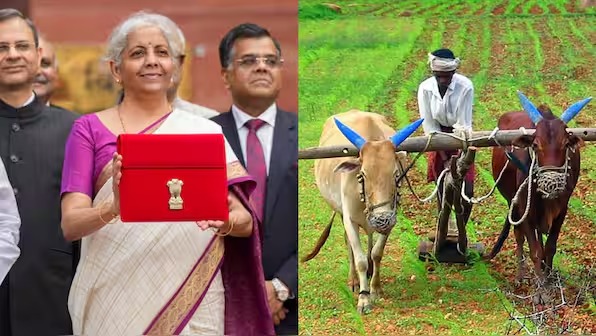

In the Union Budget 2026, Finance Minister Nirmala Sitharaman announced Bharat Vistaar, a new multilingual AI-powered platform designed to provide real-time, data-driven support to Indian farmers. Aim is to strengthen last-mile delivery of agricultural knowledge.
Elaborating on the AI tool, the Finance Minister on Sunday said, “Bharat Vistar – Virtually Integrated System to access Agricultural Resources. I propose to launch Bharat Vistar, a multilingual AI tool that shall integrate the agri-stack portals and the ICAR package on agricultural practices with AI systems.”
This tool will assist farmers through several functions. Bharat Vistaar will help farmers to overcome language barriers said the Finance Minister. The tool provides real-time, voice-based assistance in various local dialects, making scientific data actionable for all farmers.
Sitharaman said the tool will combine the government’s Agri Stack portal with the Indian Council of Agricultural Research (ICAR) practices to deliver verified, scientific farming advice. Farmers can access real-time weather forecasts via APIs, soil health data, and crop-specific alerts to reduce risks.
Bharat Vistaar will offer customised tips for pest management, irrigation optimisation, and disease detection. It will provide insights on market prices and market-aligned crop planning to help farmers improve their overall income.
The tool streamlines the process for farmers to learn about and track various government welfare schemes.
Government’s focus on agricultural diversification and rural livelihoods
Nirmala Sitharaman in her speech further highlighted the government’s focus on strengthening agricultural diversification and rural livelihoods. Emphasising support for farmers across varied geographies, she outlined initiatives aimed at boosting high-value crops-from coconut, sandalwood, cocoa and cashew in coastal regions to agar in the Northeast, and almonds, walnuts and pine nuts in hilly areas.
Unfulfilled promises from Budget 2025 for farmers’ welfare
This announcement comes after the Union Government has faced criticism for its unfulfilled promises from Budget 2025 for farmers’ welfare. While presenting the Union Budget 2025-26, Finance Minister Nirmala Sitharaman had promised enhanced credit under Kisan Credit Cards and the National Mission on High-Yielding Seeds.
FM Sitharaman had termed agriculture as the “first engine” of the economy and announced several new initiatives for the sector while presenting the budget. Some of these are yet to be implemented—like raising the loan limit under the Modified Interest Subvention Scheme from Rs 3 lakh to Rs 5 lakh for loans taken through the Kisan Credit Card (KCC), launching a Mission for Cotton Productivity, and setting up a National Mission on High-Yielding Seeds.
Announcing the enhanced credit through the KCC scheme during the budget presentation, Sitharaman said, “Kisan Credit Cards enable short-term loans for 7.7 crore farmers, fishermen, and dairy farmers. The loan limit under the Modified Interest Subvention Scheme will be increased from Rs 3 lakh to Rs 5 lakh for loans taken through the KCC.”
However, this is yet to be approved by the Union Cabinet. The agriculture ministry is expected to soon send a proposal in this regard. Critics allege that the Kisan Credit Card scheme has in some cases turned into a debt trap for farmers, marred by misuse, high bureaucratic hurdles, and structural flaws.
Sitharaman also announced a 5-year-mission for Cotton Productivity expected to facilitate significant improvements in productivity and sustainability of cotton farming, and promote extra-long staple cotton varieties. This is expected to increase the incomes of farmers, and ensure a steady supply of quality cotton for rejuvenating India’s traditional textile sector. However, this mission too is yet to be implemented on the ground.
Announcements regarding a National Mission on High-Yielding Seeds and the second gene bank for crop germplasm have also not been implemented till date. Plans to launch a “comprehensive programme to promote production, efficient supplies, processing, and remunerative prices for farmers” as announced in the budget have also not been met.