


app-store-logo
play-store-logo
January 15, 2026

Bill Gates Starts Shutting Down Gates Foundation After Two Decades of Global Impact
The CSR Journal Magazine

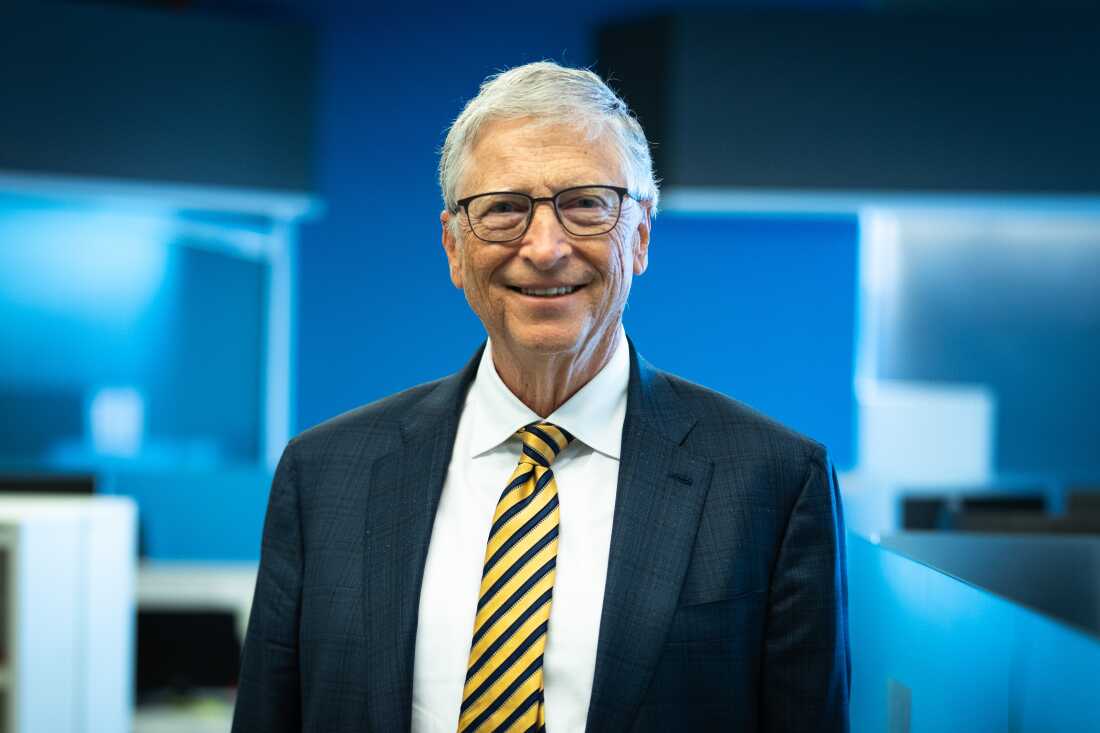
Bill Gates has begun laying the groundwork for what will eventually be the closure of one of the world’s most influential philanthropic institutions. The Bill & Melinda Gates Foundation, which has shaped global health, education and poverty reduction efforts for more than two decades, is entering a decisive new phase. The foundation has announced a record spending plan of $9 billion for 2026 while simultaneously preparing to reduce its workforce by as many as 500 roles over the next five years.

These developments follow Gates’ decision last year to formally wind down the foundation by 2045, bringing an end to an organisation that has committed roughly $200 billion to global causes since its inception. The move signals both urgency and finality at a time when international aid budgets are shrinking and global health indicators are showing worrying signs of reversal.

The decision to begin planning for closure marks a significant strategic shift for the Gates Foundation. For years, the organisation operated with an assumption of permanence, building long-term programmes in vaccination, disease eradication, education reform and agricultural development. The new timeline reframes its mission as a race against time rather than an open-ended commitment.

According to a report by Fortune, Gates intends the next two decades to be a period of accelerated impact rather than gradual decline. The foundation’s leadership has emphasised that the decision to spend more now is designed to deliver measurable outcomes before the organisation sunsets, rather than preserving capital indefinitely.

Job Cuts and a Tighter Operating Cost Cap

Alongside higher programme spending, the foundation is preparing for a significant internal restructuring. Its board has approved a cap on operating costs of $1.25 billion a year, equivalent to around 14 per cent of the total budget. Without intervention, operating expenses were projected to rise to nearly 18 per cent by 2030.

To stay within the new limits, the foundation plans to reduce its workforce from the current 2,375 roles. Some positions will be eliminated, while others will be left unfilled as staff move on. Up to 500 jobs could be cut by 2030, though leadership has stressed that this figure represents a maximum rather than a fixed target.

Foundation chief executive Mark Suzman has sought to reassure staff and partners that the process will not be abrupt. He has described the workforce reductions as gradual and subject to annual review, with adjustments made depending on programme needs and financial realities.

Suzman has argued that the changes are necessary to ensure that the bulk of the foundation’s resources continue to flow directly into programmes rather than administration. The intention, he said, is to protect impact even as the organisation becomes leaner, recalibrating each year as priorities evolve.

Record Spending

The $9 billion budget planned for 2026 will be the largest annual outlay in the foundation’s history. This comes at a moment when global health metrics are under strain. Gates recently highlighted that child mortality rose last year for the first time in two decades, reversing years of progress.

The new budget increases funding for women’s health, vaccine development, polio eradication, education initiatives and the use of technology to improve public services. Gates has acknowledged that the next few years will be difficult, particularly as international aid cuts leave gaps in funding. However, he has expressed confidence that sustained investment in proven interventions can restore momentum.

AI Investment and Expansion in Africa and India

One of the more striking aspects of the foundation’s current strategy is its approach to artificial intelligence. While Gates has repeatedly warned about the risks posed by unchecked AI development, the foundation is also investing heavily in its potential benefits. It has joined a coalition pledging $1 billion towards AI tools designed for public-sector workers in the United States, and AI-related programmes are expected to continue expanding.

At the same time, the foundation is strengthening its presence in Africa and India, creating a new division focused specifically on these regions. Work on HIV and tuberculosis, in particular, will increasingly shift from Seattle to Africa, reflecting both the burden of disease and the need for locally grounded solutions. For India, the expansion reinforces the country’s importance in global health, digital public infrastructure and poverty reduction efforts.

Despite the long-term plan to close by 2045, foundation leaders insist that the most consequential period may still lie ahead. With two decades remaining, the organisation aims to concentrate resources where they can deliver the greatest returns in lives saved and livelihoods improved.

Long or Short, get news the way you like. No ads. No redirections. Download Newspin and Stay Alert, The CSR Journal Mobile app, for fast, crisp, clean updates!

App Store –  https://apps.apple.com/in/app/newspin/id6746449540 

Google Play Store – https://play.google.com/store/apps/details?id=com.inventifweb.newspin&pcampaignid=web_share

Latest News

Popular Videos
