


Banks Use Credit Scores to Assess Candidates’ Financial Responsibility in Hiring
The CSR Journal Magazine

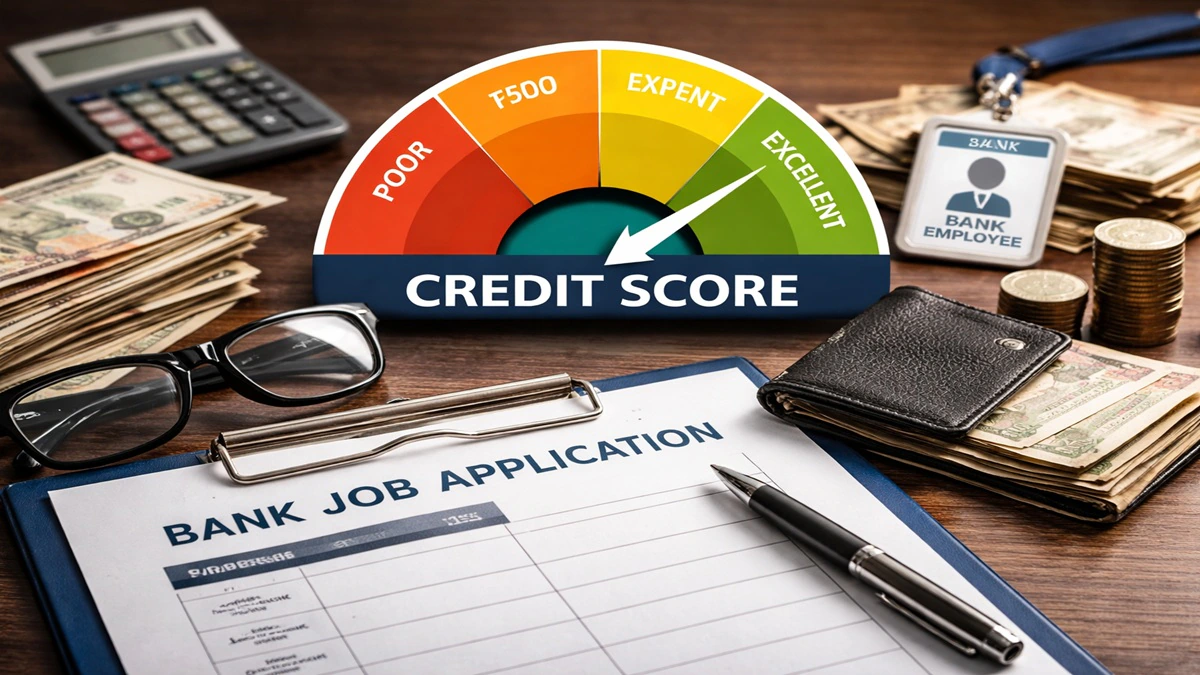
Recent remarks in the Rajya Sabha have shed light on an emerging trend regarding job applications within the banking sector, particularly concerning credit scores. Minister of State for Finance, Pankaj Chaudhary, has informed that candidates selected through the Institute of Banking Personnel Selection are now expected to maintain a “healthy credit profile.” Although this expectation is not a barrier at the initial application stage and does not specifically affect applicants without prior credit histories, it signifies a notable shift in how employers evaluate potential candidates.

Shifting Focus from Academic Credentials to Financial Behavior

Traditionally, securing a banking job relied heavily on academic qualifications, examination results, and interview performance. However, employers in the banking industry are increasingly looking beyond conventional metrics. There is a growing interest in assessing a candidate’s financial habits as an indicator of responsibility and discipline. Shantanu Rooj, the Founder and CEO of TeamLease Edtech, highlights this transformation by stating that employers are now considering behavioral traits like responsibility and risk awareness alongside technical skills. This approach suggests that how individuals manage their finances may serve as a window into their professional conduct.

The Importance of Credit History in Banking

Given that banking is fundamentally built on trust, it is essential for employees to manage sensitive data and financial transactions with integrity. Anand Agrawal, Co-founder of FixMyScore and Credgenics, emphasizes that a candidate’s credit behavior can reflect qualities such as financial discipline and risk awareness, which are vital for roles within banking. He clarifies that while credit history is a significant aspect of candidate evaluation, it is not a standalone criterion for disqualification, but rather a tool for gaining a holistic view of the individual.

Defining a ‘Healthy’ Credit Profile

A healthy credit profile does not necessarily indicate wealth or the number of loans held. Instead, it focuses on consistent behaviors such as timely payment of EMIs and credit card bills while maintaining responsible credit usage. According to Rooj, a solid credit profile is characterized more by patterns of financial responsibility than by one’s overall financial status. Thus, the emphasis is placed on the behaviors surrounding credit management rather than just numerical scores.

Potential Expansion of This Trend

Currently, this trend primarily applies within banking and financial services, but its scope might broaden in the future. Agrawal suggests that industries such as fintech and insurance, which also rely on financial responsibility, could begin to adopt similar criteria in candidate assessments. Still, he notes that credit history should play a supportive role in hiring decisions rather than being the central factor. Similarly, Rooj expresses doubt that this practice will become generalized across all sectors, indicating that it is more likely to remain specific to roles where financial accountability is essential.

Implications for Young Professionals

This evolving perspective sends a clear message to job seekers, underscoring the importance of financial literacy in today’s job market. Rooj identifies a common shortfall among recent graduates who may be academically proficient but lack a solid understanding of financial management concepts. Simple practices such as regular bill payments and prudent credit usage can contribute significantly to establishing a reliable credit history. Agrawal reinforces this point, suggesting that even a well-managed credit account can lay the groundwork for a strong financial profile.

Understanding the Broader Significance of Credit Scores

Ultimately, this trend highlights the growing importance of trust in the hiring process. Employers are inclined to seek individuals who demonstrate discipline in both their professional tasks and personal financial decisions. It is evident that credit scores are evolving beyond mere numeric representations for loans, increasingly reflecting an individual’s financial habits and, at times, their readiness for professional responsibilities.

Long or Short, get news the way you like. No ads. No redirections. Download Newspin and Stay Alert, The CSR Journal Mobile app, for fast, crisp, clean updates!

App Store –  https://apps.apple.com/in/app/newspin/id6746449540 

Google Play Store – https://play.google.com/store/apps/details?id=com.inventifweb.newspin&pcampaignid=web_share

Latest News

Popular Videos
