


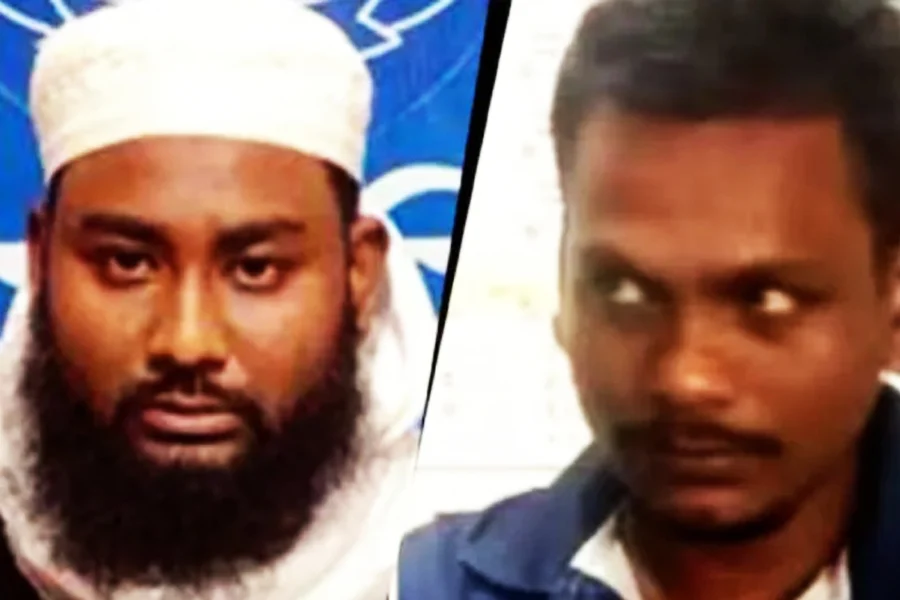

A planned murder. First, inciting the mob. Then, dragging 27-year-old Hindu youth away and handing him over to the frenzied crowd. Later, hanging Dipu Chandra Das from a tree and setting him on fire. Yasin Arafat, the main accused in the murder of Dipu Chandra Das in Bangladesh’s Mymensingh, has been arrested. Das was lynched and killed on Thursday (December 18) following vague allegations of blasphemy.
Yasin is a teacher by profession. According to sources, he orchestrated the entire plan for Dipu’s murder on December 18. Yasin had been absconding since the incident. The Bangladeshi police had launched a search operation for him. Finally, investigators arrested Yasin on Thursday, January 8. With this, the total number of arrests in Dipu’s murder has reached 21. However, the police are investigating the entire incident. It has been learnt that Yasin was a well-known figure in the area. As a result, the crowd was easily influenced by his words.
Dipu Chandra Das’ naked dead body was lynched and set on fire
Dipu Chandra Das, a resident of Mokamiakanda village in Mymensingh, had been working at a factory in Bhaluka for the past two years. On December 18, around 9:30 PM, a group of protesters suddenly attacked the factory. Vandalism ensued. According to eyewitnesses, Dipu was dragged out of the factory and then subjected to a mob beating. Dipu died on the spot. The enraged crowd then took his body to the Dhaka-Mymensingh highway. They removed his clothes, tied his naked dead body to a tree and set him on fire. Slogans were chanted during this time. Sources claim that Dipu was murdered for making offensive remarks about religion. However, the Bangladesh Rapid Action Battalion (RAB) has rejected this claim.
Bangladeshi Hindu youth Dipu Chandra Das’ co-workers had allegedly joined the enraged Muslim mob in lynching him. Employee of a garment factory named Pioneer Knitwears (BD) Limited in Dubaliapara area of Habirbari Union, Bhaluka, Mymensingh, Dipu Chandra Das was killed over blasphemy claims, regarding which no evidence has been found yet, as per Bangladeshi authorities.
Bangladesh’s Rapid Action Battalion (RAB) and police officials revealed a few days after the murder that Dipu was forced to resign by factory supervisors and then handed over to the mob, which brutally assaulted and killed him, hung his naked body on the Dhaka-Mymensingh highway, and set fire to it.
At a press conference in Mymensingh days after the murder, RAB-14 commander Naimul Hasan said the violence began inside the factory itself. Instead of calling the police and saving him, the youth was forced to resign by his factory supervisors, pushed out of his workplace, and handed over to an enraged mob of Islamists that beat him to death, hung his body and set fire to it. His colleagues reportedly joined the mob in killing him.
Dipu’s burnt body put on display for public: Father
The deceased Dipu Chandra was the son of Rabi Chandra Das of Mokamiakanda village in Banihala Union of Tarakanda Upazila. His brother, Opu Chandra Das, filed a case against 140 to 150 unidentified persons a day after the murder.
After lynching Dipu to death, the barbarism did not stop there; they hung his body from a tree and set it on fire. The group of fundamentalists then publicly displayed his burnt head and torso. Dipu Chandra Das’s father, Rabilal Das, described his son’s tragic fate. Not only his family, but the entire Hindu community in Bangladesh is terrified by Dipu’s fate.
Rabilal gave a detailed account of the events of that day in a media interview. He said, “We first learned about my son’s fate from Facebook. Rumours started circulating among our acquaintances. Half an hour after the incident, a relative came and informed me that they had taken my son away and tied him to a tree.”
Describing the murder, Dipu’s father said, “After beating him to death, they hung his body from a tree and set it on fire. Then they tied the burnt head and body with a rope and left it outside so that everyone could witness the brutality. The sight was extremely horrific.”
Dipu’s father also raised questions about the security of minorities in Bangladesh. Even after such an incident, the government has not offered any condolences or assurance of support. Rabilal said, “Even after this incident, the government has not contacted us in any way. They haven’t even given us any assurance of security. We haven’t received any condolences from anyone.”