


AIIMS Develops AI Model for Enhanced Breast Cancer Screening
The CSR Journal Magazine

Breast cancer has become the most prevalent cancer in India, with over 2.3 lakh new cases identified annually, surpassing all other malignancies. Alarmingly, a significant portion of these cases—more than 60 per cent—are diagnosed at stages III or IV, indicating an advanced progression of the disease. Recent data published in The Lancet Oncology indicates that the incidence of breast cancer in India has increased dramatically, rising from 13 cases per 100,000 women in 1990 to 29.4 cases per 100,000 in 2023—a staggering 127 per cent increase. Additionally, the mortality rate for breast cancer has also escalated, moving from 8.9 to 15.5 per 100,000 over the same period.

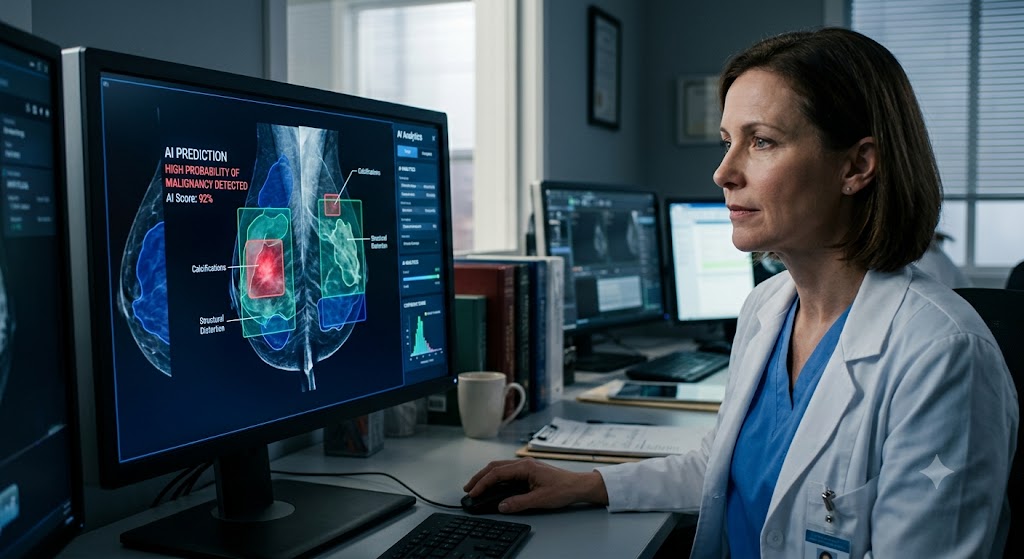
A mammogram, an X-ray designed to examine breast tissue, can uncover minute abnormalities that could signify early-stage cancer before other symptoms become apparent. Nonetheless, interpreting mammograms poses challenges; some cancers are subtle, and dense breast tissue can obscure abnormal findings. In India, the disparity in access to specialist imaging services compounds this issue, with many rural areas lacking qualified professionals capable of interpreting mammograms correctly.

Breast cancer screening initiatives in India have identified critical barriers, including the limited availability of trained personnel and the difficulties posed by breast density. Advanced imaging expertise is often concentrated in urban centres, exacerbating disparities in early detection. Artificial intelligence (AI) is being explored as a complementary tool to radiologists, enabling quicker and more accurate readings of mammograms and potentially addressing this pressing healthcare gap.

AIIMS Innovates in Mammography Interpretation

The All India Institute of Medical Sciences (AIIMS) in New Delhi has made progress in tackling the limitations of breast cancer screening through the development of an AI-based mammography interpretation model. The technology has been transferred to BPL Technologies, a medical device manufacturer based in Delhi. This partnership aims to facilitate further development and validation of the tool, designed to assist radiologists in identifying potentially malignant features in mammography images.

AIIMS’s director, Dr Nikhil Tandon, emphasised the value of translating academic research into practical healthcare solutions. The newly developed model targets environments where specialist expertise may be lacking, making it crucial in extending breast cancer screening services to underserved regions. Experts indicate that the next steps involve rigorously testing the model on diverse datasets, particularly from Indian patients and across varied imaging modalities, to ensure its readiness for widespread clinical use.

Moreover, integrating this AI technology into established mammography systems and clinical workflows will be conditional on meeting regulatory standards, validation processes, and obtaining clinical evidence. There is an accumulating body of international research supporting AI’s positive impact on breast cancer detection rates, notably from established mammography programmes in other countries.

Potential Impact and Future Directions

The evidence from Sweden’s MASAI randomised trial serves as a compelling illustration of AI’s utility in breast cancer detection. Involving over 105,000 women, the trial revealed that AI-assisted mammography identified 6.4 cancers per 1,000 women screened, surpassing the 5.0 cancers detected per 1,000 with standard screening. This marked an increase of approximately 29 per cent in the cancer-detection rate. The AI-enhanced method also lightened the workload for screen readers by 44.2 per cent, indicating its potential to assist healthcare professionals significantly.

In further analysis, AI-supported screening demonstrated a sensitivity of 80.5 per cent, in contrast to 73.8 per cent for standard double reading, while maintaining comparable specificity at 98.5 per cent across both approaches. The finding of interval cancers during screening cycles remained consistent, underscoring the AI-assisted method’s effectiveness.

As breast cancer incidence continues to rise in India, advancements such as those pioneered by AIIMS may provide a vital avenue for earlier detection and improved patient outcomes. The ongoing efforts to validate this AI technology could make a substantial impact on India’s healthcare landscape in combating breast cancer.

Long or Short, get news the way you like. No ads. No redirections. Download Newspin and Stay Alert, The CSR Journal Mobile app, for fast, crisp, clean updates!

App Store –  https://apps.apple.com/in/app/newspin/id6746449540 

Google Play Store – https://play.google.com/store/apps/details?id=com.inventifweb.newspin&pcampaignid=web_share

Latest News

Popular Videos
