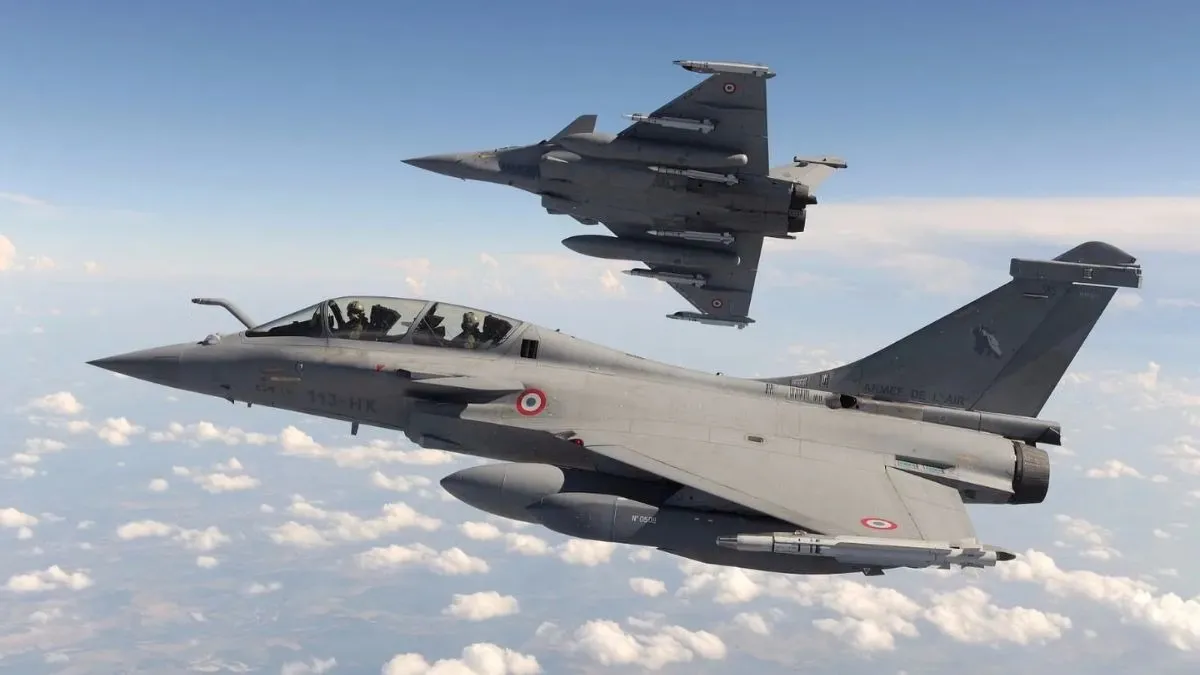
New Delhi: In anticipation of French President Emmanuel Macron’s arrival in India for the Artificial Intelligence Summit taking place from February 18 to 20, the Defence Acquisition Council (DAC) is poised to convene in the upcoming week. This meeting, chaired by Defence Minister Rajnath Singh, will focus on significant defence procurement proposals, according to sources.
Major Proposal for 114 Rafale Fighter Jets
A key item on the agenda is the proposal to grant Acceptance of Necessity (AoN) for the procurement of 114 Rafale fighter jets from France, estimated at a budget of approximately ₹3.25 lakh crore. The deal involves the acquisition of 18 aircraft in flyaway condition, while the remaining jets will be manufactured in India, featuring up to 60% indigenous content. Reports indicate that around 80% of the proposed Rafales will be produced locally.
Details of the Aircraft Configuration
The Indian Air Force (IAF) is expected to receive a total of 88 single-seater and 26 twin-seater aircraft under this initiative, with the majority of production to be undertaken in collaboration with Dassault and various Indian private sector firms. This acquisition has already secured approval from the Defence Procurement Board last month and will move to higher authorities for additional clearances. Following this, formal technical and commercial negotiations will commence.
Strategic Context and Regional Security Concerns
This deal comes at a critical time, as the IAF currently operates roughly 30 fighter squadrons, significantly lower than the sanctioned strength of 42 squadrons. There are increasing security concerns due to rising threat perceptions from both Pakistan and China. Analysts have noted the growing strategic collaboration between Pakistan and Bangladesh, as well as between Pakistan and China, amplifying regional security alarms.
Rafale’s Role in Enhancing IAF’s Capabilities
Upon completion of the deal, the IAF’s fleet will expand to 150 Rafales, in addition to 26 units for the Indian Navy, which will include a version compatible with aircraft carriers. The efficacy of the Rafale jets in offensive operations, demonstrated in Operation Sindoor, highlights their capabilities, armed with advanced missiles such as Meteor, Scalpel, and laser-guided bombs. The Rafale acquisition is expected to fulfill the IAF’s immediate need for a 4.5-generation multirole fighter aircraft.
Future Prospects and Development Delays
The urgency of this deal has intensified as India is unlikely to receive new fifth-generation fighter jets, like the Advanced Medium Combat Aircraft (AMCA), in the near future. The selection process for companies to manufacture such advanced stealth fighters is ongoing, while the production pace of HAL’s Tejas MkIA is hindered by its reliance on engines from the American firm GE.