



Space Isn’t Always Glamorous: Even Astronauts Have To Take Out The Trash

The CSR Journal Magazine

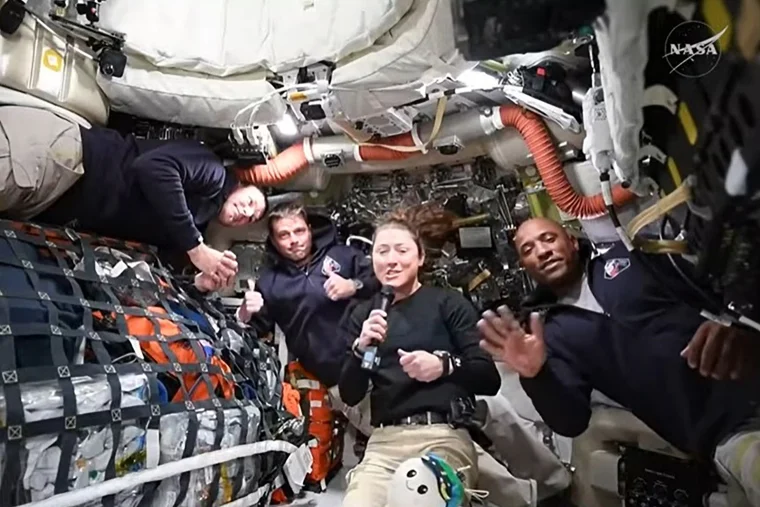
The NASA Artemis 2 mission has provided an insight into the crucial yet often overlooked aspect of human spaceflight: waste management. A newly released video showcases astronauts aboard the Orion spacecraft disposing of frozen human waste, a necessary process as they journey back to Earth following a historic lunar flyby. This disposal procedure emphasises the unique challenges of maintaining hygiene in the context of space travel.

Storage and Disposal Methods

The Orion spacecraft, specifically engineered for deep-space missions, lacks the advanced waste recycling systems that characterise facilities such as the International Space Station (ISS). Instead, it employs a simplified storage-and-disposal method tailored for missions like Artemis 2, which lasts approximately ten days. Astronauts are tasked with storing bodily waste in containers that are designed to prevent leakage and odour, ensuring that the spacecraft remains uncontaminated during its mission.

Once the waste is contained, it is exposed to the vacuum of space. The extreme cold, often dropping below -100 degrees Celsius, facilitates the rapid freezing of waste materials. Footage from the mission illustrates how the crew safely releases this frozen waste into space, adhering to protocols that prevent any interference with the spacecraft or potential hazards in orbit.

The principles underpinning this disposal method are rooted in the distinctive conditions found in space. Liquids such as urine can swiftly transition from liquid to vapour or freeze as solid ice crystals due to the vacuum environment. Solid waste, on the other hand, is dehydrated thoroughly, rendering it sterile because of the lack of atmospheric pressure and microbial activity. This allows for a safer disposal process, minimising biological risks associated with human waste management in space.

Future Considerations for Longer Missions

Experts indicate that while the methods utilised during Artemis 2 are adequate for short-duration missions, they would be impractical for extended journeys, such as potential crewed missions to Mars. In those scenarios, closed-loop life support systems capable of recycling water and waste into usable resources will be essential for maintaining crew health and safety.

NASA has reassured the public that all waste disposal procedures are meticulously planned. They aim to prevent the creation of space debris or the contamination of sensitive space environments. The trajectories utilized for waste ejection are calculated to ensure the materials do not reacquire contact with the spacecraft or disrupt other operational assets in orbit.

Although this aspect of space missions may come as a surprise to some, the footage serves to highlight the logistical realities of living and working in space. It underscores the engineering solutions that are indispensable for facilitating human exploration beyond our planet. NASA’s commitment to safely managing waste during missions is a testament to the extensive planning and technology involved in modern space exploration efforts.

Long or Short, get news the way you like. No ads. No redirections. Download Newspin and Stay Alert, The CSR Journal Mobile app, for fast, crisp, clean updates!

App Store –  https://apps.apple.com/in/app/newspin/id6746449540 

Google Play Store – https://play.google.com/store/apps/details?id=com.inventifweb.newspin&pcampaignid=web_share

Latest News

Popular Videos